
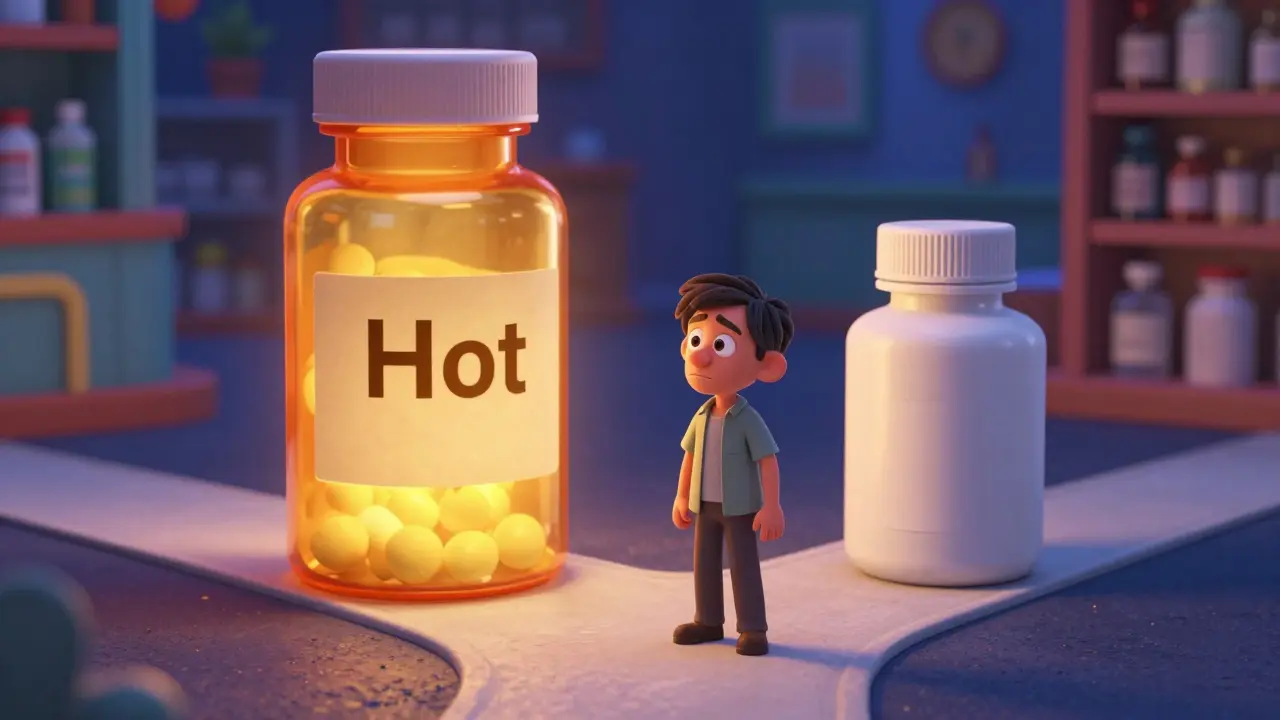
Ever wonder why someone sticks with a pricey medication even when a cheaper, equally effective version is available? Or why a person knows their health depends on a pill but simply forgets to take it? Most old-school medical models assume patients are rational actors who weigh costs and benefits like a math problem. In reality, our brains are messy. We are driven by fear, trust, and a strange desire to avoid loss more than we seek gain. This is where Behavioral Economics is an interdisciplinary field that applies psychological insights to economic models to explain why people make seemingly irrational decisions.
Understanding these "irrational" patterns isn't just an academic exercise; it's a matter of life and death. In the U.S. alone, medication non-adherence costs the healthcare system about $289 billion annually and leads to roughly 125,000 avoidable deaths. By shifting the focus from "what the patient should do" to "how the patient actually thinks," we can design better systems that help people stay healthy.
The Mental Shortcuts That Drive Drug Choices
Patients don't process medical data like a computer. Instead, they use mental shortcuts, often called cognitive biases, that can lead them away from the best clinical choice. One of the biggest culprits is Confirmation Bias, where a patient believes a more expensive drug is safer or more potent simply because the price tag is higher, ignoring evidence that a generic is identical. This isn't about greed; it's a psychological trick where we associate cost with quality.
Then there is Loss Aversion. Humans generally hate losing something they already have more than they enjoy gaining something new. In pharma, this manifests as a deep reluctance to switch medications. Even if a new drug is 30% cheaper and just as effective, the perceived "loss" of the current treatment's known benefits outweighs the potential gain of saving money. This is why roughly 68% of patients stick with their current regimen even when better alternatives exist.
We also deal with Present Bias, the tendency to value immediate rewards over future ones. This explains why about 33% of prescriptions go unfilled. The "cost" of going to the pharmacy is an immediate inconvenience, while the "benefit" of avoiding a heart attack ten years from now feels abstract and distant.
Nudging Patients Toward Better Health
If the problem is psychological, the solution must be too. This is the core of Nudge Theory, popularized by Richard Thaler and Cass Sunstein. A "nudge" isn't a command; it's a subtle change in how a choice is presented-the "choice architecture"-that steers people toward a better decision without taking away their freedom.
One of the most powerful nudges is the Default Option. When doctors change the standard order sets in a hospital to feature a specific alternative drug during a shortage, appropriate substitutions can jump by nearly 38%. Because humans tend to go with the flow, making the "right" choice the "automatic" choice is incredibly effective.
Framing also plays a huge role. Consider vaccination campaigns. If you tell a patient a vaccine is "95% effective," they are far more likely to take it than if you say it is "5% ineffective," even though the math is identical. In a 2021 trial, this simple shift in framing increased vaccine uptake by over 18 percentage points. It's not about the data; it's about how the data feels.
| Approach | Typical Adherence Improvement | Primary Mechanism | Effectiveness Rate |
|---|---|---|---|
| Traditional Education | 5% - 8% | Information Transfer | Low |
| Social Norms (e.g., Posters) | ~21.4% | Peer Comparison | Moderate |
| Framing Effects | ~17.2% | Perception Shift | Moderate |
| Default Settings | ~28.6% | Reduced Friction | High |

Why Some Interventions Fail
Not every nudge works. Behavioral economics isn't a magic wand; it's highly dependent on the context. For example, message-based reminders (like a simple text saying "Take your pill") often show a null effect in large-scale trials. To work, the message needs to trigger a specific bias. A text that says "Don't lose your streak!" leverages loss aversion and has been shown to improve adherence by nearly 20% compared to a neutral reminder.
Complexity also kills adherence. This is known as Cognitive Load. When a patient is on a single drug, they manage. But as the number of medications increases-a situation known as polypharmacy-adherence rates drop. In fact, each additional medication can reduce adherence by about 8.3%. When the brain is overwhelmed by dosing schedules and side effects, the most elegant psychological nudge can't overcome the sheer mental exhaustion of managing the regimen.
Mental health is another critical variable. Depression and anxiety can reduce the effectiveness of behavioral interventions by over 31%. When a patient is struggling with a severe mental health comorbidity, the cognitive tools required to respond to a "nudge" are often compromised, requiring more intensive, human-led support rather than digital triggers.

Real-World Implementation and the Future of Pharma
Pharmaceutical companies are starting to realize that the "science of the pill" is only half the battle; the "science of the patient" is the other half. Companies that have integrated behavioral insights into their support programs have seen a 17.3% increase in persistency rates. This is often achieved through technology-enabled interventions, such as smart pill bottles that provide real-time feedback, although these are more expensive to deploy than simple SMS programs.
We are now moving toward a future of Digital Therapeutics. Instead of a generic reminder, machine learning algorithms are being trained to predict which specific nudge will work for which patient. For example, a patient who is highly risk-averse might receive a message emphasizing the safety of staying on track, while a patient driven by social norms might see data on how many others in their community are successfully managing their condition.
Even regulatory bodies are catching up. The FDA has begun incorporating behavioral economics into its guidance for patient-focused drug development, requiring sponsors to evaluate how dosing frequency and administration routes impact a patient's actual decision-making process. It's a shift from treating patients as passive recipients to understanding them as active, though biased, decision-makers.
Does behavioral economics replace traditional medical advice?
No. It doesn't change the medical recommendation; it changes how that recommendation is delivered to ensure the patient actually follows it. It is a delivery system for clinical expertise.
Is it unethical to "nudge" patients into taking a specific drug?
This is a debated topic. However, experts like Dr. Aaron Kesselheim argue that because nudges can be consciously overcome by the patient or clinician, they preserve individual liberty while steering people toward healthier outcomes.
Why do expensive drugs often seem more effective to patients?
This is due to confirmation bias and the "price-quality heuristic." Patients subconsciously associate higher costs with higher quality or better safety, even when clinical data proves a generic is identical.
How does loss aversion affect medication switching?
Loss aversion makes patients fear the potential loss of current benefits more than they value the potential gain of a cheaper or slightly better drug, leading them to stay on a less optimal regimen.
What is the most effective behavioral intervention for drug adherence?
Currently, modifying defaults-such as changing the standard drug options in a clinician's ordering system-has shown the strongest effect, often leading to nearly a 29% improvement in appropriate prescribing.
Next Steps for Providers and Patients
If you're a provider, start by looking at your "choice architecture." How are you presenting options? Instead of just listing a drug, try framing the benefits in a way that highlights what the patient stands to lose if they don't adhere. If you're a patient, be aware of these mental traps. When you feel a strong reluctance to switch to a cheaper generic, ask yourself: "Am I avoiding a risk, or am I just experiencing loss aversion?"
For those managing complex regimens, the goal should be reducing the cognitive load. Using pill organizers, syncing refills to a single date, and utilizing smart technology can remove the "friction" that behavioral economics tells us is the primary enemy of health.