
The Essentials: What Makes a Drug "Generic"?
To understand generics, you first have to understand the Brand-name drug. When a company develops a new medicine, they get a patent. According to the World Trade Organization's TRIPS agreement, these patents usually last about 20 years. During this time, that company is the only one allowed to sell the drug, which is why prices are so high-they need to recoup the billions of dollars spent on research and clinical trials. Once that patent expires, other companies can step in. However, they don't just guess the formula. To get approved, a generic must prove it is the same as the reference drug in several core areas:- Active Ingredient: The chemical that actually treats the condition must be identical.
- Strength: If the brand is 50mg, the generic must be 50mg.
- Dosage Form: If the original is a capsule, the generic must be a capsule.
- Route of Administration: If it's an injection, the generic stays an injection.
Why the Price Drop is So Dramatic
It's a shock to see a price drop from $200 to $20. This happens because of a specific law called the Hatch-Waxman Act of 1984. Before this law, generic companies had to do the same expensive animal and human trials that the original company did. That's a huge waste of money and time. The Hatch-Waxman Act created the Abbreviated New Drug Application (ANDA) process. This allows generic makers to skip the basic safety and efficacy trials. Instead, they only have to prove bioequivalence. Basically, they show the FDA that the drug gets into the bloodstream at the same rate and in the same amount as the brand name. Since they don't have to spend $2.6 billion on new research or millions on Super Bowl commercials, they can pass those savings directly to you. When multiple companies start competing to sell the same generic, prices plummet even further-sometimes to just 9% of the original cost.Proving It Works: The Science of Bioequivalence
"Bioequivalence" is a fancy word for "it does the same thing in the body." The FDA doesn't just take a company's word for it. They require strict statistical proof. For a drug to be considered bioequivalent, the amount of the drug that reaches the blood (known as the Area Under the Curve or AUC) and the peak concentration (Cmax) must fall within a tight window-usually between 80% and 125% of the brand-name drug's performance. This ensures that whether you take the brand or the generic, your body processes the medication in virtually the same way.| Feature | Brand-Name Drug | Generic Drug |
|---|---|---|
| Active Ingredient | Original Molecule | Identical Molecule |
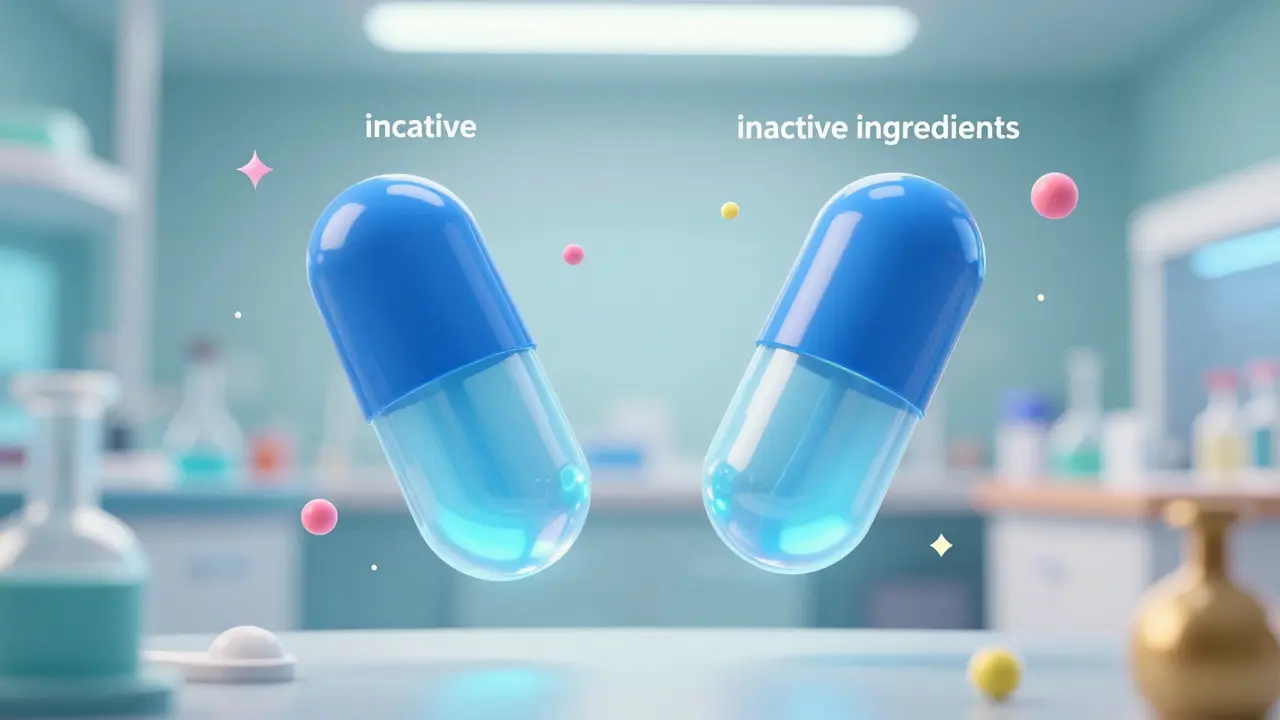
| Inactive Ingredients | Specific formula | May vary (fillers/colors) |
| Approval Path | Full New Drug Application (NDA) | Abbreviated (ANDA) |
| Cost | High (covers R&D) | Low (competitive pricing) |
| FDA Standards | Strict cGMP compliance | Strict cGMP compliance |
Are There Any Risks or Exceptions?
For 99% of people, generics are a no-brainer. However, there is a small category of medications called Narrow Therapeutic Index (NTI) drugs. These are medicines where a tiny change in the dose can be the difference between the drug working and it being toxic, or not working at all. Examples include warfarin (a blood thinner) or levothyroxine (for thyroid issues). Because these drugs are so sensitive, some doctors prefer you stay on one specific version-whether brand or generic-rather than switching back and forth. If you're taking an NTI drug, it's worth having a quick chat with your pharmacist before swapping. Another distinction is Biosimilars. These are the "generics" of the biological world (drugs made from living cells). Because biological molecules are far more complex than chemical ones, they can't be made *identical*. Instead, they are "highly similar." They still work, but they require more testing and usually don't offer as deep a price cut as traditional generics do.How the System Keeps Them Safe
Some people worry that because generics are cheaper, they are made in "lower quality" factories. In reality, the FDA holds generic manufacturers to the same Current Good Manufacturing Practices (cGMP) as the big brand names. Every year, the FDA conducts thousands of inspections globally. They check everything from the purity of the chemicals to the cleanliness of the air in the lab. If a factory isn't up to code, the drug doesn't hit the shelves. Furthermore, once a drug is on the market, it's subject to the same post-market surveillance. If a generic starts causing unexpected side effects, the FDA will flag it just as they would for a brand-name product.
The Big Picture: Impact on Your Wallet and Health
The economic impact of these drugs is staggering. In the US alone, generics make up over 90% of prescriptions filled. Despite this massive volume, they only account for about 13% of total drug spending. This means that generic competition has saved the healthcare system trillions of dollars over the last decade. When you choose a generic, you're not just saving your own money; you're helping lower the overall cost of healthcare for everyone. By removing the monopoly of the original patent holder, the market forces prices down, making life-saving medication accessible to people who otherwise couldn't afford it.Do generic drugs take longer to work than brand-name ones?
No. Because of the bioequivalence requirements, generic drugs must deliver the same amount of active ingredient into your bloodstream in the same amount of time as the brand-name version. You should feel the effects at the same speed.
Why does my generic medication look different from my brand name?
Trademark laws prevent generic drugs from looking exactly like the brand-name version. This is why they often have different colors, shapes, or flavors. These are caused by inactive ingredients (excipients) and do not affect how the medicine works.
Are generics safe if they are made in other countries?
Yes. Regardless of where the drug is manufactured, any company selling a generic in the US must follow FDA cGMP standards. The FDA conducts unannounced inspections of international facilities to ensure quality and purity.
What is an "authorized generic"?
An authorized generic is a version of the brand-name drug that the original company decides to sell as a generic. It is chemically identical to the brand-name product because it's made by the same company, but it is sold without the brand label.
Can my doctor forbid the pharmacy from using a generic?
Yes. If a doctor writes "Dispense as Written" (DAW) on your prescription, the pharmacist cannot substitute it with a generic. This is usually done if the doctor believes a specific patient reacts poorly to certain inactive ingredients in generics.