
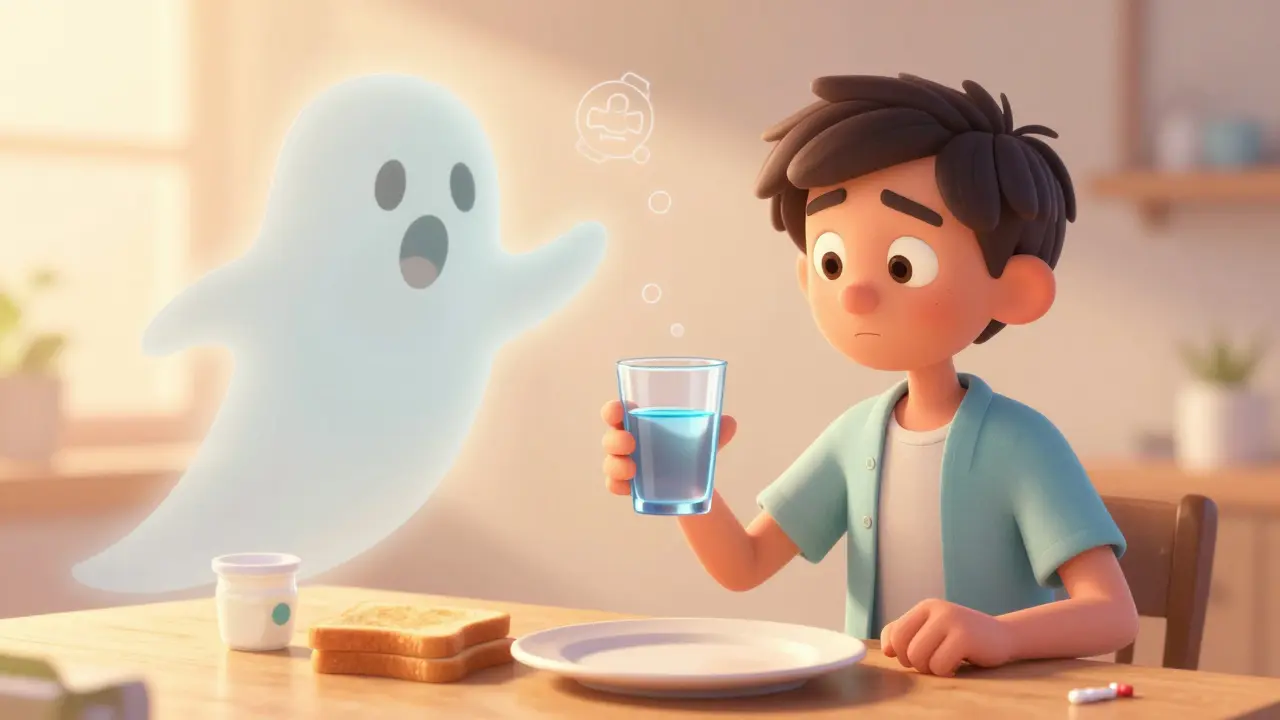
Have you ever taken a pill with breakfast and wondered why it didn’t seem to work as well? Or maybe you skipped a dose because you weren’t sure if you should take it with food or on an empty stomach. You’re not alone. Millions of people take medications every day without knowing how food changes what those drugs do in their body. And the consequences? They can be serious-treatment failure, side effects, even hospital visits.
Why Food Matters More Than You Think
Food isn’t just fuel. When you eat, your body shifts into digestion mode. Your stomach slows down, your intestines start absorbing nutrients, and your bile production ramps up. All of this affects how your medications move through your system. Take levothyroxine, the common thyroid medication. If you take it with your morning coffee and toast, your body absorbs 30-55% less of the drug. That’s not a small drop. It means your thyroid levels stay low, you keep feeling tired, and your doctor might wrongly think you need a higher dose. But if you take it with water, 30 minutes before breakfast, your body gets the full benefit. On the flip side, some drugs actually need food to work. Take griseofulvin, an antifungal used for nail infections. Without a fatty meal, your body absorbs barely half of it. With a high-fat meal-think eggs, avocado, or cheese-it absorbs up to three times more. That’s the difference between a treatment that fails and one that clears the infection.How Food Changes Drug Absorption
Food doesn’t just block or boost drugs-it changes the whole timing and path they take. Here’s how:- Slows gastric emptying: A meal delays how fast your stomach empties into your small intestine, where most drugs get absorbed. A high-fat meal can push that delay from 30 minutes to over 2 hours.
- Changes pH levels: Stomach acid drops after eating. Drugs like itraconazole need acid to dissolve. A high-fat meal can raise pH from 1.5 to 3.5, cutting absorption by 40%.
- Boosts solubility: Fats help dissolve oily drugs. Griseofulvin, itraconazole, and some HIV meds need fat to be absorbed properly.
- Creates chemical bonds: Calcium in dairy, iron in supplements, and even magnesium in antacids can bind to antibiotics like tetracycline and doxycycline. That prevents absorption-sometimes by 75%.
- Stimulates bile flow: Bile helps absorb fat-soluble drugs. Food triggers bile release, which can help or hurt depending on the drug.
The FDA tests all new drugs against a standardized high-fat meal-800 to 1,000 calories, with half the calories from fat-to see how food changes absorption. If a drug’s blood levels change by more than 20%, the label gets a warning.
When to Take Your Pills: The Rules
Not all medications work the same way. Here’s what you need to know:Take on an Empty Stomach
These drugs need your stomach to be empty-no food, no coffee, no supplements-for at least one hour before and two hours after taking them:- Levothyroxine (thyroid): Food cuts absorption by up to 55%. Take with water, 30-60 minutes before breakfast.
- Tetracycline and doxycycline (antibiotics): Calcium, iron, and antacids bind to them. Avoid dairy, antacids, and iron pills for 2-3 hours before and after.
- Alendronate (osteoporosis): Must be taken with plain water only, 30 minutes before eating. Food or juice can cause stomach damage.
- Semaglutide (diabetes/weight loss): Food reduces absorption by 44%. Wait at least 30 minutes after taking before eating.
Take With Food
These drugs work better-or are less harsh-when taken with a meal:- Nitrofurantoin (urinary tract antibiotic): Absorption increases by 40% with food. Reduces nausea too.
- Cefpodoxime (antibiotic): Absorption jumps 50-60% with food.
- Glipizide (diabetes): Must be taken 30 minutes before a meal. Taking it on an empty stomach can drop blood sugar below 70 mg/dL, causing dizziness, shaking, or fainting.
- NSAIDs like ibuprofen: Taking them with food cuts stomach irritation from 42% to 12%. But enteric-coated versions can be taken without food.
- Some HIV meds (e.g., atazanavir, rilpivirine): Need a meal of at least 200-300 calories to work. A snack like yogurt or a banana is enough.
Take With or After Food
These are flexible. Food helps reduce side effects, but doesn’t always boost absorption:- Metformin (diabetes): Taking with food reduces nausea and diarrhea.
- Statins like atorvastatin: Can be taken with or without food. Consistency matters more than timing.
- Antidepressants like sertraline: Food reduces stomach upset but doesn’t change overall effect.

What Happens When You Get It Wrong
Skipping the food rule isn’t just a mistake-it’s a health risk. A 2022 study found that 30% of treatment failures for certain drugs happened because people took them with or without food incorrectly. Here’s what that looks like in real life:- A man took doxycycline with his yogurt every morning. His UTI came back three times. He only fixed it after switching to taking the pill two hours before breakfast.
- A woman on levothyroxine felt fine-until her doctor checked her TSH levels. They were sky-high. She was taking it with her morning smoothie. After switching to water-only, her levels normalized in six weeks.
- A diabetic patient took glipizide before bed because he forgot to take it before dinner. He woke up sweating, shaky, and confused-his blood sugar had crashed to 52 mg/dL.
These aren’t rare cases. On patient forums, 62% of people taking levothyroxine admit they struggle with the empty stomach rule. And 45% of patients misunderstand “take with food”-thinking it means a full meal, when a small snack is enough.
How to Get It Right Every Time
Here’s how to avoid mistakes:- Read the label: Look for “take on empty stomach,” “take with food,” or “take with a meal.” If it’s unclear, ask your pharmacist.
- Use reminders: Apps like Medisafe or MyTherapy let you set alerts for medication timing. Users who use them see 27% fewer timing errors.
- Keep a log: Write down when you take your pills and what you ate. If you feel off, you’ll know if food timing is the issue.
- Ask your pharmacist: They’re trained to spot food-drug interactions. Don’t wait until your next doctor visit-ask when you pick up your prescription.
- Don’t mix with supplements: Calcium, iron, zinc, and magnesium can block antibiotics and thyroid meds. Take them at least 2-4 hours apart.
What’s Changing in 2026
The rules aren’t static. In 2024, the American Society of Health-System Pharmacists updated guidelines to replace vague terms like “with food” with precise language: “within 30 minutes of starting a meal” or “minimum 60 minutes before first meal.” New research is even more personal. A 2023 Lancet study showed that timing levothyroxine based on your individual gastric emptying rate-measured with a breath test-improved outcomes by 22%. And companies like Medtronic are testing ingestible sensors that track stomach pH in real time to guide when to take meds. Also, the FDA now requires food-effect testing using plant-based and gluten-free meals. That’s because diets have changed. A high-fat meal isn’t just bacon and eggs anymore-it could be avocado toast or a tofu stir-fry with coconut oil.Who’s at Highest Risk?
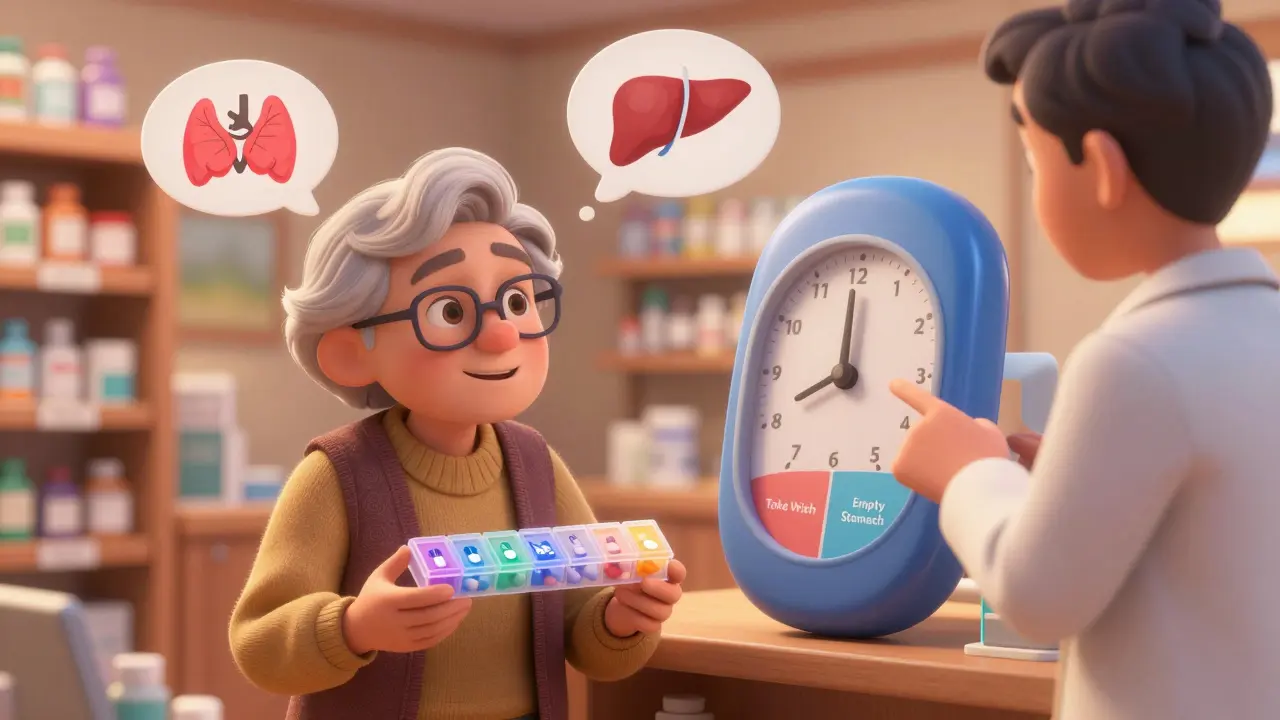
Older adults take the most medications. In 2022, 44% of people over 65 took five or more drugs daily. By 2030, that number will hit 55%. Each extra pill adds another chance for a food-drug conflict. People on multiple meds for chronic conditions-diabetes, heart disease, thyroid issues-are especially vulnerable. The same meal that helps one drug might hurt another. That’s why coordination between doctors, pharmacists, and patients is critical.Bottom Line: Timing Is Everything
Your medication doesn’t work in a vacuum. It works in your body-and your body reacts to food. Getting the timing right isn’t about being perfect. It’s about being consistent. If you take a pill with food, always take it with food. If you take it on an empty stomach, stick to water and wait. Small changes like these prevent big problems: failed treatments, side effects, ER visits, and unnecessary dose increases. And remember: if you’re unsure, ask. Your pharmacist is your best resource. They don’t just fill prescriptions-they help you take them right.Can I take my medication with coffee or juice?
It depends. Coffee and juice can interfere with absorption. Grapefruit juice can block enzymes that break down certain drugs, leading to dangerous buildup. Orange juice can reduce absorption of antibiotics like ciprofloxacin. For most medications, water is the safest choice unless your doctor says otherwise.
What if I forget to take my pill on an empty stomach?
If you realize within 30 minutes, take it now with water. If it’s been longer, wait until your next scheduled dose. Don’t double up. For critical drugs like levothyroxine, missing the timing means you’ll need a blood test to check levels. For others, it’s less urgent-but still worth avoiding.
Does it matter what kind of food I eat?
Yes. High-fat meals delay absorption and boost fat-soluble drugs. Calcium-rich foods block antibiotics. Fiber can slow down some meds. For drugs that require food, a small snack with 200-300 calories is often enough-no need for a full meal. Check your drug’s label or ask your pharmacist for specifics.
Can I take all my pills at once with breakfast?
No. Many drugs conflict with each other and with food. For example, taking levothyroxine with calcium or iron supplements can cancel out both. Always space out meds unless your doctor or pharmacist says it’s safe. Use a pill organizer with time slots to avoid mixing.
Why do some drugs say "take with food" and others "take on an empty stomach"?
It’s about how the drug is absorbed. Some need stomach acid or a fatty environment to dissolve. Others get blocked by food or cause stomach upset. The FDA tests each drug with meals to see how it behaves. The label reflects those results to ensure safety and effectiveness.
steve rumsford
January 7, 2026 AT 13:58LALITA KUDIYA
January 9, 2026 AT 05:59Poppy Newman
January 10, 2026 AT 23:51Anthony Capunong
January 12, 2026 AT 22:46Ayodeji Williams
January 14, 2026 AT 21:04Kyle King
January 15, 2026 AT 11:30Kamlesh Chauhan
January 16, 2026 AT 06:36Mina Murray
January 18, 2026 AT 04:17Rachel Steward
January 18, 2026 AT 12:50Christine Joy Chicano
January 19, 2026 AT 21:25Anastasia Novak
January 21, 2026 AT 13:38Jonathan Larson
January 22, 2026 AT 14:17Alex Danner
January 24, 2026 AT 00:21Vince Nairn
January 24, 2026 AT 13:24Katrina Morris
January 25, 2026 AT 12:54