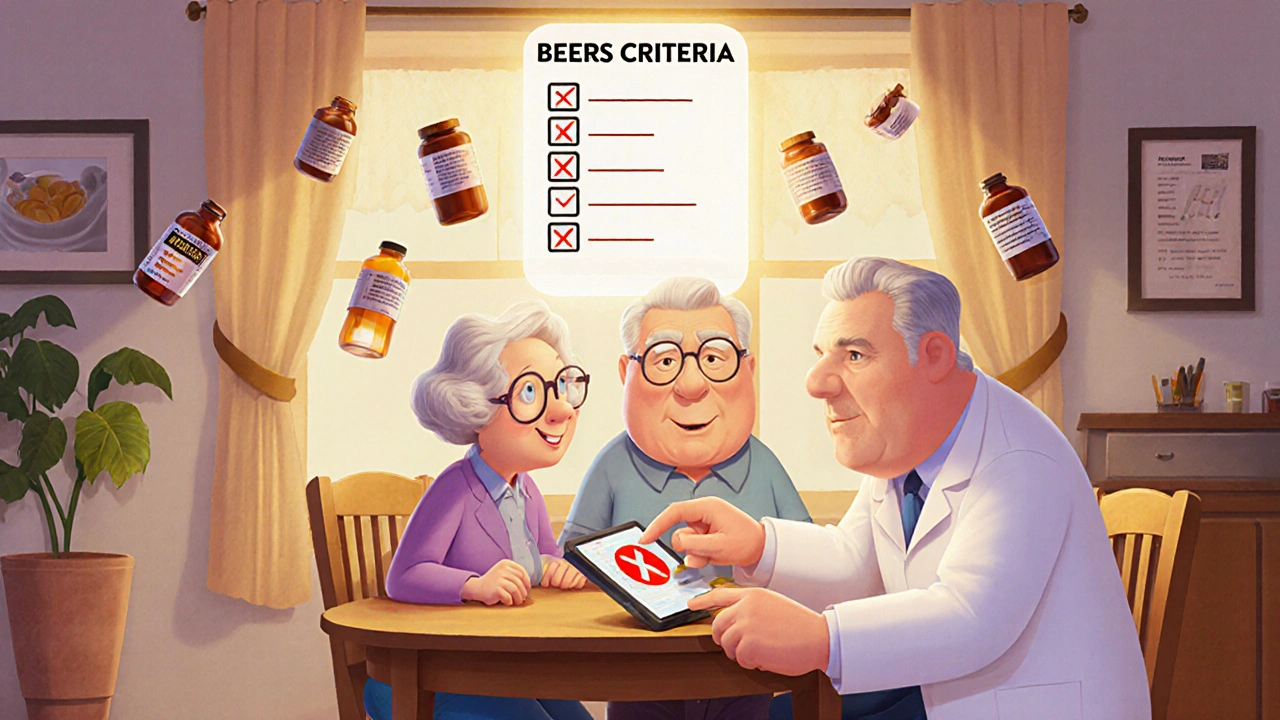
Beers Criteria: Medications to Avoid in Seniors and Why It Matters
When you’re over 65, your body doesn’t process drugs the same way it did at 30. That’s where the Beers Criteria, a regularly updated list of medications that pose higher risks than benefits for older adults. Also known as Beers List, it’s not a ban—it’s a warning system built by experts to stop common, preventable harm. Every year, thousands of seniors end up in the ER because of drugs that were supposed to help. Many of those drugs are still prescribed because doctors don’t always know they’re risky for older bodies. The Beers Criteria changes that by naming the offenders: drugs that can cause falls, confusion, kidney damage, or even death in people over 65.
This isn’t just about one drug. It’s about polypharmacy, the use of multiple medications at once, which multiplies the chance of dangerous interactions. A senior might take a sleep aid, a painkiller, a blood pressure pill, and an antihistamine for allergies—all perfectly fine alone, but together they can slow breathing, blur vision, or drop blood pressure too low. The drug interactions, when two or more medicines react in harmful ways inside the body listed in the Beers Criteria aren’t rare. They’re routine. And they’re avoidable. That’s why pharmacists and geriatricians now use it as a checklist before writing a new script. It’s also why you should ask your pharmacist: "Is this on the Beers List?"
The list doesn’t just say "don’t use"—it tells you why. For example, diphenhydramine (Benadryl) is flagged because it blocks acetylcholine, a brain chemical that helps with memory and focus. In older adults, that blockage doesn’t just cause drowsiness—it can trigger delirium that lasts for weeks. Or consider long-acting benzodiazepines like diazepam: they stick around in aging livers, leaving seniors groggy, unsteady, and prone to fractures. Even common NSAIDs like ibuprofen, which you might think are harmless, can wreck kidneys or cause internal bleeding in seniors, especially if they’re already on blood thinners. The Beers Criteria points these out so you don’t have to guess.
What you’ll find in the posts below are real-world examples of how these risks show up. You’ll see how NSAIDs quietly damage kidneys, how sleep aids increase fall risk, and how antihistamines mess with cognition without making you feel sleepy. You’ll read about how pill packs help seniors avoid mixing dangerous combos, how remote monitoring tools catch side effects before they become emergencies, and how pharmacists work with doctors to swap out risky drugs for safer ones. These aren’t theoretical concerns—they’re daily decisions that shape whether someone stays independent or ends up in the hospital.