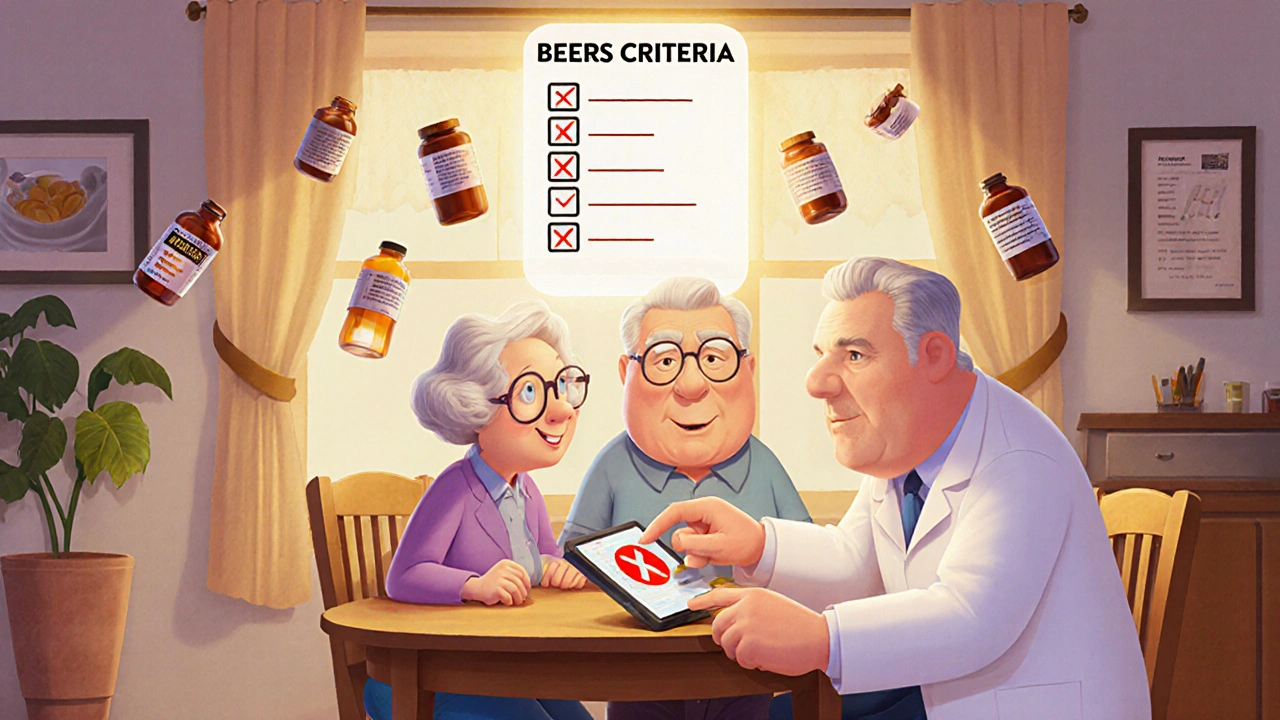
AGS Beers Criteria: Medications to Avoid in Seniors and What to Use Instead
When it comes to medications for older adults, not all drugs are created equal. The AGS Beers Criteria, a widely used list of potentially inappropriate medications for adults 65 and older, developed by the American Geriatrics Society is your go-to guide for spotting drugs that do more harm than good in seniors. It’s not about banning medications—it’s about replacing risky ones with safer alternatives that actually work for aging bodies. Many of these drugs were fine when you were 40, but at 75, your kidneys, liver, and brain process them differently—and sometimes dangerously.
Why does this matter? Because nearly 40% of older adults take at least one medication on the AGS Beers Criteria list. Think benzodiazepines for sleep, anticholinergics for overactive bladder, or NSAIDs for joint pain. These drugs can cause confusion, falls, kidney damage, or even hospitalization. The polypharmacy in seniors problem isn’t just about taking too many pills—it’s about taking the wrong ones. The geriatric drug risks listed in the Beers Criteria aren’t theoretical. They’re backed by real data from hospital records, clinical trials, and decades of patient outcomes. For example, diphenhydramine (Benadryl) might seem harmless for allergies or sleep, but it’s a major contributor to delirium in older adults. And while it’s easy to blame the patient for forgetting doses, the real issue is often the medication itself.
The good news? Every risky drug on the list has a safer alternative. Instead of sleeping pills like zolpidem, try melatonin or sleep hygiene fixes. For bladder issues, behavioral changes or mirabegron often work better than oxybutynin. For pain, acetaminophen or topical NSAIDs reduce systemic risk. The inappropriate medications elderly list isn’t meant to scare you—it’s meant to empower you and your provider to make smarter choices. What you’ll find below are real-world posts that dig into these exact problems: how NSAIDs hurt kidneys in older patients, why certain antihistamines cause falls, how pill packs help seniors avoid dangerous mixes, and how remote monitoring tools catch side effects before they become emergencies. These aren’t abstract guidelines—they’re daily decisions that keep people out of the ER and living independently longer.