

Steroid Insulin Adjustment Calculator
What Is Steroid Hyperglycemia?
When you take steroids - like prednisone, hydrocortisone, or dexamethasone - for conditions like asthma, rheumatoid arthritis, or after an organ transplant, your blood sugar can spike. This isn’t just a side effect. It’s a well-documented condition called steroid hyperglycemia, or steroid-induced diabetes. Even people without prior diabetes can develop it. For those already living with type 2 diabetes, steroids can make blood sugar control much harder - sometimes requiring a 50% or higher increase in insulin.
The problem isn’t just high numbers on a glucometer. Uncontrolled hyperglycemia during steroid therapy can lead to dehydration, ketoacidosis, infections, and longer hospital stays. And here’s the tricky part: it doesn’t always show up in fasting glucose. Steroids mainly cause spikes after meals, especially breakfast and lunch, because they peak in your system 4 to 8 hours after you take them.
Why Steroids Raise Blood Sugar
Steroids don’t just make your body ignore insulin - they actively fight it. Here’s how:
- Insulin resistance: Steroids block insulin’s ability to help muscle and fat cells take in glucose. Your cells become less responsive, so sugar stays in your blood.
- Increased liver sugar production: Your liver starts pumping out more glucose, even when you don’t need it.
- Reduced insulin secretion: Steroids suppress the pancreas’s ability to release insulin, especially after eating.
- Counter-hormone surge: They boost glucagon, epinephrine, and cortisol - hormones that naturally raise blood sugar.
This isn’t theoretical. Studies show over 50% of patients on high-dose steroids develop hyperglycemia. In one study of 11,855 people, those taking 120 mg or more of hydrocortisone daily had over 10 times the risk of needing insulin compared to those not on steroids.
Who’s Most at Risk?
Not everyone on steroids develops high blood sugar. But some people are far more likely to:
- Have pre-existing diabetes (especially type 2)
- Be over 65 years old
- Have a BMI over 30
- Take steroids for more than 7 days
- Use high doses - 20 mg or more of prednisone daily
- Take other immunosuppressants like tacrolimus (common after transplants)
- Have low magnesium levels or chronic hepatitis C
If you’re on long-term steroids and have even one of these risk factors, you’re not just at risk - you’re in the high-risk zone. That means you need a proactive plan, not a reactive one.
How Insulin Needs Change
Insulin isn’t one-size-fits-all during steroid therapy. Your needs change based on the type, dose, and timing of the steroid.
For example:
- If you’re on prednisone (once-daily morning dose), your blood sugar peaks 4-8 hours later - so breakfast and lunch become the critical times to adjust insulin.
- If you’re on hydrocortisone (taken 3-4 times daily), you’ll need more frequent insulin adjustments because it wears off faster.
- If you’re on dexamethasone (long-acting), the effect lasts 2-3 days, so insulin adjustments need to be more gradual and sustained.
Here’s what experts recommend:
- For patients with pre-existing diabetes, insulin requirements typically increase by 30-50% when starting moderate-dose steroids (≥20 mg prednisone).
- For new-onset steroid hyperglycemia, basal-bolus insulin (long-acting + rapid-acting) is far better than sliding scale alone. Sliding scale just reacts - it doesn’t prevent spikes.
- Basal insulin (like glargine or detemir) should go up by 20-30%.
- Prandial insulin (like lispro or aspart) should increase by 50-100%, especially for meals eaten 4-8 hours after steroid dosing.
At Great Ormond Street Hospital, pediatric patients on 1-2 mg/kg/day prednisolone needed 25-40% more total daily insulin - mostly in the form of mealtime doses. This isn’t rare. Reddit users with diabetes report similar patterns: 89% needed 30-100% more insulin during steroid courses.
Monitoring: What to Check and When
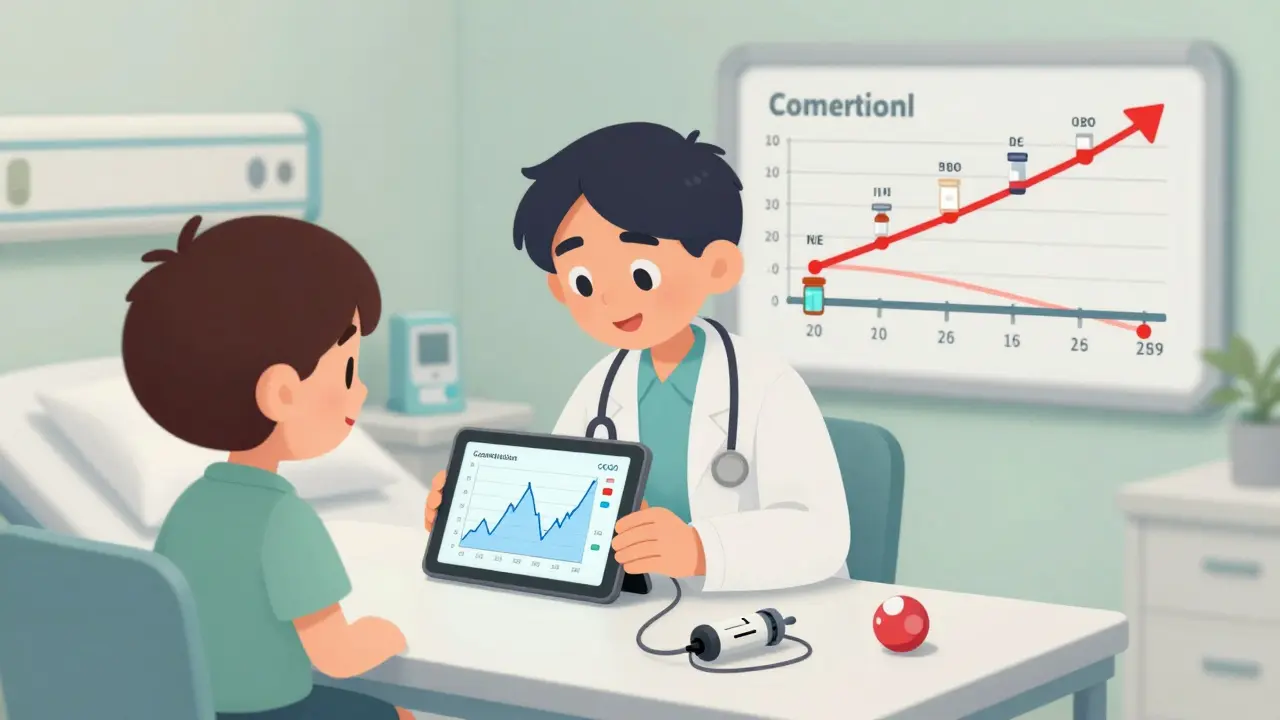
Checking blood sugar once a day won’t cut it. You need to track patterns.
The Endocrine Society recommends:
- At least 4 checks daily when starting steroids ≥20 mg prednisone equivalent: fasting, 2 hours after breakfast, 2 hours after lunch, and bedtime.
- Up to 6-8 checks daily if glucose is above 140 mg/dL.
- Focus on post-meal numbers, not just fasting. Steroid spikes are hidden if you only check fasting glucose.
Continuous glucose monitors (CGMs) are game-changers. A Dexcom case series found CGM users adjusted insulin doses 37% more accurately than those using fingersticks. Why? Because CGMs show you the rise and fall in real time - not just a snapshot.
The Tapering Trap: Why Stopping Steroids Can Cause Hypoglycemia
This is where most mistakes happen. People think, “I’m done with steroids, so my insulin can go back to normal.” But insulin doesn’t turn off automatically.
When steroid levels drop, insulin resistance drops too - fast. If your insulin dose hasn’t been reduced, you’re at high risk for dangerous low blood sugar.
Studies show:
- 22% of patients experience hypoglycemia during steroid tapering because insulin wasn’t adjusted down.
- 18% of hospital readmissions within 30 days of stopping steroids were due to hypoglycemia from unchanged insulin regimens.
Here’s how to avoid it:
- Start reducing insulin as soon as steroid dose drops.
- For every 10 mg reduction in prednisone equivalent, reduce total daily insulin by 10-20%.
- Reduce prandial insulin first - it’s more sensitive to changes in steroid levels.
- Monitor closely for 7-10 days after the last steroid dose.
One patient on Reddit shared: “I dropped my prednisone from 40 mg to 10 mg over 3 weeks. I didn’t change my insulin. I passed out at work on day 2 of the taper. That was scary.”
What About Oral Medications?
Metformin? GLP-1 agonists? SGLT2 inhibitors? Most oral drugs are ineffective during steroid hyperglycemia.
- Metformin: Helps with insulin resistance but doesn’t handle the massive glucose surge from steroids. Often used as a backup, not the main tool.
- GLP-1 agonists (like semaglutide): Can help, but may not be strong enough for high-dose steroid cases. Also, nausea can worsen with steroid-induced GI issues.
- SGLT2 inhibitors (like empagliflozin): Risk of euglycemic DKA increases with steroid use. Avoid.
- Insulin is the gold standard. It’s predictable, adjustable, and doesn’t rely on your body’s ability to respond.
Unless you’re on very low-dose steroids for a short time (under 7 days), insulin is almost always needed.
Technology Is Helping - But Not Everywhere
Some hospitals now use decision-support tools like the EndoTool System or Glytec’s eGlucose Management System. These tools use steroid dose, timing, and glucose trends to suggest insulin doses.
Results speak for themselves:
- 27% fewer hyperglycemia episodes with these tools.
- 33% fewer hypoglycemia events during tapering.
- Machine learning algorithms can now predict insulin needs with 85% accuracy using steroid dose, BMI, and baseline HbA1c.
But here’s the gap: 75% of primary care clinics still don’t have protocols for managing steroid hyperglycemia. Most patients are sent home with the same insulin dose they had before - and told to “watch their sugar.” That’s not enough.
Key Takeaways
- Steroid hyperglycemia is common, predictable, and dangerous if ignored.
- Insulin requirements increase by 30-50% with moderate steroid doses - sometimes much more.
- Post-meal glucose matters more than fasting glucose.
- Basal-bolus insulin is better than sliding scale.
- Always reduce insulin during steroid tapering - don’t wait.
- CGMs improve accuracy by 37% compared to fingersticks.
- Oral diabetes meds rarely work well during steroid therapy.
Frequently Asked Questions
Can you get steroid-induced diabetes if you don’t have diabetes?
Yes. Steroid-induced diabetes (SIDM) can occur in people with no prior history of diabetes. Studies show that up to 40% of patients on high-dose steroids develop hyperglycemia severe enough to require insulin - even if they were never diagnosed before. This is why hospitals now screen all patients on steroids for blood sugar changes, regardless of their diabetes history.
How long does steroid-induced hyperglycemia last?
It lasts as long as the steroid is active in your system - but the effects linger. For short-acting steroids like prednisone, blood sugar usually returns to baseline within 3-7 days after stopping. For long-acting steroids like dexamethasone, it can take 10-14 days. However, if your pancreas was stressed or you had pre-existing insulin resistance, it may take weeks or months for glucose control to fully normalize. Some patients develop permanent type 2 diabetes after prolonged steroid use.
Should I stop my diabetes meds when starting steroids?
No. Never stop your diabetes medications without medical supervision. For most people, insulin is added on top of existing oral meds - not instead of them. However, some drugs like SGLT2 inhibitors (e.g., Jardiance) should be paused because they increase the risk of ketoacidosis during steroid use. Always consult your provider before making changes.
Is it safe to use insulin during steroid therapy?
Yes - insulin is the safest and most effective treatment for steroid hyperglycemia. It doesn’t interact with steroids and can be precisely adjusted. The real danger isn’t using insulin - it’s under-dosing it or failing to reduce it during tapering. Insulin prevents complications like dehydration, infections, and diabetic ketoacidosis.
What’s the best way to monitor blood sugar during steroid therapy?
Use a continuous glucose monitor (CGM) if possible. If not, check your blood sugar at least four times a day: fasting, 2 hours after breakfast, 2 hours after lunch, and before bed. Don’t rely on fasting numbers alone - steroid spikes happen after meals. Record each reading and the time you took your steroid. This pattern helps your provider adjust your insulin correctly.
Alex Arcilla
March 23, 2026 AT 23:06Jefferson Moratin
March 24, 2026 AT 10:06Caroline Dennis
March 25, 2026 AT 16:36Zola Parker
March 26, 2026 AT 08:28florence matthews
March 27, 2026 AT 23:32Kenneth Jones
March 28, 2026 AT 22:28Mihir Patel
March 30, 2026 AT 19:11Kevin Y.
April 1, 2026 AT 05:19