
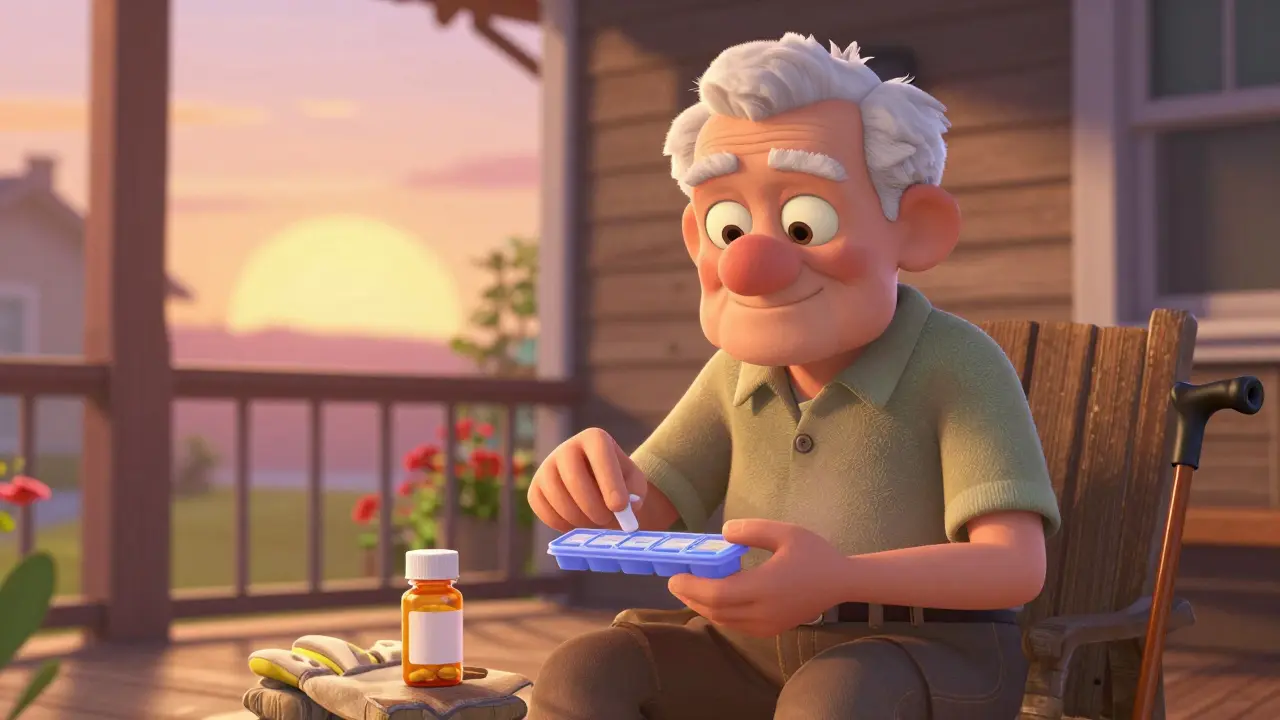
Statin Discontinuation Risk Calculator
This tool helps assess whether stopping statins might be appropriate based on your health status, following current medical guidelines. It is not a substitute for medical advice.
Your Risk Assessment
Recommendation
Based on your current health status, stopping statins may be associated with significant risks. Continuing statins is likely to provide more benefit than harm for your situation.
Why this result?
You have a history of heart attack/stroke (secondary prevention) - statins are particularly beneficial for this group.
Your life expectancy is limited ( years).
You have multiple health conditions that increase your risk of adverse events.
Stopping statins isn’t as simple as just skipping a pill. For millions of people, these drugs have become a routine part of daily life - like brushing teeth or taking a multivitamin. But what happens when the reasons for taking them change? What if you’re older, sicker, or just tired of the side effects? The truth is, statin discontinuation is more common than most doctors admit, and doing it without a plan can be risky.
Why Do People Stop Statins?
Nearly one in five people who take statins stop them for at least a year. That’s not just a few outliers - it’s a widespread pattern. The biggest reason? Muscle pain. Not everyone gets it, but for those who do, it’s often enough to quit. People report soreness, weakness, or cramps that make walking, climbing stairs, or even getting out of bed hard. Some blame the statin. Others worry they’re developing diabetes, or they’ve heard rumors about liver damage. Fear drives more discontinuations than actual side effects. Hospital stays, nursing home admissions, or a new cancer diagnosis also push people off statins - not because the drug stops working, but because priorities shift. When you’re facing a serious illness, managing dozens of pills becomes a burden. Doctors may not bring it up, but patients often feel pressured to keep taking everything, even when it no longer makes sense.When Is It Safe to Stop?
Not everyone needs statins forever. The key is understanding your risk level. If you’ve had a heart attack, stroke, or bypass surgery - that’s secondary prevention. Stopping statins here is dangerous. Research shows you’re 1 in 77 likely to have another major heart event each year if you quit. That’s not a small risk. For these patients, the benefits are clear: statins save lives. But if you’ve never had heart disease? That’s primary prevention. Here, the numbers are more nuanced. Stopping increases your risk too - about 1 in 112 per year. But for older adults with multiple health problems, limited life expectancy, or frailty, the math changes. If you’re not expected to live two more years, continuing statins may do more harm than good. The extra pills, the side effects, the constant monitoring - they add up. Studies show no increase in death risk when statins are stopped near end-of-life. In fact, many patients feel better without them. The American Geriatrics Society now recommends considering statin discontinuation in older adults with poor health, dementia, or advanced cancer. It’s not about giving up - it’s about choosing quality over quantity.What Happens When You Stop?
Your cholesterol will rise again. That’s normal. Statins work by blocking cholesterol production. Take them away, and your liver goes back to making more. But rising numbers don’t always mean danger. For someone with advanced heart failure or terminal cancer, a cholesterol level of 200 mg/dL isn’t the enemy - the disease is. For a healthy 70-year-old with no other conditions, a sudden jump might be worth monitoring. The real issue isn’t the number on the lab slip - it’s your overall health, your symptoms, and your goals. Some people report feeling stronger, sleeping better, or having less pain after stopping. That’s not placebo. Muscle-related side effects often vanish within weeks. Others feel anxious. They worry they’re throwing away years of protection. That’s valid. That’s why stopping shouldn’t be done alone.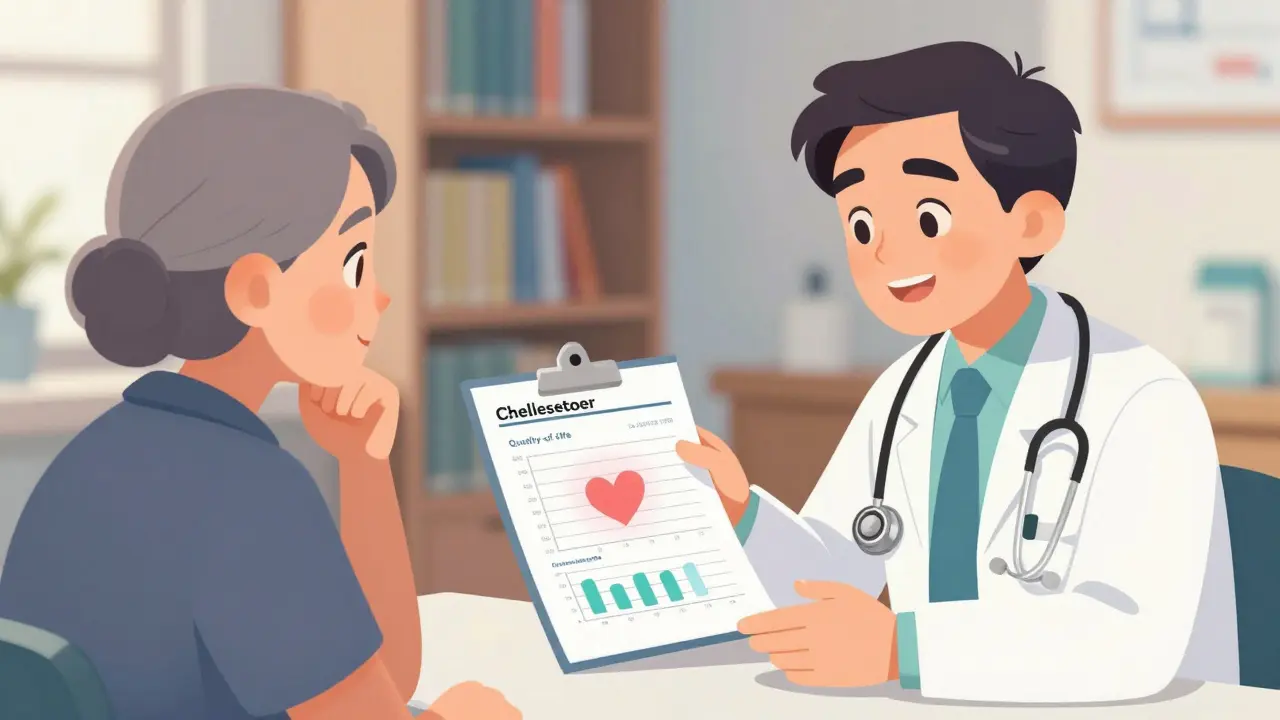
How to Stop Safely
Never just quit cold turkey unless your doctor says so. Here’s how to do it right:- Talk to your doctor first. Don’t assume they know you want to stop. Bring up your concerns - muscle pain, fatigue, or just feeling overwhelmed by pills.
- Review your risk. Are you in primary or secondary prevention? Do you have diabetes, high blood pressure, or a family history? Your risk profile matters more than your age.
- Consider alternatives. If muscle pain is the issue, switching to a different statin (like pravastatin or fluvastatin) at a lower dose often helps. Some patients do well on intermittent dosing - taking the pill every other day or twice a week.
- Try non-statin options. Ezetimibe lowers cholesterol without muscle side effects. PCSK9 inhibitors work well but cost thousands a year. Fibrates or omega-3s may help in some cases, but they’re not magic bullets.
- Monitor after stopping. Get your cholesterol checked in 4-6 weeks. Watch for chest pain, shortness of breath, or unusual fatigue. These could signal a problem.
- Document why you stopped. If your chart says “no longer necessary,” it hides the real reason. Make sure your doctor writes down “muscle pain,” “end-of-life care,” or “patient preference.” That helps future providers understand your history.
Who Should Never Stop?
Some people are at too high a risk to quit:- Anyone who’s had a heart attack, stroke, or stent placement in the last 5 years
- People with familial hypercholesterolemia - a genetic condition that causes extremely high cholesterol from birth
- Those with diabetes and additional risk factors like high blood pressure or smoking
- Patients under 75 with no major illnesses and a life expectancy over 10 years
What About the Ongoing Research?
A major study called Discontinuing Statins in Multimorbid Older Adults is wrapping up in 2025. It’s tracking 1,800 people over 70 with multiple chronic conditions but no heart disease. Half kept statins. Half stopped. Researchers are measuring not just heart attacks, but quality of life, muscle strength, falls, and daily function. Early signals suggest that for many older adults with frailty or dementia, stopping statins doesn’t increase heart events - and may improve how they feel day to day. This could change guidelines for millions.Real Talk: What Patients Are Saying
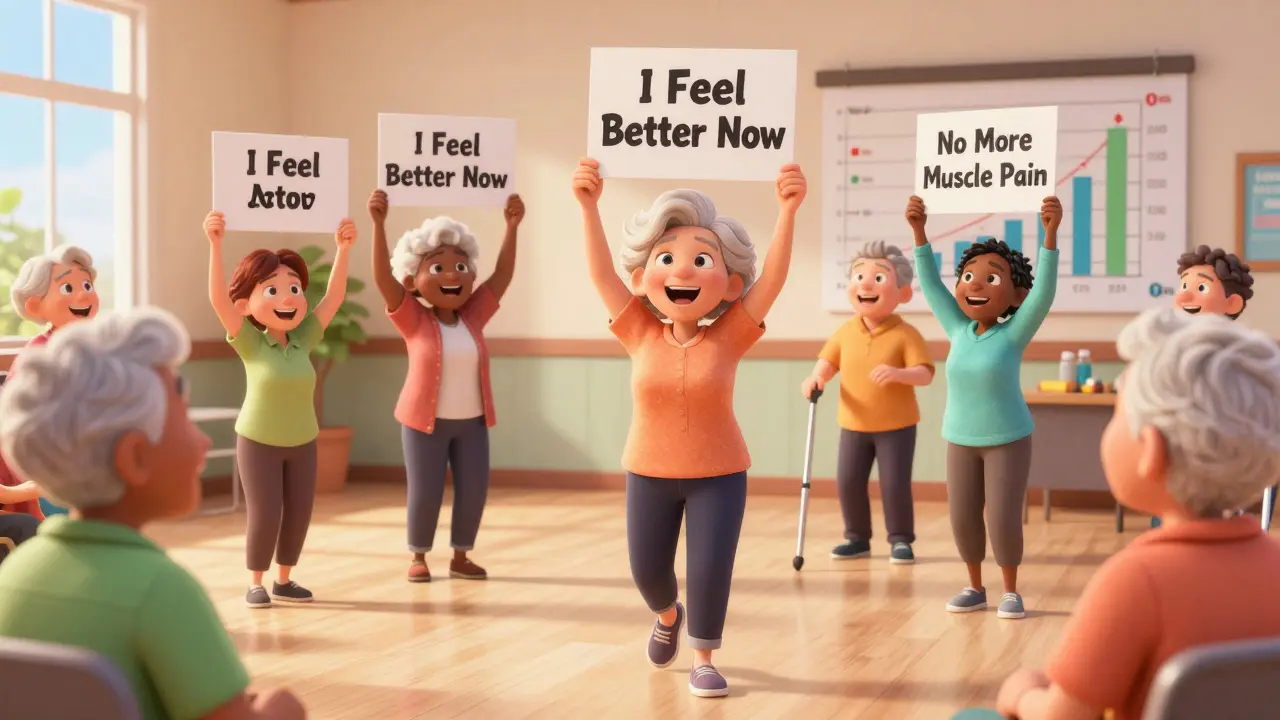
Online forums are full of stories. One man in his 80s with COPD and arthritis stopped his statin after 12 years. His leg pain vanished. He started walking again. He didn’t have a heart event. Another woman with kidney disease and depression quit after her doctor said it was okay. She sleeps better now. No more headaches. But there are also stories of regret. A woman in her 60s stopped because she was scared of side effects. Six months later, she had a stroke. Her doctor hadn’t explained her risk properly. She blames herself. She shouldn’t have. The pattern? People who stop with support and understanding do better. Those who quit out of fear or confusion pay the price.The Bigger Picture
Statins are one of the most prescribed drugs in the world. Billions are spent on them every year. But medicine isn’t just about adding pills - it’s about removing them when they no longer serve you. Too often, doctors keep prescribing because it’s easier than having the hard conversation. Patients keep taking because they don’t know they can stop. But deprescribing - the careful removal of unnecessary meds - is now recognized as a vital part of good care, especially for older adults. It’s not about rejecting medicine. It’s about using it wisely. If you’re on statins and wondering if you still need them, ask your doctor. Bring this article. Ask: “Based on my health right now, does this pill still help me live better?” The answer might surprise you - and it might change your life.Can I stop statins if I feel fine?
Feeling fine doesn’t mean you still need the drug. If you’re over 75, have multiple chronic illnesses, or a life expectancy under two years, continuing statins may add more burden than benefit. Talk to your doctor about your overall health goals, not just your cholesterol numbers.
What if my cholesterol goes up after stopping?
Cholesterol will rise - that’s expected. The question is whether that increase puts you at real risk. For someone with advanced cancer or dementia, a higher cholesterol level won’t change their outcome. For younger, healthier people, your doctor may suggest monitoring or alternative treatments. Don’t panic - just follow up.
Are there safe alternatives to statins?
Yes, but they’re not perfect. Ezetimibe is a good option for lowering cholesterol without muscle side effects. PCSK9 inhibitors work well but are expensive. Fibrates and omega-3s help some people, but they don’t reduce heart attacks like statins do. Lifestyle changes - diet, exercise, quitting smoking - are always important, but they rarely replace statins for high-risk patients.
Can I restart statins if I stop and then change my mind?
Yes, you can restart - but it’s not always easy. If you stopped because of muscle pain, you might have the same issue again. Your doctor may start you on a lower dose or switch you to a different statin. Don’t assume you can just go back to your old dose - your body may react differently now.
Is it dangerous to stop statins suddenly?
Stopping suddenly isn’t life-threatening like quitting blood pressure meds can be. But for people with established heart disease, stopping abruptly increases the risk of a heart attack or stroke in the months that follow. Always work with your doctor to make a plan - even if you’re stopping for side effects.
Do statins cause long-term damage?
No. Statins don’t cause permanent liver, kidney, or muscle damage in most people. Muscle pain usually goes away within weeks of stopping. Liver enzyme changes are common but rarely serious. The real risk isn’t damage - it’s missing out on protection if you’re still at high risk for heart disease.
How often should I review whether I still need statins?
At least once a year, especially after age 70 or if your health changes. If you’ve been diagnosed with cancer, dementia, or heart failure, or if you’ve moved into a care home - that’s a clear signal to reevaluate. Your needs today aren’t the same as they were five years ago.
Martin Spedding
December 17, 2025 AT 21:22statins r just big pharma’s way of makin’ us dependent on pills lmao. my uncle took ‘em for 10 yrs, then stopped, now he hikes every weekend. cholesterol? who cares. he’s alive, ain’t he?
Raven C
December 19, 2025 AT 17:44One must consider, with the utmost gravity, the pharmacoeconomic implications of deprescribing in an aging population-particularly when one’s risk-benefit calculus is muddied by anecdotal narratives masquerading as evidence. The data, when properly contextualized, reveals a far more nuanced reality than the emotionally charged testimonials suggest.
CAROL MUTISO
December 21, 2025 AT 12:02Wow. So we’re just supposed to trust that a cholesterol number is the enemy? 😏 I mean, my grandma stopped statins after her diagnosis, started eating tacos again, and now she’s the one teaching yoga at the senior center. The real villain? The medical system that treats people like walking lab reports. 🙃
Also-side note: if your doctor doesn’t ask you what kind of life you want to live, not just how long, they’re not your doctor. They’re a pill dispenser.
Donna Packard
December 22, 2025 AT 01:28I’m so glad this article exists. My mom stopped her statin last year after talking to her geriatrician. She said she felt like a person again-not a list of numbers. No more muscle aches, no more midnight panic about liver enzymes. Just… peace. 💛
Patrick A. Ck. Trip
December 23, 2025 AT 01:57It is important to recognize that the decision to discontinue statin therapy must be undertaken with a high degree of clinical deliberation, particularly in light of the robust longitudinal evidence supporting their efficacy in primary and secondary prevention. While patient autonomy is paramount, it must be balanced against evidence-based risk stratification. I would recommend, in all cases, a shared decision-making model informed by updated guidelines.
Jessica Salgado
December 24, 2025 AT 06:39Wait-so if I’m 78, have COPD, arthritis, and a pacemaker… but no heart attack… and I feel 100% better without the statin… you’re telling me I’m supposed to keep taking it just because some study says ‘1 in 112’? 😭
That’s not medicine. That’s math with a stethoscope. My body knows what it needs. Why won’t the system just listen?
Chris Van Horn
December 26, 2025 AT 02:30Oh please. This is pure anti-science nonsense. Statins reduce LDL, LDL causes plaques, plaques cause heart attacks. It’s basic physiology. You people are just scared of taking pills because you’re lazy and think ‘natural’ means better. Your ‘feelings’ don’t override decades of RCTs. Stop being sheep.
Virginia Seitz
December 27, 2025 AT 13:24My abuela stopped statins and now she dances salsa every Sunday. 🕺💃 No more leg cramps. No more pills. Just joy. 🙏❤️
amanda s
December 29, 2025 AT 06:52THIS IS WHY AMERICA IS FALLING APART. People think they know better than doctors. Statins are the #1 reason we’re living longer. Stop being selfish and take your damn pill. Your grandkids deserve you alive. 🇺🇸
Sam Clark
December 30, 2025 AT 19:45Thank you for writing this with such clarity. I’ve seen too many patients stop statins without guidance-and too many more kept on them long past their utility. The real win isn’t in lowering cholesterol. It’s in restoring autonomy. When a patient says, ‘I feel like myself again,’ that’s the outcome that matters most.
For those considering discontinuation: don’t rush, but don’t fear it either. Work with a provider who listens. Your health isn’t a checkbox-it’s your life.