
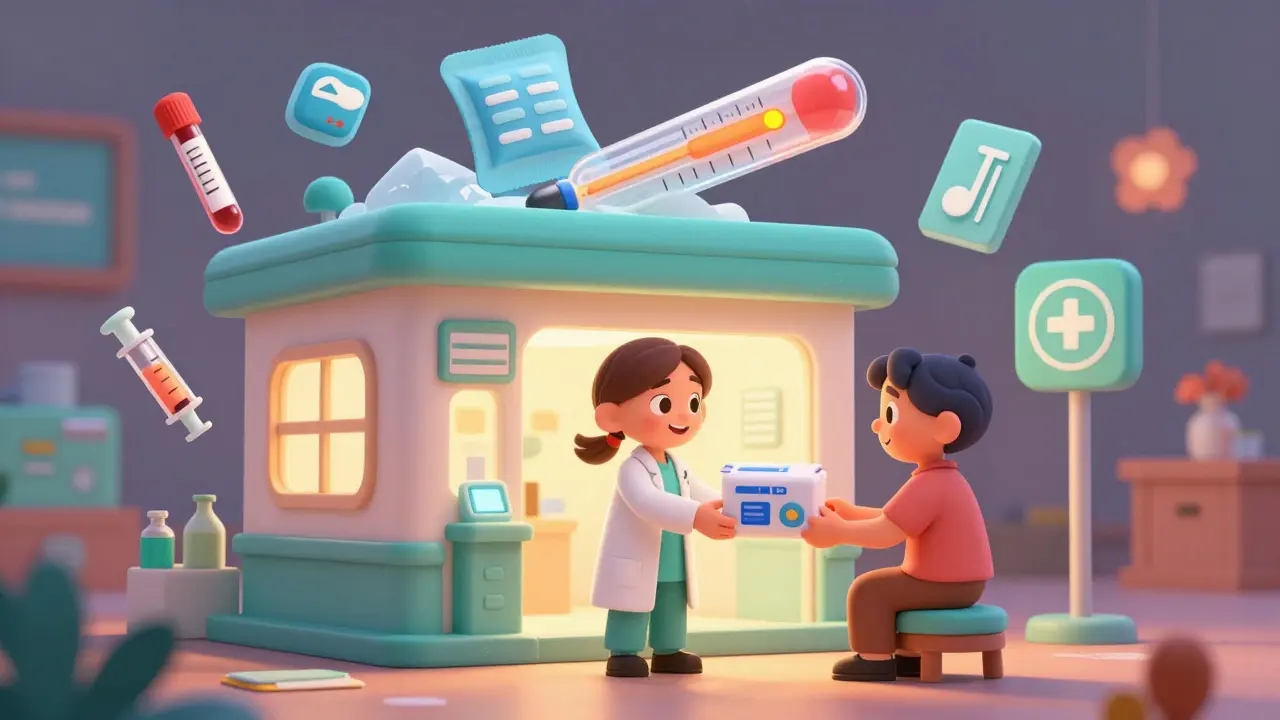
When a patient gets a generic version of a specialty drug, many assume it’s just like picking up a cheap pill at the corner pharmacy. But that’s not how it works. For complex medications-whether branded or generic-the path from prescription to patient is handled almost entirely by specialty pharmacy providers. These aren’t your typical drugstores. They’re clinical operations with nurses, pharmacists trained in chronic disease management, temperature-controlled shipping, and systems built to track every step of a patient’s treatment. And here’s the catch: even when a generic version exists, the same rules apply. The provider doesn’t get to choose where it’s filled. The manufacturer does.
Why Generic Doesn’t Mean Retail
Most people think generics are interchangeable with brand-name drugs because they’re cheaper. That’s true for things like metformin or lisinopril. But specialty drugs are different. They’re not just expensive-they’re complicated. Many are injectable, require cold storage, or need special training to use. Even when a generic version is approved by the FDA, manufacturers often lock distribution to specialty pharmacies only. This isn’t about profit. It’s about control. If a drug needs a Risk Evaluation and Mitigation Strategy (REMS), or if the manufacturer wants to ensure patients get counseling, lab monitoring, or nurse follow-ups, they can legally require that only specialty pharmacies dispense it. That rule applies whether the drug costs $10,000 or $1,000.Take methotrexate, for example. It’s been a generic drug for decades. But when used for rheumatoid arthritis or psoriasis at high doses, it’s classified as a specialty medication. A patient switching from a brand to a generic version of methotrexate might still have to go through a specialty pharmacy. Why? Because the manufacturer still requires patient education on liver monitoring, blood tests, and avoiding alcohol. The generic version isn’t just a cheaper pill-it’s still part of a high-touch care system.
The Workflow: It’s Not Just Dispensing
Specialty pharmacies don’t just fill prescriptions. They manage entire treatment journeys. Here’s what happens when a provider sends a generic specialty drug to a specialty pharmacy:- Prescription intake: The pharmacy receives the e-prescription and checks if it’s for a drug under a mandatory distribution program.
- Prior authorization: Even for generics, insurers often require proof that the patient tried other treatments first. This step can take days, sometimes weeks.
- Financial assistance: Many patients can’t afford copays, even on generics. Specialty pharmacies connect them to manufacturer co-pay programs or nonprofit aid.
- Clinical review: Pharmacists check for drug interactions, kidney/liver function, and whether the patient is already on similar therapies.
- Patient education: A nurse or pharmacist calls the patient to teach them how to inject the drug, store it properly, or recognize side effects.
- Shipping: The drug is packed in a temperature-controlled box with ice packs and shipped overnight.
- Follow-up: Within 48 hours, the patient gets a call to see if they’re doing okay, if they have side effects, or if they missed a dose.
This entire process takes an average of 7.2 days, according to a 2023 study in PMC. That’s more than five times longer than a retail pharmacy turnaround. But for patients on drugs like biosimilars for rheumatoid arthritis or Crohn’s disease, those extra days aren’t just bureaucracy-they’re safety.
Brand vs. Generic: The Real Difference
The biggest myth is that switching from brand to generic means losing support. That’s not true. In fact, many patients report better continuity when they stay with the same specialty pharmacy after switching to a generic.A 2024 survey from MyHealthTeams found that 68% of patients preferred keeping their existing specialty pharmacy team-even after their drug changed from brand to generic. Why? Because the same nurse who taught them how to use the brand version now helps them with the generic. The same pharmacist knows their lab results. The same delivery driver brings their meds every month. The relationship doesn’t reset.
On the other hand, some patients get hit with sticker shock. One Reddit user shared that their generic version of Xeljanz (tofacitinib) cost $75 per month through their specialty pharmacy, while the same drug at Walgreens was $15. That’s not because the generic is more expensive-it’s because the specialty pharmacy’s dispensing fee is baked into the price. That fee, which averages $250-$500 per prescription, covers the clinical services, not the drug itself. So even when the drug is cheaper, the total cost doesn’t always drop.
Who’s in Charge? The Manufacturer Holds the Keys
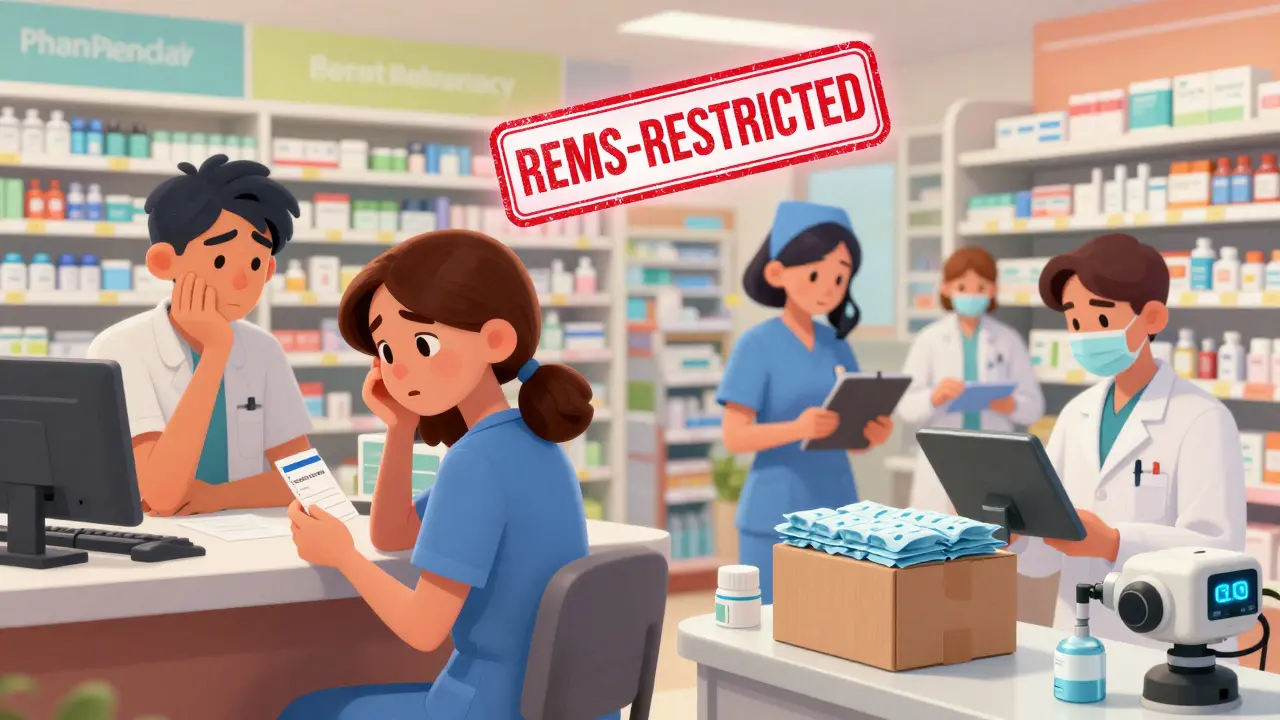
Providers-doctors, nurse practitioners, physician assistants-can recommend a generic. But they can’t force a retail pharmacy to fill it if the manufacturer has restricted distribution. That’s the law. If the manufacturer says “only specialty pharmacies can dispense this,” then even a generic version must go through them.This is especially true for biosimilars-the closest thing we have to generics for biologic drugs. Unlike small-molecule generics, biosimilars aren’t exact copies. They’re highly complex proteins made using living cells. Because of that, the FDA requires them to go through the same distribution channels as their reference biologics. So when a patient switches from Humira to its biosimilar, Adalimumab-adbm, they’re still getting it from the same specialty pharmacy. The drug changed. The service didn’t.
Technology Is Changing the Game
One of the biggest bottlenecks in specialty pharmacy is prior authorization. It’s a paperwork nightmare. But new tools are helping. Real-Time Prescription Benefit (RTPB) systems now let pharmacists see a patient’s coverage, copay, and prior authorization status before they even submit the claim. In 2023, Surescripts reported that RTPB cut authorization time by 3.2 days across nearly 5 million specialty prescriptions.That matters because delays can mean missed doses, worsening symptoms, or hospital visits. For patients on drugs like hepatitis C antivirals or cancer therapies, those extra days aren’t just inconvenient-they’re dangerous.
Another shift? White bagging and brown bagging. Instead of sending the drug home, the specialty pharmacy ships it directly to the clinic or hospital where the patient gets infused. This is becoming common for both branded and generic biologics. It reduces the risk of improper storage and ensures the drug is administered under supervision.

The Future: More Generic, More Pressure
The market for specialty drugs is growing fast. In 2023, they made up 34.6% of U.S. pharmaceutical spending-$215 billion out of $621 billion. By 2028, that number could hit 61%. And a big chunk of that growth will come from biosimilars. The Centers for Medicare & Medicaid Services (CMS) just mandated in 2024 that all Medicare Part D plans cover FDA-approved biosimilars. That means more patients will be getting cheaper versions of expensive biologics.But here’s the twist: those cheaper drugs still need the same level of care. So specialty pharmacies aren’t going away. They’re evolving. More health systems are trying to bring specialty pharmacy services in-house. Walgreens bought Shields Health Solutions in January 2024 to do just that. But even if hospitals start dispensing their own drugs, they’ll still need the same infrastructure: trained staff, cold storage, patient tracking, and clinical support.
The bottom line? Generic specialty drugs aren’t simpler. They’re just less expensive. The provider’s role hasn’t changed. It’s still to ensure the patient gets the right drug, with the right support, at the right time. Whether it’s branded or generic, the specialty pharmacy is the only place that can deliver that.
What Patients Should Know
If you’re switching from a brand-name specialty drug to a generic:- Don’t assume your pharmacy will change. You’ll likely stay with the same one.
- Your copay might not drop as much as you expect-dispensing fees are still there.
- Your care team probably won’t change. That’s a good thing.
- If you’re getting a new drug, ask if it’s under a mandatory distribution program. If yes, you can’t fill it at CVS or Walgreens.
- If delivery takes longer than 10 days, call the pharmacy. Delays are common, but not always unavoidable.
Patients who stay engaged with their specialty pharmacy team-answering calls, reporting side effects, keeping up with lab work-have better outcomes. It’s not just about the pill. It’s about the support behind it.
Can a retail pharmacy dispense a generic specialty drug?
No, not if the manufacturer has restricted distribution. Even if a drug is generic, if it’s classified as a specialty medication and the manufacturer requires it to be dispensed only through specialty pharmacies, retail pharmacies are legally prohibited from filling it. This is common for drugs requiring REMS programs, cold storage, or specialized patient education.
Why is the cost still high even with a generic specialty drug?
The high cost isn’t from the drug itself-it’s from the services. Specialty pharmacies charge a dispensing fee of $250-$500 per prescription to cover clinical support, nurse follow-ups, temperature-controlled shipping, prior authorization management, and patient monitoring. These services remain necessary regardless of whether the drug is branded or generic.
Are biosimilars considered generic specialty drugs?
Biosimilars aren’t generics in the traditional sense. They’re highly similar versions of biologic drugs, but because they’re made from living cells, they can’t be exact copies. The FDA requires them to be dispensed through the same specialty pharmacy channels as their reference biologics, so they’re treated like branded specialty drugs in terms of distribution and patient support.
Do I have to use the same specialty pharmacy if I switch to a generic?
You usually can’t choose. The manufacturer controls distribution. If your original brand was dispensed through a specific specialty pharmacy, your generic version will likely come through the same one. Many patients prefer this because they keep the same care team, which improves adherence and outcomes.
What should I do if my generic specialty drug is delayed?
Call the specialty pharmacy directly. Delays often happen during prior authorization or insurance verification. Ask if they’ve received your prescription, if your insurance needs more info, or if a financial assistance application is pending. Don’t wait for them to call you-follow up after 5 business days.
Marian Gilan
January 26, 2026 AT 14:45Conor Murphy
January 28, 2026 AT 06:31Conor Flannelly
January 28, 2026 AT 21:17Patrick Merrell
January 30, 2026 AT 12:55Geoff Miskinis
January 31, 2026 AT 09:38Ryan W
February 2, 2026 AT 00:24Suresh Kumar Govindan
February 2, 2026 AT 14:45Ashley Karanja
February 4, 2026 AT 01:29Uche Okoro
February 5, 2026 AT 11:59Faisal Mohamed
February 6, 2026 AT 08:22bella nash
February 6, 2026 AT 09:43SWAPNIL SIDAM
February 8, 2026 AT 05:57Sally Dalton
February 9, 2026 AT 16:58