
When you’re on regular medication, your insurance plan isn’t just a safety net-it’s the difference between taking your pills every day or skipping them because you can’t afford them. In 2023, 66.7% of U.S. adults used at least one prescription drug. That means if you’re managing high blood pressure, diabetes, asthma, or even something like insulin or a specialty drug for rheumatoid arthritis, your coverage could be saving you thousands-or costing you more than you realize.
Here’s the hard truth: 63% of people who bought a new health plan in 2022 didn’t check if their medications were covered until after they enrolled. By then, it was too late. One person on Reddit shared they got hit with a $3,700 bill for a drug they thought was covered. Another saved $8,400 a year just by switching plans after checking their insulin coverage. This isn’t about guesswork. It’s about asking the right questions before you sign up.
Is my exact medication on the formulary?
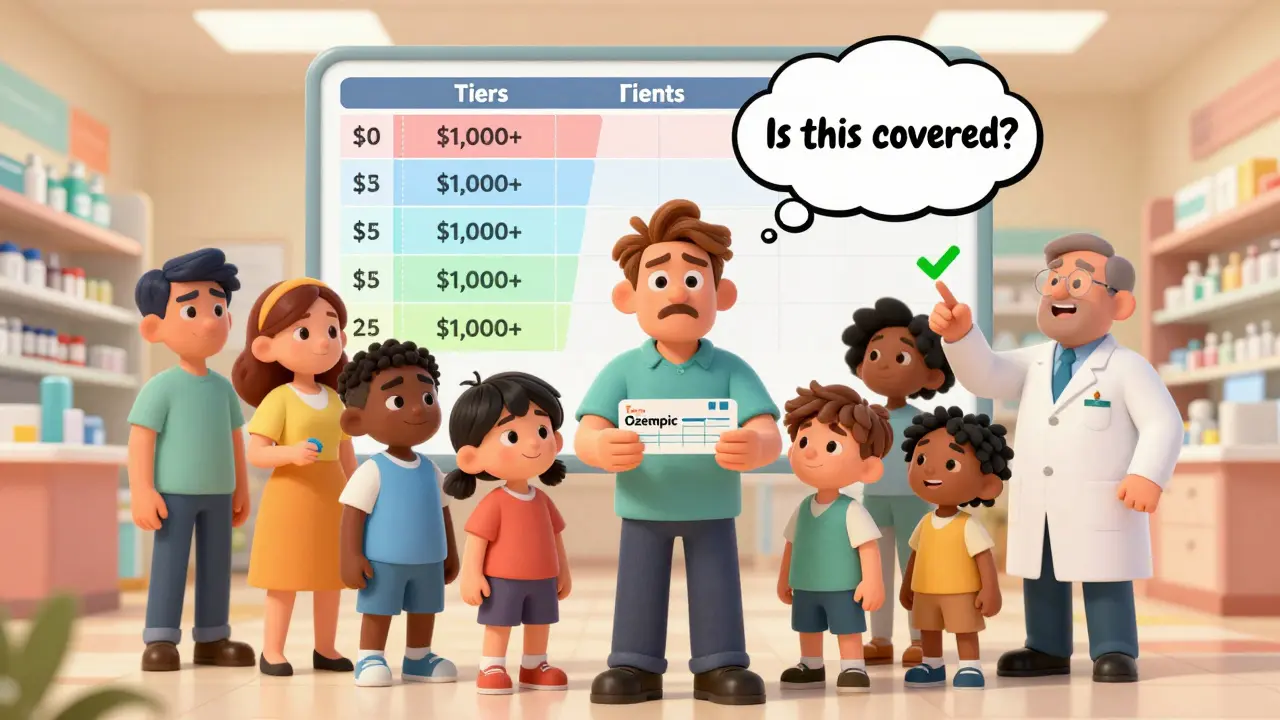
Your insurance plan doesn’t cover every drug. It has a list called a formulary. This list is broken into tiers, and each tier has a different cost. Tier 1 is usually generic drugs-think metformin or lisinopril-and costs around $10 per fill. Tier 2 is preferred brand-name drugs, like Eliquis or Humira (if available as preferred), and might cost $40. Tier 3 is non-preferred brands-often more expensive versions of the same drug-and can run $100 or more. Tier 4 is for specialty drugs, like those for MS, cancer, or rare diseases. These often require coinsurance: you pay 25% to 33% of the total cost. One specialty drug can cost over $1,000 per month. If your drug isn’t on the formulary at all, you’ll pay full price.
Don’t assume your drug is covered just because it’s common. Even widely used drugs like Ozempic or Wegovy may only be covered if you have type 2 diabetes-and not for weight loss. Always check your plan’s formulary by name, not by category. Use the plan’s online tool or call customer service and ask: “Is exact drug name on the formulary? What tier?”
What’s my out-of-pocket cost before coverage starts?
Some plans have a deductible for prescriptions. That means you pay 100% of the cost until you hit that number. Bronze Marketplace plans average a $6,000 deductible-yes, you read that right. That’s $6,000 in drug costs before your insurance kicks in. Gold plans? Often $150 or nothing at all.
If you’re taking three or more maintenance medications, a plan with a high deductible could cost you more than one with a higher monthly premium. For example, someone filling 12 prescriptions a year saved $1,842 by switching from a Bronze to a Gold plan. The Gold plan had a $685 monthly premium, but their out-of-pocket maximum was only $5,050. The Bronze plan had a $452 premium, but a $9,450 out-of-pocket max. When you add up your monthly meds, the higher premium plan was cheaper overall.
Ask: “Is there a prescription deductible? If so, how much? And what’s my out-of-pocket maximum for drugs?” Don’t just look at the monthly premium. Look at the total cost if you need your meds all year.
Do I need prior authorization or step therapy?
Prior authorization means your doctor has to prove to the insurance company that you need the drug before they’ll pay for it. It can take days or weeks. Step therapy means you have to try cheaper drugs first-even if they didn’t work for you before. For example, your doctor prescribes a new biologic for psoriasis, but the plan says you have to try three older, less effective drugs first.
In 2023, 28% of Medicare Part D prescriptions needed prior authorization. For specialty drugs in Marketplace plans, 37% required step therapy. That’s not rare. It’s standard.
Ask: “Does my medication require prior authorization? Is there a step therapy requirement? How long does it usually take to get approved?” If your drug has a long approval process, it could delay your treatment by weeks. And if you’re already feeling sick, that’s not just inconvenient-it’s dangerous.

Which pharmacies can I use?
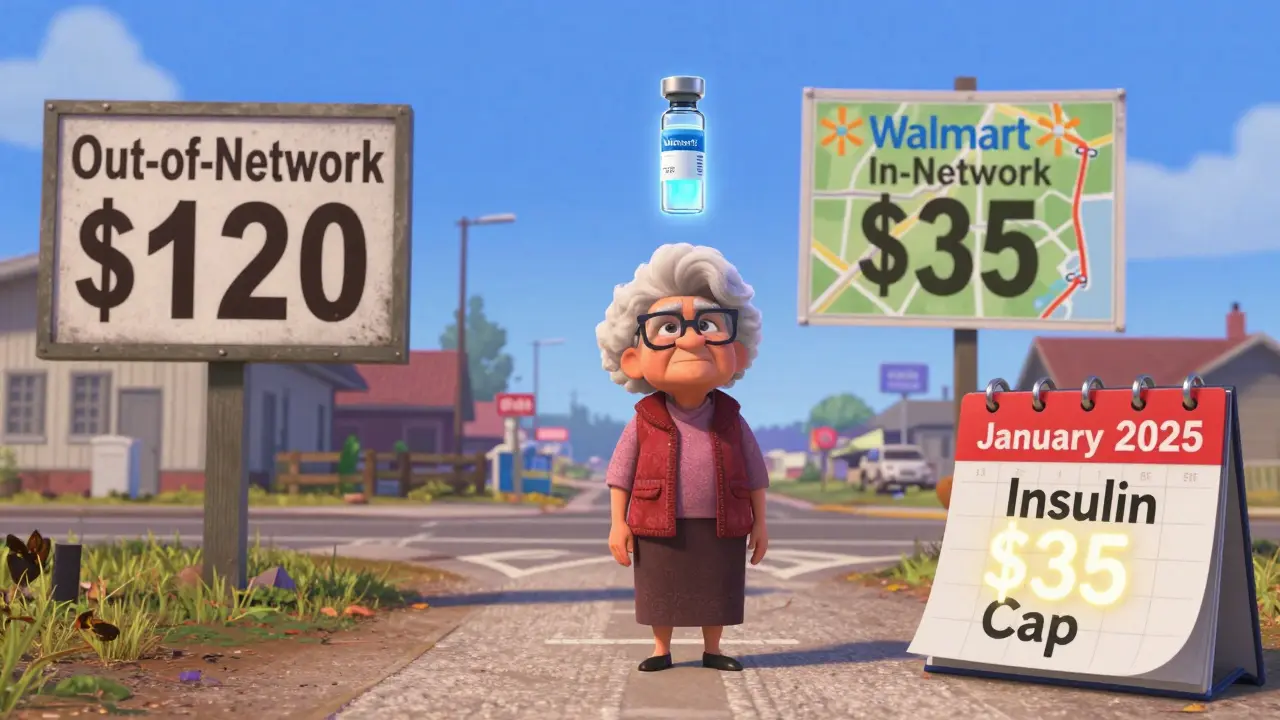
78% of Marketplace plans limit you to specific pharmacies. If you use an out-of-network pharmacy, you might pay 37% more. Some plans only cover CVS, Walgreens, or Walmart. Others only work with mail-order services. If you live in a rural area, your nearest pharmacy might not be in-network.
Medicare Advantage plans are even stricter. 68% use tiered pharmacy networks-meaning you pay less at Tier 1 (like Walmart), more at Tier 2 (like a local pharmacy), and way more if you go outside the network. One woman in Iowa switched plans and found her local pharmacy wasn’t covered. She had to drive 45 miles to get her insulin at the right price.
Ask: “Which pharmacies are in-network? Can I use mail-order? Is there a penalty for using an out-of-network pharmacy?” If your current pharmacy isn’t covered, ask if the plan offers a one-time exception or if you can switch to a different pharmacy without penalty.
What happens if I hit the coverage gap (donut hole)?
If you’re on Medicare Part D, you might have heard of the “donut hole.” That’s the gap between what you and your plan pay. In 2024, once your total drug costs hit $5,030, you enter the gap. You pay 25% of the cost until you hit $8,000 in total spending. Then catastrophic coverage kicks in.
But here’s the good news: starting in 2025, the donut hole is gone. The Inflation Reduction Act caps your out-of-pocket costs at $2,000 per year. And insulin will cost no more than $35 per month. If you’re on Medicare, you’ll see big savings next year. But right now, if you’re in the gap, you’re paying more than you should.
Ask: “Does my plan have a coverage gap? If so, what are the thresholds? What do I pay during the gap?” Even if you’re not on Medicare, some private plans still have gaps. Know the rules before you’re caught off guard.
Are there limits on how much I can get at once?
Some plans limit how many pills you can get per fill. For example, you might be allowed only a 30-day supply, even if your doctor prescribes a 90-day supply. That means more trips to the pharmacy, more copays, and more chance of running out.
Others limit refills. If you need a refill before the 30 days are up, you might have to pay full price or wait. This is especially common with chronic condition drugs like thyroid medication or antidepressants.
Ask: “What’s the maximum quantity I can get per fill? Can I get a 90-day supply? Are there limits on refills?” If you’re paying extra for multiple 30-day fills, you’re losing money. A 90-day supply often costs less than three 30-day fills combined.
What changes are coming in 2025?
Big changes are coming. Starting January 1, 2025, Medicare Part D will cap your total out-of-pocket drug costs at $2,000 per year. Insulin will cost $35 or less per month. And Medicare will start negotiating prices for 20 high-cost drugs, which could lower premiums by 10-15% by 2030.
Even if you’re not on Medicare, private plans are shifting. By 2026, 70% of new Marketplace plans are expected to use value-based insurance design-meaning lower copays for drugs that actually improve health outcomes, like statins or metformin.
Ask: “Will my plan change in 2025? Will my medications be affected by new price caps or negotiation rules?” If you’re on a long-term medication, knowing what’s coming can help you choose a plan that’ll still be good next year.
When should I check this?
You have two windows each year to review your coverage:
- Marketplace Open Enrollment: November 1 to January 15. Use HealthCare.gov’s plan comparison tool. Enter your exact medications and pharmacies. It’ll show you which plan saves you the most.
- Medicare Annual Election Period: October 15 to December 7. Use Medicare.gov’s Plan Finder. Type in your drugs by name or NDC code. It’ll compare costs across plans.
Don’t wait until you’re at the pharmacy counter. People who spend 20+ minutes checking their coverage save $1,147 a year on average. That’s more than the cost of a new phone. It’s not about being thorough-it’s about not getting stuck with a bill you didn’t expect.
If you’re switching plans, do it early. Don’t assume your current plan will cover you next year. Formularies change. Pharmacies drop out. Deductibles rise. And if you don’t check, you’re gambling with your health.
Matt Alexander
March 2, 2026 AT 08:29Just want to say this post saved me a ton of money last year. I was on a Bronze plan thinking I was saving cash, but my insulin was costing me $400/month until I checked the formulary. Switched to a Gold plan with a higher premium but $35 insulin and $0 deductible for meds. Total savings: $8,200. Don't just look at monthly premiums - look at what you actually pay when you need your meds.
Also, 90-day fills are a game-changer. My pharmacy lets me get 90 days for the price of two 30-day refills. I don't have to drive to the pharmacy every month. Simple move, huge difference.
Gretchen Rivas
March 3, 2026 AT 14:34Check your pharmacy network. My local pharmacy wasn't in-network. Had to drive 40 miles. Now I use mail-order. No more stress. No more late refills. Just order online, get it in 3 days. Easy.
Stephen Vassilev
March 3, 2026 AT 15:06Are you aware that pharmaceutical companies have lobbied extensively to maintain tiered formularies? The so-called "cost savings" are manufactured. The real issue is that drug pricing is not regulated, and insurers are complicit in creating artificial scarcity through formularies and prior authorization. This entire system is designed to extract maximum profit from sick people. You think checking your formulary is the solution? It's just damage control. The real solution is single-payer healthcare - not playing this bureaucratic game.
Mike Dubes
March 5, 2026 AT 01:23Yo I just wanna say - if you're on meds, do NOT wait till the last minute. I waited till I got to the pharmacy and found out my drug wasn't covered. Total panic. Had to pay $1,200 out of pocket. Now I check every year like clockwork. Took 15 mins. Saved me $5k. Seriously, just go to your plan's website, type in your meds, boom. Done.
Also, 2025 is gonna be wild. Insulin at $35? I'm crying. Finally some good news.
Helen Brown
March 7, 2026 AT 00:56This is all just a distraction. The real problem is that your insurance company doesn't want you to live. They don't care if you take your meds. They want you to get sicker so they can charge more. The formulary? The deductible? The prior auth? All traps. They're designed to make you give up. And if you do? They win. You don't have to play their game. Just stop taking your meds. Let your body fail. Then they'll have to cover the ER visit. That's the real system.
John Cyrus
March 7, 2026 AT 19:06People are too lazy to read their own insurance documents. If you don't know your formulary, you deserve to pay full price. This isn't hard. It's not rocket science. You get a plan. You read the fine print. You ask questions. If you can't do that, don't blame the system. Blame yourself. I've been on 7 different plans in 10 years. Never had an issue. Because I read the damn documents.
John Smith
March 7, 2026 AT 20:04Let me tell you something - this whole insurance game is a rigged casino. They slap a "coverage" sticker on a drug, then hit you with a $200 copay because it's "non-preferred." It's a scam. I call it the "Pharma Tax." You pay twice - once in premiums, once in out-of-pocket hell. And don't even get me started on step therapy. They want you to suffer on old drugs like it's some kind of medieval trial. I'm done playing nice. If your plan makes you jump through hoops just to breathe - switch. Or burn it down.
Sharon Lammas
March 8, 2026 AT 18:39I think about how many people never ask these questions. How many people just keep taking their meds, hoping it'll be okay, not realizing the cost is slowly eating them alive. It's not just about money - it's about dignity. Being able to take your medicine without fear. I hope more people read this and feel less alone. You're not being lazy for not knowing. The system is just built to hide the truth.
marjorie arsenault
March 10, 2026 AT 05:43One thing I wish more people knew - if your plan doesn't cover your drug, ask for a formulary exception. Your doctor can write a letter. It's not as hard as it sounds. I helped a neighbor get Ozempic approved for diabetes after they were denied. Took 2 weeks. Worth it.
Also, 90-day mail-order? Always cheaper. Even if you have to pay a little more upfront, you save on shipping and copays. And no more forgetting to refill. I set a calendar reminder every 85 days. Boom. Done.
Deborah Dennis
March 10, 2026 AT 19:17Wow. This post is so detailed. I'm sure it's helpful. But honestly? Why do we even have to do this? Why is it so complicated? Why can't we just have affordable drugs? Why do we have to be doctors, lawyers, and accountants just to get our medicine? I'm exhausted just reading this. I'm going to bed.
Shivam Pawa
March 12, 2026 AT 16:25Formulary tiering is a cost-containment strategy aligned with value-based pharmacoeconomic models. In resource-constrained environments, formulary restrictions serve as non-price rationing mechanisms. Prior authorization thresholds reflect clinical guidelines embedded within payer algorithms. The 2025 IRA caps represent a structural shift toward out-of-pocket affordability thresholds, but formulary exclusion persists due to PBMs' rebate-driven incentives. Consider negotiating with pharmacy benefit managers for alternative access pathways.