

When you take a new medication, you expect relief - not a life-threatening crisis. But for some people, common drugs can trigger thrombotic thrombocytopenic purpura (TTP), a rare but deadly condition that destroys platelets, tears apart red blood cells, and shuts down organs. It doesn’t come with a warning label. It doesn’t always show up in routine blood tests. And if it’s missed, death can follow in days.
What Exactly Is Drug-Induced TTP?
TTP is a type of thrombotic microangiopathy - a group of disorders where tiny blood clots form throughout the body, clogging small vessels. These clots chew up platelets and shred red blood cells, leading to low platelet counts, severe anemia, and organ damage. In drug-induced cases, the trigger isn’t your body going rogue - it’s something you swallowed.
The classic signs? A sudden drop in platelets (often below 50,000 per microliter), fatigue from anemia, yellowing skin from broken-down blood cells, dark urine, confusion, seizures, or kidney trouble. These symptoms often appear within days to weeks after starting a new drug. But because they mimic other conditions - like sepsis, ITP, or even the flu - TTP is misdiagnosed nearly half the time.
Which Medications Are the Biggest Risks?
More than 300 drugs have been linked to TTP, but only a handful carry real, proven danger. The top offenders are well-documented:
- Quinine - Found in tonic water, malaria meds, and some leg cramp remedies. Even two or three glasses of tonic water a day for a few weeks can trigger it. A 2019 BMJ case report showed TTP developing after someone drank tonic water daily for three weeks. The FDA now warns: 1 in 10,000 prescriptions leads to TTP.
- Clopidogrel (Plavix) - A common antiplatelet drug after heart attacks or stents. Symptoms usually show up within two weeks. Though rare (1 in 26,000 users), it’s one of the most frequent causes in developed countries.
- Ticlopidine - Older than clopidogrel, but far more dangerous. It was pulled from many markets after 1 in 1,600 users developed TTP. Sales dropped 86% after the FDA issued a black box warning in 2010.
- Cyclosporine and Mitomycin C - Used in transplants and cancer treatment. These cause TTP through direct damage to blood vessel walls, not immune reactions. Symptoms often appear after months of use.
- Checkpoint inhibitors - Newer cancer drugs like pembrolizumab and nivolumab. Around 47 cases have been reported since 2018. These can cause TTP even years after stopping treatment.
And here’s the twist: you don’t have to be on high doses. Quinine-induced TTP has happened in people who took just 250 mg - the amount in a few glasses of tonic water. No prior history. No risk factors. Just one wrong pill - or sip - at the wrong time.
Two Ways the Body Turns Against the Drug
Not all drug-induced TTP works the same way. There are two main mechanisms:
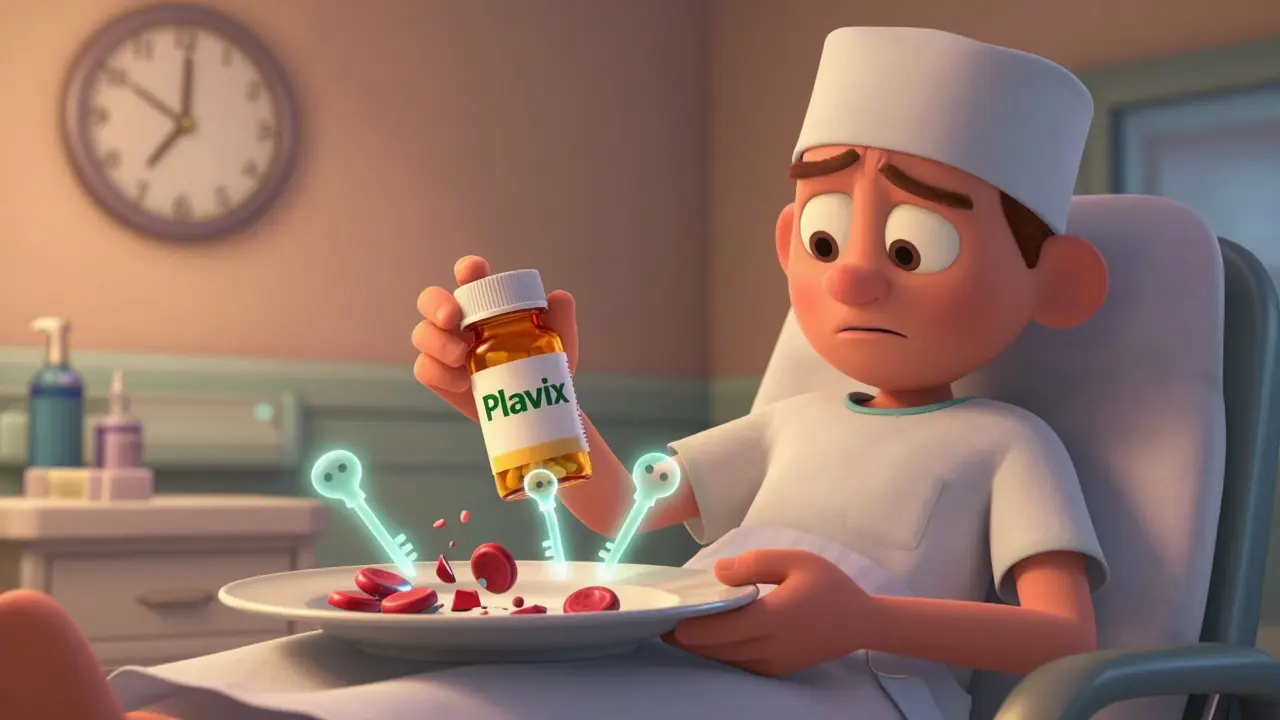
Immune-mediated TTP (60% of cases): Your body makes antibodies that stick to platelets - but only when the drug is present. Think of it like a lock and key: the drug is the key that turns the lock. Without it, the antibodies sit idle. That’s why someone can take quinine for years without issue, then suddenly develop TTP after restarting it. The antibodies stay in their system for years, waiting.
Dose-dependent toxicity (40% of cases): Drugs like cyclosporine or mitomycin C directly damage the lining of blood vessels. The more you take, the more damage piles up. This type doesn’t involve antibodies. It’s like slowly burning a wire until it shorts out. Symptoms show up after months, not days.
This difference matters because treatment changes completely. Immune cases respond to plasma exchange. Toxicity cases need the drug stopped - and that’s it.
Why Plasma Exchange Isn’t Always the Answer
Plasma exchange (PLEX) has been the gold standard for immune-mediated TTP since the 1980s. It removes bad antibodies and replaces them with healthy plasma. Success rates? Over 80% for quinine or clopidogrel cases.
But if the TTP is caused by cyclosporine or mitomycin C, plasma exchange doesn’t help much. Why? Because the problem isn’t antibodies - it’s dead endothelial cells. You can replace plasma all day, but if the blood vessel walls are shredded, the clots keep forming. The only fix? Stop the drug and wait. Recovery can take months. Some patients need dialysis for over a year.
Newer drugs like caplacizumab are changing the game. This nanobody blocks clot formation and cuts recovery time by 78% in immune cases. But it costs $18,500 per course. Most hospitals outside big cities can’t afford it.
Diagnosis: The Race Against Time
Time is everything. The longer TTP goes untreated, the higher the chance of stroke, heart attack, or death. Mortality stays at 10-20% - unchanged since the 1990s - because doctors still miss it.
Here’s what you need to check if someone is on a risky drug and starts feeling off:
- Platelet count below 150,000 (ideally below 50,000)
- Schistocytes (fragmented red blood cells) on a blood smear
- LDH above 500 U/L (a sign of red cell destruction)
- Haptoglobin undetectable
- No other cause (like infection, autoimmune disease, pregnancy)
ADAMTS13 enzyme activity below 10% confirms immune-mediated TTP. But you don’t wait for results. If the clinical picture fits, start plasma exchange within 4-8 hours. Delaying even one day can cost lives.
The Silent Culprit: Tonic Water
Most people don’t realize tonic water contains quinine. It’s not a medicine - it’s a drink. But in some people, even small, regular doses can trigger TTP.
There are documented cases of people drinking 2-3 glasses of tonic water daily for weeks - then collapsing with bleeding, confusion, and kidney failure. One case in New Zealand involved a 62-year-old man who developed intracranial hemorrhage with platelets at 8,000 per microliter after just three weeks of nightly tonic water.
Doctors in Wellington and Auckland now routinely ask patients: “Do you drink tonic water?” It’s not a joke question anymore. It’s a life-saving one.

What to Do If You’re on a High-Risk Drug
If you’re taking clopidogrel, cyclosporine, or any drug on the high-risk list, watch for these red flags:
- Unexplained bruising or pinpoint red spots (petechiae)
- Extreme fatigue, dizziness, or shortness of breath
- Dark urine or jaundice (yellow skin/eyes)
- Headaches, confusion, slurred speech, or seizures
- Reduced urine output or swelling in legs
If you notice any of these - stop the drug immediately and go to the ER. Don’t wait. Don’t call your GP first. Go to the hospital. Tell them: “I’m on [drug name] and I think I might have TTP.”
Keep a list of all medications - including supplements and over-the-counter products. Many cases come from herbal teas, migraine remedies, or even quinine in some energy drinks.
The Bigger Picture: Why This Keeps Happening
Drug-induced TTP is rare - but it’s not random. The FDA reports a 37% rise in cases between 2015 and 2022. Why? More people are on long-term immunosuppressants. More cancer patients are on checkpoint inhibitors. And more people are drinking tonic water thinking it’s harmless.
Pharmaceutical companies now screen new drugs for endothelial toxicity. But for older drugs - like quinine, which has been around since the 1800s - warnings came too late. The same happened with ticlopidine. By the time the FDA acted, hundreds had died.
And here’s the hardest truth: we still don’t know who’s at risk. No genetic test can predict it. No blood test can screen you before you start the drug. All we have is vigilance.
What’s Next?
Researchers are working on faster ADAMTS13 tests - right now, results take 24 to 72 hours. Point-of-care tests could cut that to 20 minutes. Genetic studies suggest people with HLA-DRB1*11:01 are 4.3 times more likely to get quinine-induced TTP. That could one day mean screening before prescribing.
But for now, the best protection is awareness. If you’re on a drug that’s been linked to TTP - know the signs. If you’ve had TTP before - never take that drug again. Ever. Even a tiny dose can bring it back.
And if you’re a patient, a caregiver, or a clinician - don’t ignore a low platelet count just because it’s “mild.” Don’t assume it’s just an infection. Don’t wait for confirmation. If TTP is possible - treat it like it’s real.
Because in TTP, waiting for proof is the same as waiting for death.
Shane McGriff
January 19, 2026 AT 19:57This is one of the most important posts I’ve read all year. I work in ER and we’ve had two TTP cases in the last 18 months-both missed initially because everyone assumed it was sepsis or flu. One patient was a healthy 34-year-old who drank tonic water nightly. He didn’t even know it had quinine. We saved him, but barely. If you’re on any of these meds-or even just sipping tonic water-know the signs. Don’t wait for a doctor to catch it. You might be the only one who does.
thomas wall
January 21, 2026 AT 16:36It is deeply concerning that pharmaceutical companies continue to market substances with known, life-altering risks under the guise of ‘harmless’ consumer products. Quinine in tonic water is not a ‘flavor additive’-it is a potent pharmacological agent with a documented, deadly side effect profile. The fact that this remains unregulated in the beverage industry speaks volumes about our collective moral decay in public health policy. People are dying because corporations prioritize profit over precaution-and we, as a society, have allowed it.
Paul Barnes
January 21, 2026 AT 17:26‘Tonic water’ is spelled with a lowercase ‘t’ in the middle of a sentence. Also, ‘ADAMTS13’ needs a space before the comma in ‘ADAMTS13 enzyme activity below 10% confirms...’-grammar matters, especially when lives are on the line.
pragya mishra
January 23, 2026 AT 16:25I’m from India and we drink tonic water all the time here-my cousin had TTP last year. She was on clopidogrel and drank tonic water for her ‘digestive benefits.’ Doctors didn’t connect it. Now she’s on dialysis. Why isn’t this on every pharmacy label? Why isn’t it on TV? Why do we only talk about this after someone dies?
Manoj Kumar Billigunta
January 24, 2026 AT 13:29Thank you for writing this. I’m a nurse in Delhi, and I’ve seen too many patients come in with low platelets and no idea what’s going on. We don’t always have access to plasma exchange or caplacizumab. But we do have time to ask the right questions: ‘Are you on any new meds?’ ‘Do you drink tonic water?’ ‘Any unexplained bruising?’ This post is a gift to frontline workers like me who don’t have fancy labs but still need to save lives. Please share this with your family, your neighbors, your chai wallah.
Andy Thompson
January 26, 2026 AT 07:05MARK MY WORDS. This is all part of the WHO’s global depopulation agenda. Tonic water? Really? They put quinine in drinks to thin out the ‘unproductive’ population-people who don’t take their meds, who don’t go to the doctor, who just live their lives. They don’t want us healthy. They want us dependent. And now they’re hiding it behind ‘medical awareness’ campaigns. Wake up. The FDA is complicit. The WHO is complicit. Even your doctor is just a pawn. 💀🩸
sagar sanadi
January 27, 2026 AT 10:00So… you’re telling me the same drug that cures malaria is now a death sentence if you drink it in a cocktail? And the FDA didn’t ban it until after people died? Classic. Next they’ll say coffee causes cancer because one guy had a stroke. I’m just waiting for the ‘TTP caused by tap water’ panic. 😏
kumar kc
January 27, 2026 AT 23:47Quinine in tonic water is dangerous. Don’t drink it. Ever.
Thomas Varner
January 28, 2026 AT 19:37Okay, so… I’ve been drinking tonic water for years. Like, every night. With gin. I’m fine. But now I’m paranoid. I checked my bloodwork last month-platelets were 148,000. Is that… low? Should I be worried? I mean, I’m not tired, no bruising, no jaundice… but now I’m Googling schistocytes at 2 a.m. I’m fine, right? Right??
Art Gar
January 30, 2026 AT 16:56While the clinical presentation of drug-induced thrombotic thrombocytopenic purpura is well-documented in peer-reviewed literature, the assertion that plasma exchange is universally effective is not empirically substantiated across all subtypes. The heterogeneity of endothelial injury mechanisms necessitates a more granular diagnostic taxonomy prior to therapeutic intervention. Furthermore, the socioeconomic implications of caplacizumab accessibility remain inadequately addressed in current policy discourse.
Edith Brederode
January 31, 2026 AT 13:56Thank you so much for this 🙏 I’m a caregiver for my dad who’s on cyclosporine after his transplant. I never knew tonic water could be dangerous-he drinks it for his ‘nightly ritual.’ I’m tossing out the bottle tomorrow. And I’m printing this out to give to his doctor. You saved us from a nightmare. 💙
clifford hoang
February 1, 2026 AT 19:53This isn’t just about drugs. It’s about control. The pharmaceutical industry knows that if you make people afraid of their own biology, they’ll keep buying pills. TTP is a manufactured crisis to sell plasma exchange machines and caplacizumab. They don’t want you to heal-they want you to be a lifelong customer. The real cure? Stop trusting doctors. Stop trusting corporations. Your body isn’t broken. It’s being manipulated. 🤖💊
Arlene Mathison
February 2, 2026 AT 09:38YOU CAN DO THIS. If you’re reading this and you’re scared-you’re not alone. I survived TTP after taking clopidogrel. It took 8 months. I lost my job. I cried every day. But I’m here. And if you catch it early, you can too. Don’t wait. Don’t doubt. Go to the ER. Tell them TTP. Say it like you mean it. You’ve got this. 💪❤️
Emily Leigh
February 4, 2026 AT 08:49So… you’re saying the same thing that’s in ‘tonic’ water is also in ‘malaria medicine’… and now it’s killing people? But we still sell it in grocery stores? And you want me to believe this isn’t a government experiment? Like… what if the whole thing is a distraction from something bigger? I mean… why not just ban quinine entirely? Why the ‘awareness campaign’ instead of a ban? 🤔