
When you take a pill for high blood pressure, you expect every tablet to be exactly the same. That’s because small-molecule drugs are made in labs using chemical reactions-like baking a cake from a recipe. Every batch turns out nearly identical. But if you’re taking a biologic drug-like a treatment for rheumatoid arthritis, Crohn’s disease, or certain cancers-what’s in your vial isn’t a single molecule. It’s a soup of millions of slightly different versions of the same protein. And that’s normal.
Why biologics are never truly identical
Biologics aren’t made in test tubes. They’re grown inside living cells-usually yeast, bacteria, or mammalian cells. These cells act like tiny factories, producing complex proteins like antibodies. But living systems aren’t perfect. Even under tightly controlled conditions, cells make tiny mistakes. They might attach an extra sugar molecule here, or tweak an amino acid there. These small changes are called post-translational modifications, and they happen naturally in every batch. The U.S. Food and Drug Administration (FDA) calls this lot-to-lot variability. It’s not a flaw. It’s a fact of biology. One lot of a biologic drug can contain millions of slightly different protein molecules, and that’s expected. The same is true for the original brand-name product and any biosimilar made to copy it. The key isn’t to eliminate variation-it’s to make sure it stays within safe, predictable limits.Biosimilars aren’t generics. Here’s why
If you’ve heard that biosimilars are just like generics, that’s misleading. Generics are exact copies of small-molecule drugs. If the brand-name drug is aspirin, the generic is aspirin-same chemical structure, same atoms, same everything. You can prove it with simple tests. Biosimilars are different. They’re highly similar, but not identical. Because they’re made from living cells, they’ll always have some variation. That’s why the FDA has a separate approval path for them called the 351(k) pathway. To get approved, a biosimilar must go through hundreds of tests: analytical studies to compare molecular structure, functional assays to see how it behaves in the body, and sometimes clinical trials to confirm it works the same way. The goal isn’t to match the original molecule down to the last atom. It’s to prove that any differences don’t affect safety or effectiveness. The FDA says a biosimilar must have no clinically meaningful differences from the reference product. That’s a high bar-and it’s why biosimilars take longer and cost more to develop than generics.How manufacturers control the chaos
You might think: if every batch is different, how do companies keep things consistent? The answer is control. Manufacturers don’t just hope for the best. They build tight controls into every step of production. They monitor things like:- Cell line stability-making sure the same cells are used over time
- Culture conditions-temperature, pH, nutrient levels
- Purification methods-how proteins are separated from unwanted material
- Storage and handling-temperature, light exposure, container type
What this means for labs and testing
Lot-to-lot variability doesn’t just affect patients taking biologics. It also impacts diagnostic labs that use biologic reagents for blood tests. Imagine your doctor orders a blood test to check your HbA1c level-a marker for diabetes control. The lab uses a reagent made from antibodies to measure it. If the lab switches to a new lot of that reagent, and the new lot behaves slightly differently, your result could shift by 0.5% or more. That might seem tiny, but in diabetes care, even a small change can affect treatment decisions. A 2022 survey found that 78% of lab directors see lot-to-lot variation as a major challenge. Why? Because quality control samples don’t always behave the same way as real patient samples. A reagent might work perfectly on a control sample but give skewed results on actual blood. That’s called poor commutability. To catch these issues, labs use statistical methods like moving averages and require at least 20 patient samples tested in duplicate when switching reagent lots. It’s time-consuming, expensive, and often overlooked-until a patient’s results suddenly change for no obvious reason.Interchangeable biosimilars: The next step
Some biosimilars go one step further. They’re designated as interchangeable. That means a pharmacist can swap them for the brand-name drug without asking the doctor-just like swapping a generic for a brand-name pill. To earn that status, manufacturers must prove more than just similarity. They need data from switching studies. Patients are moved back and forth between the reference product and the biosimilar multiple times over several months. The goal? To show that switching doesn’t increase risk or reduce effectiveness. As of May 2024, the FDA has approved 12 interchangeable biosimilars in the U.S., mostly for autoimmune conditions. That number is expected to grow. By 2026, about 70% of new biosimilar applications will likely include interchangeability data.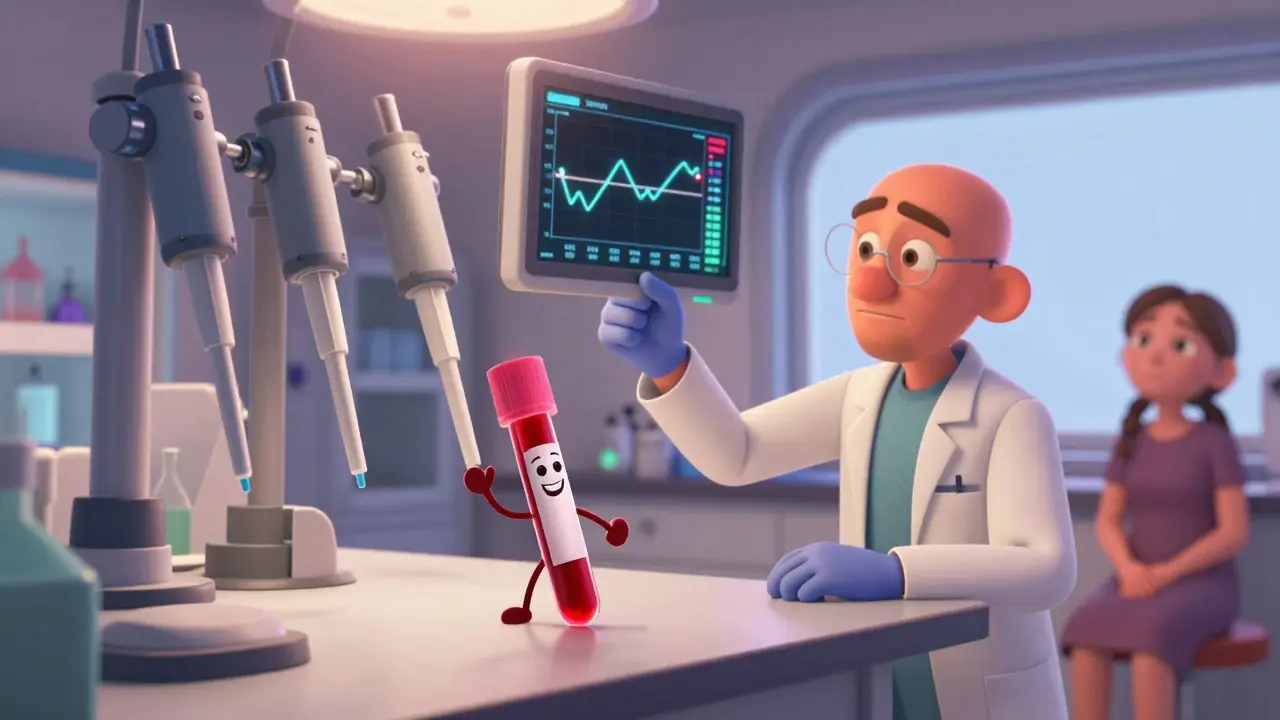
Why this matters for patients
You might wonder: if every batch is different, is my treatment still safe? Yes. The system is built to handle this. Regulators, manufacturers, and labs all work together to keep variation in check. The FDA doesn’t approve a biosimilar unless it’s shown to be as safe and effective as the original-even with natural differences. What you should know:- Lot-to-lot variability is normal. It’s not a sign of poor quality.
- Biosimilars are not generics. They’re complex, carefully studied alternatives.
- Switching between biosimilars or from brand to biosimilar is safe when approved as interchangeable.
- If you notice changes in how you feel after switching products, tell your doctor. It’s rare, but possible.
What’s next for biologics?
The next wave of biologics is even more complex: antibody-drug conjugates, cell therapies, gene therapies. These aren’t just proteins-they’re living treatments. Their variability will be harder to measure, harder to control. But the lessons from today’s biosimilars will carry forward. We’ve learned that variability isn’t a problem to eliminate. It’s a feature of biology to understand. The tools we use today-advanced analytics, statistical controls, switching studies-are the foundation for tomorrow’s therapies. As the global biosimilars market grows from $10.6 billion in 2023 to an expected $35.8 billion by 2028, access to these treatments will expand. More patients will get life-changing care at lower cost. And behind every vial, there’s a story of science, control, and careful management of nature’s imperfections.Is lot-to-lot variability a sign that a biosimilar is inferior?
No. Lot-to-lot variability is normal in all biologics, including the original brand-name products. It’s not a defect-it’s a result of using living cells to make complex proteins. The FDA requires biosimilars to have the same level of variability as the reference product and proves that this variation doesn’t affect safety or effectiveness.
Can I switch between a biosimilar and the brand-name drug safely?
If the biosimilar has been approved as "interchangeable" by the FDA, then yes. Interchangeable biosimilars have been tested in switching studies where patients alternated between the brand and biosimilar multiple times. These studies showed no increased risk or loss of effectiveness. Non-interchangeable biosimilars can still be prescribed, but switching requires a doctor’s approval.
Why are biosimilars cheaper than biologics if they’re so complex to make?
Biosimilars are cheaper because manufacturers don’t have to repeat the full clinical trials the original brand did. They rely on the existing safety and efficacy data of the reference product. They only need to prove similarity through analytical, functional, and targeted clinical studies. That cuts development time and cost-without cutting corners on safety.
Do I need to be tested differently if I switch to a biosimilar?
Generally, no. Your monitoring plan-blood tests, symptom tracking, imaging-should stay the same. But if you notice changes in how you feel or if your lab results shift unexpectedly after switching, talk to your doctor. While rare, some patients report differences, and it’s important to investigate whether it’s related to the product change.
How do labs handle lot-to-lot changes in testing reagents?
Labs use statistical verification methods. When a new reagent lot arrives, they test it against the old one using at least 20 patient samples with duplicate measurements. They compare results to predefined performance limits. If the difference is within acceptable bounds, they approve the new lot. Many labs also track long-term trends using moving averages to catch subtle shifts over time.
Are there any risks if lot-to-lot variability isn’t properly managed?
Yes. If variability exceeds acceptable limits and goes undetected, it can lead to inconsistent treatment effects or inaccurate lab results. For example, a change in a diabetes reagent lot once caused an average 0.5% increase in HbA1c readings-enough to trigger unnecessary treatment changes. That’s why strict verification protocols exist in both manufacturing and diagnostics.
josue robert figueroa salazar
December 27, 2025 AT 11:04Biologics are just biology playing Jenga with your immune system.
Matthew Ingersoll
December 28, 2025 AT 17:57This is why I stopped trusting any drug that wasn't synthesized in a clean room with robotic arms. Living cells? No thanks.
christian ebongue
December 28, 2025 AT 23:02so the fda approves a drug that's literally a different snowflake every time and calls it 'safe'... brilliant. 🙄
Joanne Smith
December 29, 2025 AT 12:08Let me guess - the next thing they'll say is that your coffee's flavor varies because the beans are "natural" and that's totally fine. Same logic. Same bullshit.
jesse chen
December 30, 2025 AT 10:03I appreciate how thorough this is - seriously. I work in a lab, and I’ve seen reagent lots flip the script on HbA1c results. One day your patient’s A1c is 7.2, next week it’s 7.7, and you’re like... did they suddenly start eating donuts? Nope. Just a new batch of antibody. It’s maddening. But this explains why we do the double-testing. It’s not overkill - it’s survival.
Jeanette Jeffrey
December 31, 2025 AT 00:56Oh wow, so the pharmaceutical industry is just gambling with human biology and calling it "science"? How quaint. Let me get this straight - you’re telling me we’re okay with millions of slightly different protein versions floating around in my bloodstream because "it’s natural"? Natural doesn’t mean safe, it just means uncontrolled. And yet we hand out these drugs like candy. You know what’s more natural? Diet. Exercise. Sleep. But no, let’s just keep injecting our bodies with biological lottery tickets.
And don’t even get me started on biosimilars. You call them "highly similar"? That’s like calling a Volkswagen Beetle "highly similar" to a Lamborghini. Same four wheels, sure. But one gets you to the grocery store. The other gets you to the hospital after a crash. And we’re supposed to trust that the "similar" one won’t blow up in our faces? Give me a break.
And then there’s the lab part - where a 0.5% shift in a diabetes test triggers a whole new treatment plan? That’s not variability, that’s medical malpractice waiting to happen. Labs are drowning in paperwork just to keep from misdiagnosing people because some chemist changed the pH of a cell culture tank in China. And patients? They’re just supposed to shrug and say "oh well, my A1c went up, guess I’m diabetic now."
Interchangeable? Please. If I were a patient, I’d demand a DNA fingerprint of every vial I get. Because right now, I’m being treated like a lab rat in a system that doesn’t even know what it’s injecting. And the worst part? Everyone acts like this is normal. It’s not normal. It’s terrifying.
And yet, the industry profits. The regulators sleep. The doctors nod. And we all just take our little vial, smile, and pretend we’re not gambling with our lives.
Prasanthi Kontemukkala
December 31, 2025 AT 11:18Thank you for explaining this so clearly. I’ve been on a biologic for years and always wondered why my doctor never mentioned batch differences. Now I understand it’s not a flaw - it’s just how life works. I feel more informed, and honestly, less anxious. It’s okay to be complex as long as we’re careful.
Alex Ragen
January 1, 2026 AT 11:11Oh, so we’re now romanticizing biological chaos as "nature’s imperfections"? How poetic. How… bourgeois. You speak of "rigorous science" as if the FDA isn’t just rubber-stamping corporate filings while the real world burns. The fact that we’ve built an entire multi-billion-dollar industry on the premise that "close enough" is acceptable - and that patients are expected to swallow this with a smile - is not a triumph of science. It’s a failure of imagination. And don’t even get me started on the fact that these "interchangeable" products are still patented, still monopolized, still priced beyond reach for most. You call it management of complexity. I call it capitalism dressed in lab coats.
david jackson
January 3, 2026 AT 06:11Let me just say this - if you think this is wild, wait until you see the next generation: gene therapies where the treatment is literally a modified virus that edits your DNA. Or cell therapies where they take your immune cells, reprogram them in a petri dish, and put them back in you like little bio-robots. The variability? It’s not just in the sugar attachments anymore - it’s in the *entire genome*. And we’re not just measuring protein shapes anymore - we’re tracking epigenetic drift, off-target edits, immune responses that change over time. This isn’t just lot-to-lot variability anymore. This is patient-to-patient variability on a molecular level. And we’re just now starting to build the tools to even see it. The FDA? They’re still using 1980s-era standards to regulate 2030s science. And yet - somehow - it works. I mean, think about it. We’re curing cancer with living drugs. We’re editing genes like text. And we’re doing it while managing chaos that would make a quantum physicist weep. It’s not perfect. It’s not clean. It’s not predictable. But it’s real. And it’s saving lives. So yeah - maybe we should stop screaming about the imperfections and start celebrating the fact that we’re even capable of this. The future isn’t about eliminating biology. It’s about dancing with it.