
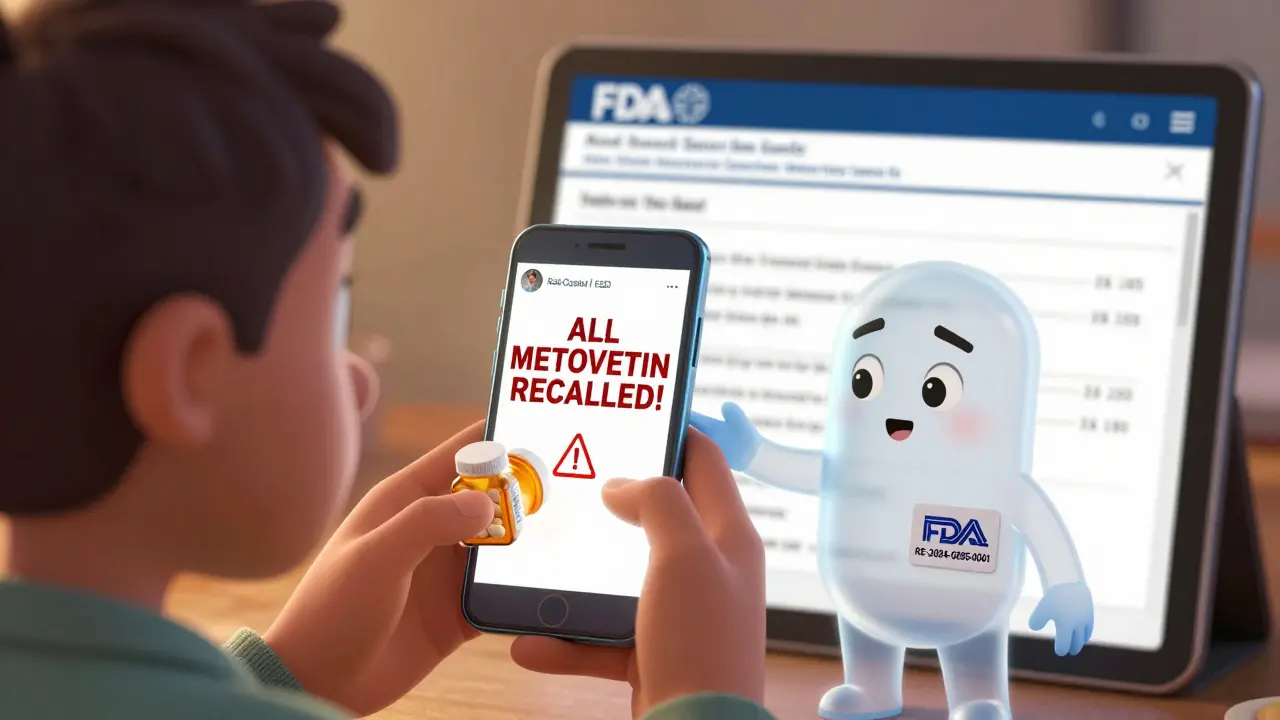
When you see a post saying all metformin is being recalled, or that your insulin pen is dangerous, your first instinct might be to stop taking it immediately. That’s understandable. But what if that post isn’t real? Fake drug recall alerts are spreading faster than ever - and they’re putting lives at risk. In 2024, the FTC logged over 1,800 cases where people stopped taking their medications based on false social media alerts, leading to hospital visits, panic, and even deaths. The good news? You don’t need to be a pharmacist to tell real from fake. You just need to know where to look and what to check.
Don’t Trust Social Media or News Sites Alone
Social media, news headlines, and even forwarded text messages are the most common sources of fake recall alerts. A viral Facebook post claiming “ALL Zantac is recalled” might sound urgent, but it’s often misleading. Real recalls don’t target entire drug classes. They target specific lots - sometimes just one batch out of millions. The FDA doesn’t issue blanket warnings like that. News outlets can also misreport. A headline might say “FDA Recalls Blood Pressure Med,” but the actual notice only affects one manufacturer’s product with a specific lot number. If you rely on headlines alone, you’ll end up throwing away perfectly safe medicine. In a 2024 FDA survey, 43% of Americans believed news reports were enough to verify a recall. That’s dangerous. News sites don’t verify lot numbers. They don’t check the FDA’s official database. They just repeat what’s trending.Look for the Official FDA Recall Format
Real FDA recall notices follow a strict format. If it doesn’t match, it’s not real. Here’s what to look for:- Recall Event Number: Starts with “RE-” followed by 16 digits, like RE-2024-0285-0001. No “RE-”? It’s fake.
- Recall Classification: Must say Class I, II, or III. Class I means serious risk - possible death or serious injury. Class II is temporary or reversible. Class III is unlikely to cause harm. If it just says “recall” without this, it’s not official.
- Firm Notification Distribution Code (FNDC): Looks like F12345678. This is a unique ID assigned by the FDA to each recall notice.
- Lot Number: Must be exact - 10 to 15 characters, often alphanumeric like LOT# ABC1234567. If the alert says “all bottles” or “all brands,” it’s false.
- Reason for Recall: Must state the specific problem - like “N-Nitrosodimethylamine (NDMA) levels exceed 96 ng/day” or “foreign particles found.” Vague reasons like “safety concerns” aren’t enough.
- FEI Number: A manufacturer’s facility ID, starting with “FEI” followed by 8 digits.
These aren’t suggestions. They’re federal requirements under 21 CFR 7.42. If any of these are missing, it’s not a legitimate FDA recall.
Check the FDA’s Official Website - Not Google
The only place to confirm a recall is fda.gov/recalls. Not Google. Not a news site. Not a drug app. Go directly to that URL. Type in the exact brand name, manufacturer, and lot number. The search system is picky - 98% of successful searches include the manufacturer name. If you search “metformin recall,” you’ll get dozens of unrelated results. Search “metformin Teva RE-2024-0285-0001,” and you’ll get the real notice.Every Friday at 2:00 PM Eastern Time, the FDA updates its Enforcement Report. This is the official, machine-readable list of all recalls. You can find it at fda.gov/iceci/enforcement_reports. Real entries look like this:
CLASS I - Metformin Hydrochloride Extended-Release Tablets - Teva Pharmaceuticals - RE-2024-0285-0001 - NDMA levels exceed acceptable limits
If your drug isn’t listed here by Friday afternoon, it wasn’t recalled - at least not officially.
Verify With the Manufacturer - But Only Using FDA-Provided Contacts
Once you find a recall notice on the FDA site, check the manufacturer’s website. But here’s the catch: don’t Google the company. Scammers create fake websites that look real. Instead, use the contact info listed in the FDA notice. That’s the only trusted source. The FDA includes the manufacturer’s phone number, email, and official website link in every recall notice.For example, if the FDA says “Contact Teva at 1-800-TEVA-123,” call that number. Don’t search “Teva customer service” - you might land on a phishing site. In 2024, the FDA found that 63% of fake recall sites mimicked manufacturer domains using slight misspellings like “teva-pharma.com” instead of “tevapharm.com.”
Use the National Drug Code (NDC) Directory
Every prescription drug in the U.S. has a unique 11-digit National Drug Code (NDC). You can find it on your pill bottle or box. Go to the FDA’s NDC Directory at accessdata.fda.gov/scripts/cder/ndc/ and enter the full NDC. If the drug is listed, it’s approved. If it’s been recalled, the system will show the recall status with the same RE-number from the FDA notice. This is especially helpful for generic drugs - where brand names vary but the NDC stays the same.Call the FDA Directly If You’re Unsure
Still not sure? Call the FDA’s Division of Drug Information at 1-855-543-3784. Have the Recall Event Number ready. They answer 98% of calls within 2.4 business hours. You can also email them at [email protected]. This isn’t a last resort - it’s the smartest move. The American Medical Association says this step prevents 92% of unnecessary medication stops. If your doctor tells you to stop your pill because of a news alert, ask them to call the FDA first. Most won’t.Watch Out for These Common Traps
- Market Withdrawals: These aren’t recalls. Companies sometimes pull a product voluntarily because of minor packaging issues - no safety risk. The FDA doesn’t issue notices for these. If the alert doesn’t mention “recall,” it’s likely just a withdrawal.
- Compounded Medications: These are custom-made by pharmacies and aren’t tracked in the FDA’s system. Apps like GoodRx often miss these. If you take a compounded drug, call your pharmacist directly.
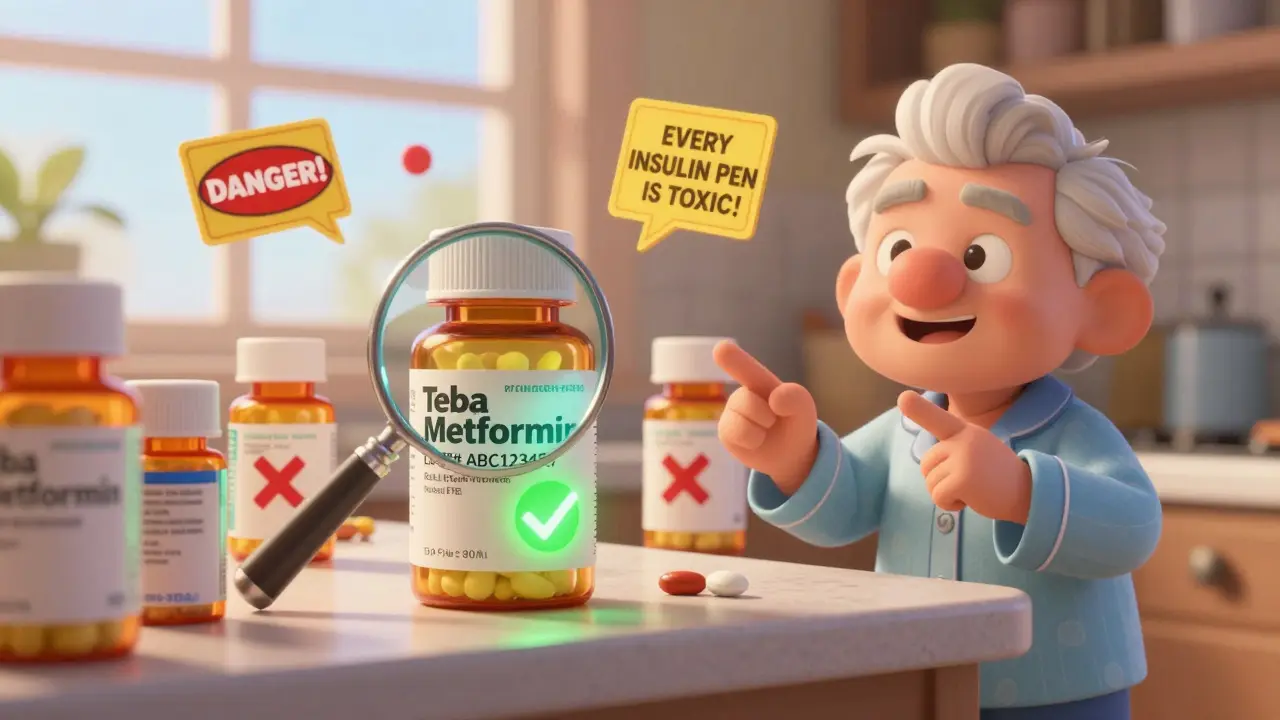
- “All” or “Every” Claims: Real recalls never say “all” or “every.” They say “lots X, Y, Z from manufacturer A.” If you see “all insulin pens,” it’s fake.
- QR Codes and Apps: Some apps claim to scan your pill bottle and verify recalls. GoodRx Recall Checker is 89% accurate, but still misses 11% - especially compounded or older drugs. QR codes on labels are coming in 2026, but for now, don’t rely on them.
What Happens If You Believe a Fake Recall?
In 2023, a fake alert claimed insulin pens were contaminated. People stopped using them - even if their insulin wasn’t on the list. The result? 147 emergency room visits from uncontrolled diabetes. That’s not hypothetical. That’s documented. People died because they trusted a meme, not a government agency.And it’s not just insulin. Fake alerts for blood pressure meds, antidepressants, and even birth control have caused panic. Patients stop taking life-saving drugs. Doctors get flooded with calls. Pharmacies waste hours verifying nonsense. The system breaks because people skip the simple steps to check.
What’s Changing in 2025 and Beyond
The FDA is upgrading its system. Starting March 2025, AI tools are flagging fake alerts before they go viral. By the end of 2026, every prescription bottle will have a QR code that links directly to the FDA’s official recall page. Blockchain tech is being tested to make recall records unchangeable - so no one can alter a notice after it’s posted.But until then, you’re still the first line of defense. No AI, no app, no news site can replace your ability to check the official source. The technology is improving - but your habits matter more.
Quick Verification Checklist
- ✅ Find the lot number on your medicine packaging
- ✅ Go to fda.gov/recalls - not Google
- ✅ Search using brand name, manufacturer, and lot number
- ✅ Look for the “RE-” number, classification (Class I/II/III), and reason
- ✅ Cross-check with the manufacturer’s contact info from the FDA notice
- ✅ Check the Friday Enforcement Report
- ✅ If unsure, call 1-855-543-3784
If you follow these steps, you’ll never be fooled by a fake recall again. You’ll know exactly what’s real - and what’s not. And that’s how you protect yourself, your family, and your health.
How do I know if a drug recall is real or fake?
Real FDA recalls include a Recall Event Number starting with “RE-,” a classification (Class I, II, or III), the exact lot number, the reason for the recall, and the manufacturer’s FEI number. Fake alerts often use vague language like “all” or “every,” lack these details, and appear on social media or unverified websites. Always verify on fda.gov/recalls - never trust a headline or tweet.
Can I trust drug apps like GoodRx for recall alerts?
GoodRx Recall Checker is 89% accurate but still misses about 11% of recalls, especially those involving compounded medications or older drugs. It also lags behind the FDA by an average of 8.7 hours. Use it as a helper, not a primary source. Always double-check the FDA website with the exact lot number before taking action.
What should I do if I see a recall on social media?
Don’t stop taking your medication. Don’t share it. Go to fda.gov/recalls and search for the exact brand name, manufacturer, and lot number. If it’s not there, the alert is fake. If you’re unsure, call the FDA at 1-855-543-3784. Sharing unverified alerts can cause panic and lead to real harm.
Why do fake recalls spread so quickly?
Fake recalls prey on fear. People are already anxious about their medications. A post saying “Your blood pressure pill could kill you” triggers an emotional response - not a logical one. Scammers know this. They use urgent language, fake FDA logos, and mimic real formats. But real recalls are precise, not dramatic. They list exact lots, not entire drug classes.
Are recalls from other countries valid in the U.S.?
No. The FDA only enforces recalls for drugs sold in the U.S. A recall in Canada or the EU doesn’t automatically apply here. Check fda.gov/recalls for U.S.-specific alerts. If you bought a drug overseas, contact the FDA with the product details - they can tell you if it’s been flagged for the U.S. market.
What if my doctor says to stop my medicine because of a recall?
Ask your doctor for the Recall Event Number and the FDA notice link. Then verify it yourself. Many doctors rely on pharmacy alerts or news - not the FDA’s official database. The American Medical Association recommends physicians call the FDA directly at 1-855-543-3784 before advising patients to stop medication. Don’t assume your doctor has checked - do it yourself.
How long does it take for a recall to appear on the FDA website?
The FDA posts Class I recalls (serious risk) within 24 hours of manufacturer notification. Other recalls may take up to 72 hours. There’s also a 72-hour “quiet period” where the FDA works with the manufacturer to coordinate the recall before going public. If you hear about a recall before it’s on fda.gov, it’s likely unconfirmed - don’t act on rumors.
Can I return a recalled drug to the pharmacy?
Yes. If your medication is on the FDA recall list, most pharmacies will take it back and provide a replacement or refund. Don’t throw it away. Keep the bottle and lot number. Call your pharmacy first - they’ll tell you how to return it safely. Some recalls require you to mail it back to the manufacturer - the FDA notice will say how.
Saylor Frye
January 6, 2026 AT 10:04Look, if you’re still trusting Google to verify drug recalls, you’re one meme away from ending up in the ER. The FDA’s system is rigid for a reason - those RE-numbers and FEI codes aren’t decoration. I’ve seen people panic over fake alerts for metformin because some influencer posted a screenshot with a red stamp. Real recalls don’t use emojis. They use federal regulation. If it’s not on fda.gov/recalls with all six required fields? It’s noise.
And don’t get me started on GoodRx. 89% accurate? That’s like saying your parachute is 89% likely to open. You don’t need ‘likely.’ You need 100%.
Also, the Friday Enforcement Report? That’s your Bible. Ignore it at your peril.
People treat medication like TikTok trends. It’s not. It’s life-or-death paperwork.
Stop sharing. Start verifying. Or just keep being the reason pharmacists hate Mondays.
Kiran Plaha
January 8, 2026 AT 05:22Very useful. I am from India and we get many fake messages on WhatsApp about medicines. Now I know to check FDA site with lot number. Thank you for clear steps. I will share with my family.
Isaac Jules
January 8, 2026 AT 23:48Oh wow. Another ‘trust the government’ lecture. You really think the FDA isn’t corrupted by pharma lobbying? Class I recalls? Please. They sit on dangerous drugs for months while they negotiate with manufacturers. That ‘RE-’ number? It’s a PR stunt. The real problem is the system is rigged. You think people stop meds because they’re dumb? No - they stop because they’ve seen too many ‘safe’ drugs get pulled years later after people are dead.
And don’t act like the FDA is your knight in shining armor. They approved opioids. They ignored NDMA for years. You’re not verifying safety - you’re verifying bureaucracy.
Also, calling 1-855-543-3784? Good luck getting through. I tried during the metformin scare. Got a voicemail for 11 days.
Real solution? Stop taking pills. Eat turmeric. Your body’s smarter than your pharmacist.
Amy Le
January 9, 2026 AT 17:36Wow. Just wow. 🇺🇸
So let me get this straight - the American government, the same one that got us through WWII and the moon landing, is now the ONLY trustworthy source for drug safety? Meanwhile, the rest of the world is just… what? Clueless? 🤦♀️
And you want people to call a government line instead of asking their doctor? LOL. My doctor has a PhD. You think she doesn’t check FDA? She’s got alerts set up. She’s not waiting for Friday at 2 PM like some kind of bureaucratic monk.
Also - QR codes coming in 2026? We’re still using rotary phones in 2025? 🤡
This post reads like a PowerPoint slide from a CDC intern’s first day. Cute. But it’s not protecting anyone. It’s just making people feel safe while the real rot continues.
Also - why is every single example American? Are we the only country on Earth that takes medicine? 🤨
Pavan Vora
January 11, 2026 AT 15:58Very informative, thank you... but, I am confused about one thing... the FDA website... it is very hard to navigate... I mean, I tried searching for my medicine... and it gave me 17 pages... and I don’t know which one is mine... maybe, you can make a video? Or, maybe, a step-by-step guide with screenshots? Because, honestly, for non-Americans, it’s very hard to find the right page... I mean, I am from India, and we don’t have this kind of system... so, I really appreciate your effort... but, it’s still too complex... maybe, a simple app? Or, maybe, a WhatsApp bot? 🙏
Indra Triawan
January 12, 2026 AT 08:43I just cried reading this. I lost my mom because of a fake recall. She stopped her blood pressure med because a friend sent her a meme. She thought it was real. She didn’t check. She just… believed. I still see her pills in the cabinet. I keep them. Like a shrine. I don’t know why. I just can’t throw them away. I wish I had seen this post before. I wish someone had told me to check the FDA. I didn’t know. I thought it was just… common sense. But it’s not. It’s not common at all.
Thank you for writing this. I’m sharing it with everyone I know. Even if they think I’m dramatic. Even if they roll their eyes. I don’t care. Someone else’s mom shouldn’t die because they trusted a tweet.
Harshit Kansal
January 13, 2026 AT 06:45Bro this is wild. I saw a post last week saying my metformin was recalled. I almost threw mine out. Then I remembered my cousin works at a pharmacy. She said ‘nah, that’s fake, check fda.gov’ - so I did. Nothing. Phew. But like… why do people even make these things? Who wakes up and thinks ‘I’m gonna scare a bunch of diabetics today’? 😅
Brian Anaz
January 13, 2026 AT 17:50Let’s be real - the FDA is a joke. They approve junk, sit on recalls, and then act like they’re saving lives. You think people stop meds because they’re dumb? No. They stop because they’ve seen too many ‘safe’ drugs get pulled after the damage is done. This whole thing is a PR circus. Trust the system? Nah. Trust your gut. If a drug feels sketchy - stop it. Call your doctor. Don’t wait for a government website that updates once a week.
Also - QR codes in 2026? We’re still in the stone age.
Venkataramanan Viswanathan
January 15, 2026 AT 10:03Esteemed author, I am deeply grateful for the meticulous delineation of the official protocols governing pharmaceutical recall verification. It is, without question, a commendable exposition of regulatory fidelity. However, I must respectfully submit that the practical accessibility of the FDA’s digital infrastructure remains, in the context of global users, markedly suboptimal. The requisite navigational acumen, coupled with the lexical precision demanded by the search interface, imposes an undue cognitive burden upon non-native English speakers and elderly populations. A multilingual, simplified portal - perhaps administered in conjunction with local pharmacists - would constitute a more equitable, humane, and efficacious public health intervention. I remain, with profound respect, your obedient servant.
Vinayak Naik
January 16, 2026 AT 20:12Man, I love this post. But lemme add something - if you got a generic drug, don’t just look up the brand name. Look up the NDC code on the bottle. That’s the real key. I had a friend who thought ‘metformin’ meant all metformin. Nope. His was Teva. The fake alert was for Mylan. He kept taking it. Saved his life. Also - if you’re on compounded meds? Call your pharmacy. No app in the world knows what your weird-ass custom pill is. I’ve seen people panic over ‘insulin’ when they were actually on a home-mixed version. Don’t Google. Call. Simple as that.
And yeah - the Friday report? Set a damn reminder. I do it every week. Like a church service. 🙏
Kelly Beck
January 17, 2026 AT 02:43Y’ALL. This is so important. 💕 I’m a nurse and I see this every single day - people stopping their meds because of a Facebook post. One lady thought her antidepressant was recalled because someone said ‘all SSRIs are dangerous’ - she went off cold turkey and ended up in the ER. We had to stabilize her for 3 days.
But here’s the good news - you can stop this. Just. Check. The. FDA. Website.
It takes 2 minutes. You can do it while you’re waiting for your coffee to brew. You don’t need to be a doctor. You just need to be a little bit brave and a little bit careful.
And if you’re scared? Call 1-855-543-3784. I did. They answered in 2 minutes. They were sweet. They didn’t judge me. They just helped.
So please - don’t panic. Don’t share. Don’t assume.
Just check.
And then tell someone else to check too. 💙
Molly McLane
January 18, 2026 AT 09:57I’m a pharmacy tech and I see this every day. People come in with their phones showing a screenshot of a Reddit post saying their insulin is recalled. We have to pull the bottle, check the lot number, and then go to the FDA site to prove it’s not real. It takes 5 minutes. That’s 5 minutes we could’ve spent helping someone who actually needs help.
And the worst part? They’re mad when we tell them it’s fake. Like we’re the enemy.
So thank you for this. I’m printing it out and putting it on the counter. I’m telling every patient: ‘If you see a recall on social media - come see me. Don’t stop your meds. Don’t panic. Let’s check together.’
Small steps. Big impact.
You’re doing good work.
Katie Schoen
January 19, 2026 AT 07:06So… the FDA’s got a 24-hour window for serious recalls… but people are still dying because they trusted a meme? 🤦♀️
Meanwhile, the people who made the fake alerts are probably laughing their asses off while sipping matcha lattes and counting their ad revenue.
And we’re still using ‘RE-2024-0285-0001’ as the gold standard? In 2025? The system’s so analog it’s almost poetic.
But hey - at least we know what to do. So… I guess we’re the adults in the room?
Pass the popcorn. And the FDA verification checklist.
Beth Templeton
January 19, 2026 AT 13:03Check fda.gov. That’s it. No other steps needed. You’re overcomplicating it.