

Drug safety isn’t just about what’s on the label. It’s about what happens when real people take real medicines in real life. That’s where clinician portals and apps come in. They turn scattered reports, vague notes, and delayed alerts into real-time signals that can stop harm before it spreads. If you’re a doctor, pharmacist, or clinical researcher, you’re already surrounded by data-now you need the right tools to make sense of it.
Why Traditional Reporting Isn’t Enough
For years, drug safety relied on paper forms, slow email chains, and sporadic voluntary reports. A patient has a reaction? They might tell their doctor. The doctor might write it down. Weeks later, it gets mailed to a regulatory body. By then, the signal is buried. In 2023, the FDA found that 22% of safety signals flagged by automated systems were false positives-because the system didn’t know the patient had a rare genetic condition or was taking an herbal supplement no one documented. Modern clinician portals fix this by embedding safety monitoring directly into clinical workflows. Instead of waiting for reports, you see warnings while you’re writing a prescription, reviewing lab results, or checking a patient’s history. The goal isn’t to replace judgment-it’s to give you better information, faster.What These Tools Actually Do
These aren’t just fancy databases. They’re dynamic systems that connect multiple data streams:- Electronic Health Records (EHRs) like Epic or Cerner
- Clinical trial data captured in systems like Medidata or Oracle
- Laboratory results and vital signs
- Prescription histories from pharmacy networks
- Patient-reported outcomes via mobile apps
- Has this reaction been seen before with this drug?
- Is there a known interaction with their other meds?
- Are other patients on the same drug showing similar patterns?
Choosing the Right Platform
Not all tools are built the same. Your choice depends on your setting.For Hospitals and Large Clinics: Medi-Span by Wolters Kluwer
Used in 43% of U.S. hospitals with 500+ beds, Medi-Span is built into existing EHRs. It’s not flashy, but it’s reliable. Its drug interaction alerts flagged 187 potentially dangerous combinations in one 500-bed hospital over six months. The downside? Alert fatigue. Clinicians reported 3-5 false positives per day, which can make them ignore real warnings. The fix? Customizing thresholds. If your hospital sees a lot of elderly patients on multiple meds, adjust sensitivity so only high-risk interactions trigger alerts.For Clinical Trials: Cloudbyz
If you’re running trials, Cloudbyz integrates directly with your EDC (electronic data capture) and CTMS (clinical trial management system). It reduces time-to-detect safety signals by 40% compared to manual review. One biotech company cut their safety report prep from three weeks to four days. But it’s not plug-and-play. Setup takes 6-12 weeks. You need to map data fields to CDISC standards (SDTM, ADaM), which requires a data specialist. If you’re a small biotech without a dedicated informatics team, this might be overkill.For Low-Resource Settings: PViMS
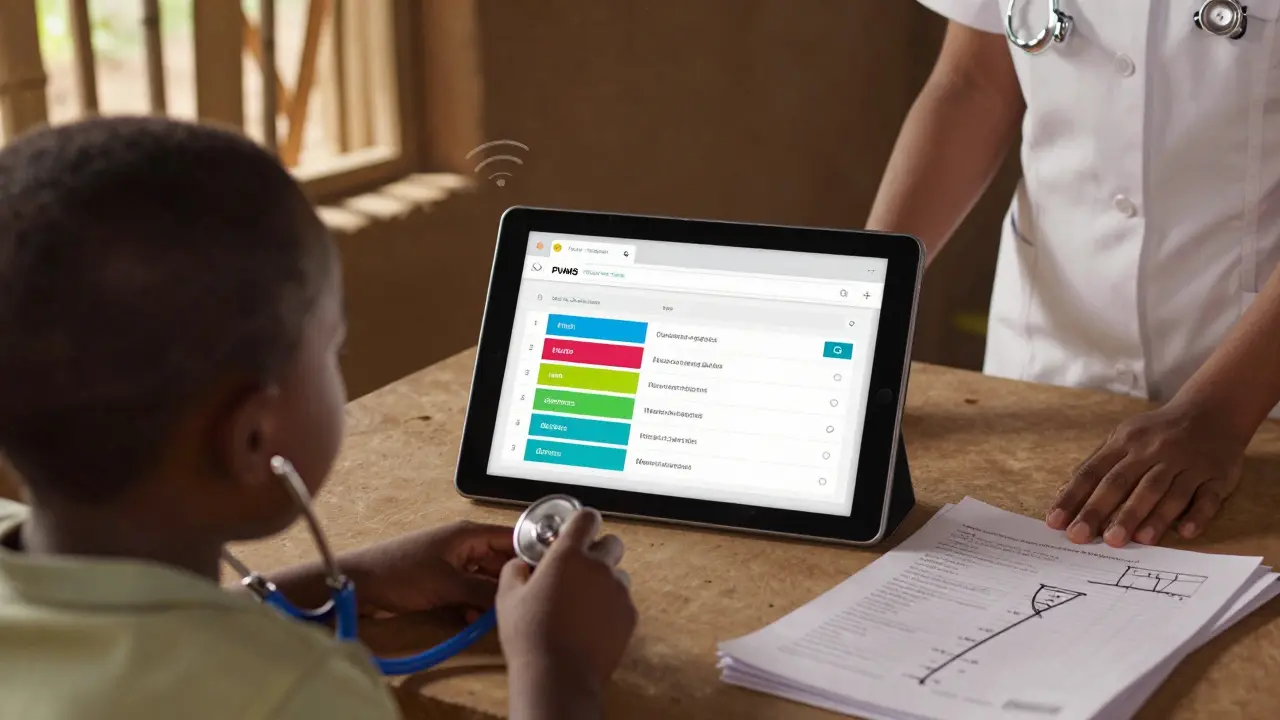
Developed by USAID and used in 28 countries across Africa and Southeast Asia, PViMS is designed for clinics with spotty internet and minimal tech support. It runs on any browser, needs no special hardware, and uses simple dropdown menus based on MedDRA terminology. A clinician in Kenya reported a 60% drop in data entry time compared to paper forms. But it doesn’t have AI, predictive analytics, or deep integration with labs. It’s a safety net, not a smart assistant.For Researchers: clinDataReview
This open-source tool, built in R, generates FDA- and EMA-compliant safety reports automatically. It’s 99.8% accurate in detecting signals during validation tests. Perfect for academic centers or regulators who need auditable, reproducible analyses. But you need to know R. If you can’t write a loop or clean a dataset with dplyr, you’ll need a data scientist on standby. Training takes 3-5 days.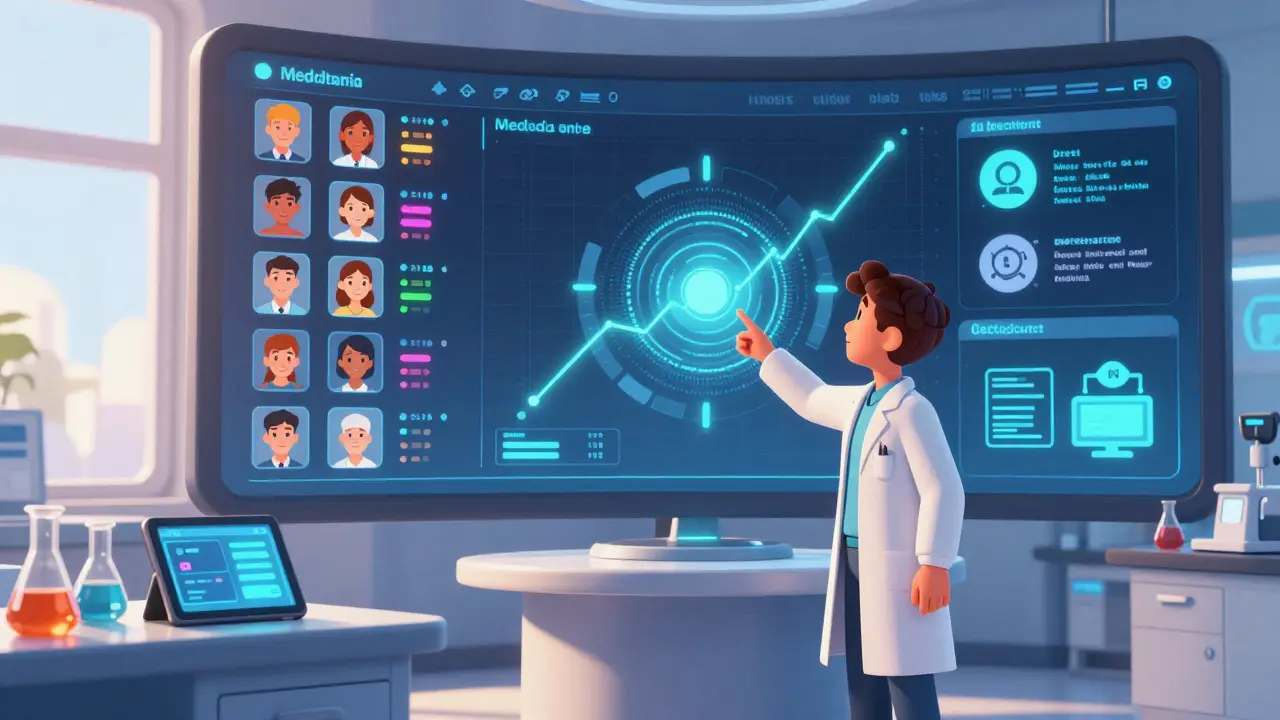
How to Start Using One
Don’t jump into the most advanced system. Start here:- Identify your biggest pain point. Are you missing reactions in your EHR? Are reports taking too long? Are you drowning in false alerts?
- Match the tool to your setting. Hospital? Go with Medi-Span. Trial site? Cloudbyz. Clinic in a remote area? PViMS. Research lab? clinDataReview.
- Check integration. Does it talk to your EHR? Can it pull lab data? If not, you’ll be manually copying and pasting-and that defeats the purpose.
- Train your team. A 2024 survey found 87% of users need 80-120 hours of training to use advanced tools effectively. Don’t assume everyone knows what a “safety signal” means. Teach them how to interpret alerts, not just react to them.
- Start small. Pilot with one drug class-say, anticoagulants or antibiotics-before rolling out to everything.
What You Need to Know to Use Them Well
These tools won’t help if you don’t understand the data they’re showing you.- Know your drugs. You need clinical pharmacology knowledge. A spike in creatinine might mean kidney damage-or just dehydration. Context matters.
- Understand regulatory rules. FDA 21 CFR Part 11, EMA guidelines, and ICH E2B formats aren’t bureaucracy. They’re the rules that make your reports legally valid and usable globally.
- Don’t ignore the unstructured data. Most EHRs still store notes as free text. Current systems only extract 65-78% of adverse events from these notes. If a patient writes, “I feel like my heart is jumping out of my chest,” that’s a red flag. But the system might miss it unless you use NLP tools built into the portal.
- Question the AI. IQVIA’s AI cuts false positives by 85%, but it needs 50,000+ patient records to work well. If your clinic has 2,000 patients, it’s not going to help. And AI can’t explain why it flagged something-yet. Always ask: “What data led to this?”
What’s Next?
The next wave is AI that doesn’t just detect signals-it explains them. IQVIA’s new “AI co-pilot” shows safety officers the evidence behind each alert: “This signal is based on 12 similar cases from 3 different countries, with matching lab trends and timeline patterns.” That’s huge. It turns guesswork into evidence. But the biggest shift isn’t technological. It’s cultural. The FDA and EMA now say human oversight isn’t optional-it’s mandatory. AI can point you to the problem. Only you can decide what to do about it.Common Pitfalls to Avoid
- Ignoring connectivity. In rural clinics, internet drops kill reporting. Always have an offline mode or backup form.
- Over-relying on alerts. If you’re getting 20 alerts a day and only acting on 3, you’re training yourself to ignore the system.
- Not updating your drug lists. If your portal doesn’t have the latest version of a drug’s safety profile, it’s giving outdated advice.
- Skipping training. A 2024 DIA survey showed that 60% of failed implementations were due to poor user training-not bad software.
Final Thought
Drug safety monitoring isn’t about technology. It’s about trust. Trust that the system won’t miss something critical. Trust that the alert isn’t just noise. Trust that your actions will prevent harm. The right portal doesn’t make you smarter-it makes your knowledge faster, sharper, and more connected. Use it to listen better-to your patients, your data, and the signals that matter.Can clinician portals replace pharmacovigilance experts?
No. These tools enhance, not replace, human judgment. AI can flag patterns, but only a trained pharmacovigilance professional can interpret them in context-considering a patient’s full history, comorbidities, and social factors. The FDA and EMA require a Qualified Person for Pharmacovigilance (LQPPV) to review and validate every serious adverse event report, regardless of how the signal was detected.
Are these portals only for large hospitals or pharma companies?
No. While enterprise tools like Cloudbyz and Medi-Span target large organizations, simpler platforms like PViMS are designed for clinics in low-resource settings. Even small practices can use EHR-embedded tools like drug interaction alerts. The key is matching the tool’s complexity to your needs-not your size.
How long does it take to implement a drug safety portal?
It varies. For hospital-based tools like Medi-Span, implementation takes 4-6 weeks, including training. For clinical trial platforms like Cloudbyz, expect 8-12 weeks due to data mapping and integration with EDC systems. Open-source tools like clinDataReview can be installed in days, but training staff to use them effectively takes 3-5 days. LMIC tools like PViMS can be deployed in 3-5 weeks but require reliable internet and local support.
Do I need special training to use these apps?
Yes. Basic users need 20-40 hours to learn how to navigate alerts and submit reports. Advanced users-like safety officers or data analysts-need 80-120 hours to interpret patterns, customize settings, and validate signals. Training should include pharmacology basics, regulatory requirements, and hands-on practice with real (anonymized) cases.
Can these tools detect drug interactions I haven’t seen before?
Yes, but only if enough data exists. AI-driven platforms like IQVIA’s can detect new patterns by comparing your patient data with global databases. For example, if 15 patients across three countries developed a rare skin rash after taking Drug A and Drug B together, the system might flag it-even if it’s not in any published literature yet. But if your patient population is small or data is sparse, the system won’t have enough to go on.
Are these portals compliant with FDA and EMA regulations?
Most enterprise and research-grade platforms are designed for compliance. Cloudbyz, Medi-Span, and clinDataReview all meet FDA 21 CFR Part 11 and EMA guidelines for data integrity, audit trails, and electronic signatures. PViMS meets basic reporting standards for LMICs but lacks advanced compliance features. Always verify the platform’s certification status and ask for documentation before implementation.
swati Thounaojam
January 7, 2026 AT 18:51Manish Kumar
January 8, 2026 AT 10:12Dave Old-Wolf
January 9, 2026 AT 09:13Prakash Sharma
January 10, 2026 AT 23:26Kristina Felixita
January 12, 2026 AT 18:20Joanna Brancewicz
January 13, 2026 AT 17:31Ken Porter
January 15, 2026 AT 08:15Annette Robinson
January 17, 2026 AT 07:36Luke Crump
January 17, 2026 AT 15:14Evan Smith
January 17, 2026 AT 17:41Lois Li
January 19, 2026 AT 01:59christy lianto
January 20, 2026 AT 18:49Aubrey Mallory
January 21, 2026 AT 17:47Donny Airlangga
January 22, 2026 AT 20:25Molly Silvernale
January 22, 2026 AT 23:21