
Why Teens Need to Learn Medication Management
Teens aren’t kids anymore, but they’re not fully grown adults either. That middle ground is exactly where things get risky when it comes to prescription meds. A 16-year-old on ADHD medication, a 17-year-old with asthma, or a 15-year-old taking antidepressants-all of them need to know how to handle their own pills, patches, or inhalers before they leave home for college, a job, or military service. The problem? Many teens don’t. According to the 2022 Monitoring the Future study, about 14% of high school seniors have misused prescription drugs at least once. That’s not rebellion-it’s ignorance. And it’s preventable.
Medication mismanagement isn’t just about getting high. Missing doses of antibiotics can lead to resistant infections. Forgetting insulin can send someone to the ER. Taking too much painkiller can stop breathing. And teens often don’t realize how dangerous even a "safe" pill can be. The DEA says 70% of teens think prescription drugs are safer than street drugs. That’s a deadly myth.
Start Early-Don’t Wait Until College
Waiting until your teen leaves for college to hand over their meds is like giving them a car key without teaching them to drive. The best time to start? 10th grade. That’s when most teens are old enough to understand cause and effect, but still close enough to home for you to guide them through mistakes. The Child Mind Institute recommends a three-year plan: learn in 10th grade, practice in 11th, take full control in 12th.
By 10th grade, your teen should be able to name every medication they take, say what it’s for, and explain why they need it. No more "I don’t know, Mom just says take it." If they can’t answer those questions, they’re not ready to manage it. Start with simple conversations: "Why do you take this? What happens if you skip it?" Make it normal, not scary.
Build a Routine-Not a Checklist
Teens don’t respond well to lists. They respond to habits. That’s why pairing meds with something they already do every day works better than setting ten alarms. Brushing teeth? Take your pill after. Eating breakfast? Take it right after. Walking to the bus? Put your inhaler in your pocket before you leave.
Research from the University of Rochester shows that teens who link meds to daily routines are 37% more likely to stick with them. Why? Because routines don’t require willpower-they just happen. Try this: sit down with your teen and map out their day. Where do they already have anchors? Morning, after school, before bed? That’s where the meds go.
Don’t just say "take it at night." Say "take your antidepressant right after you turn off your phone and get into bed." Specificity beats general advice every time.
Use Tools That Actually Work
There are hundreds of medication apps out there. Most are useless. The ones that work-like Medisafe and MyMeds-do three things: they send reminders, let teens log doses, and notify a parent if a dose is missed. Studies show they improve adherence by 28% in teens.
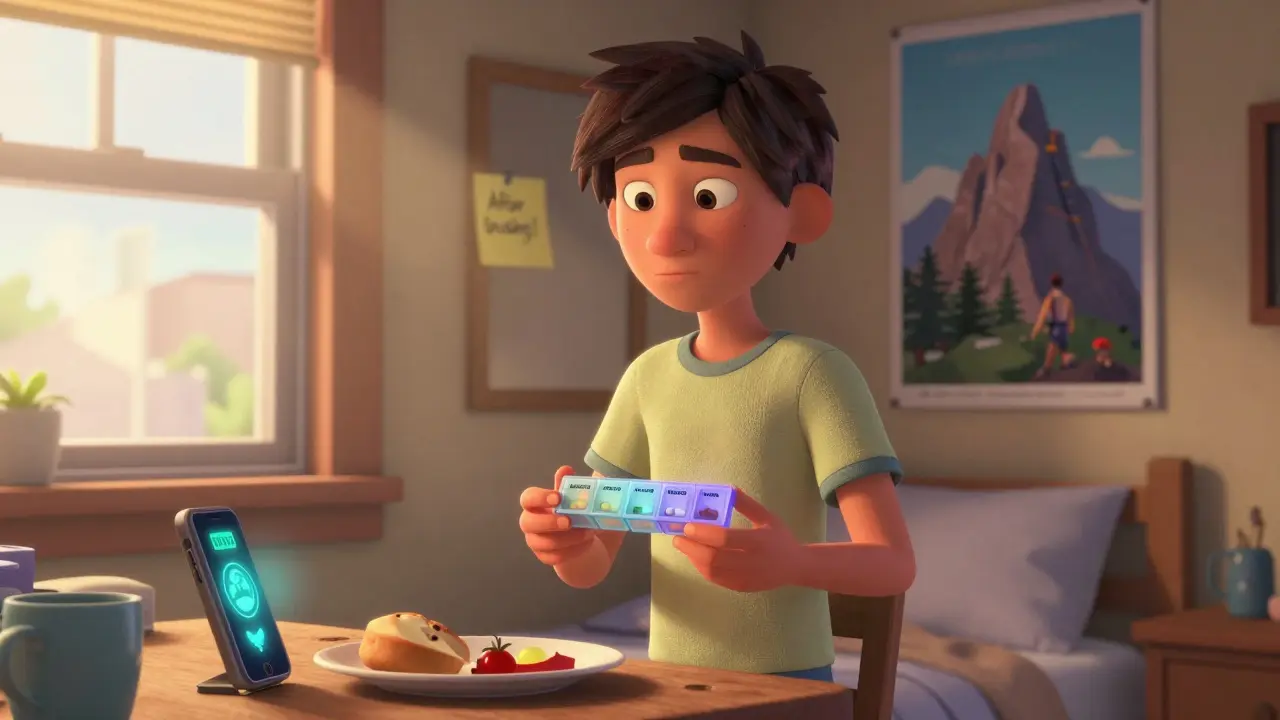
But here’s the catch: the teen has to want to use them. Don’t download an app and force it. Let them pick. Ask: "Do you want to use an app, a pill box, or just a sticky note?" Then support their choice. A pill organizer with morning/afternoon/evening slots works great for simple regimens. For complex ones, an app with snooze alerts and visual logs is better.
And don’t forget the old-school tools. A simple whiteboard on the fridge with a checkmark for each dose? Still effective. The goal isn’t fancy tech-it’s consistency.
Teach Them to Talk to Doctors
Too many teens never speak up about side effects. They think the doctor won’t listen. Or they’re embarrassed. Or they don’t know what to say. That’s dangerous. A teen on a new antidepressant might feel dizzy. A kid on steroids might gain weight. A teen on painkillers might feel sleepy all day. If they don’t tell anyone, it gets worse.
Practice role-playing with them. "Say this to your doctor: ‘I’ve been feeling really tired since I started this pill. Is that normal?’" Give them phrases. Teach them to write down questions before appointments. Let them sit in on their own doctor visits-just listen at first, then slowly take over the conversation. By 12th grade, they should be able to explain their meds, report side effects, and ask about refills without you stepping in.
Controlled Substances Need Extra Rules
Not all meds are equal. Painkillers like oxycodone, ADHD meds like Adderall, and anxiety drugs like Xanax are the most commonly misused by teens. The DEA calls them the "big three." And they’re not safe just because they’re prescribed.
Aetna’s 2021 guidelines say it plainly: even responsible teens shouldn’t control their own painkillers. That means locked storage. A small lockbox in your bedroom, not the bathroom cabinet. A key you keep. A count you check weekly. If you notice pills missing, don’t accuse-ask. "I noticed your count is low. Are you taking extra?"
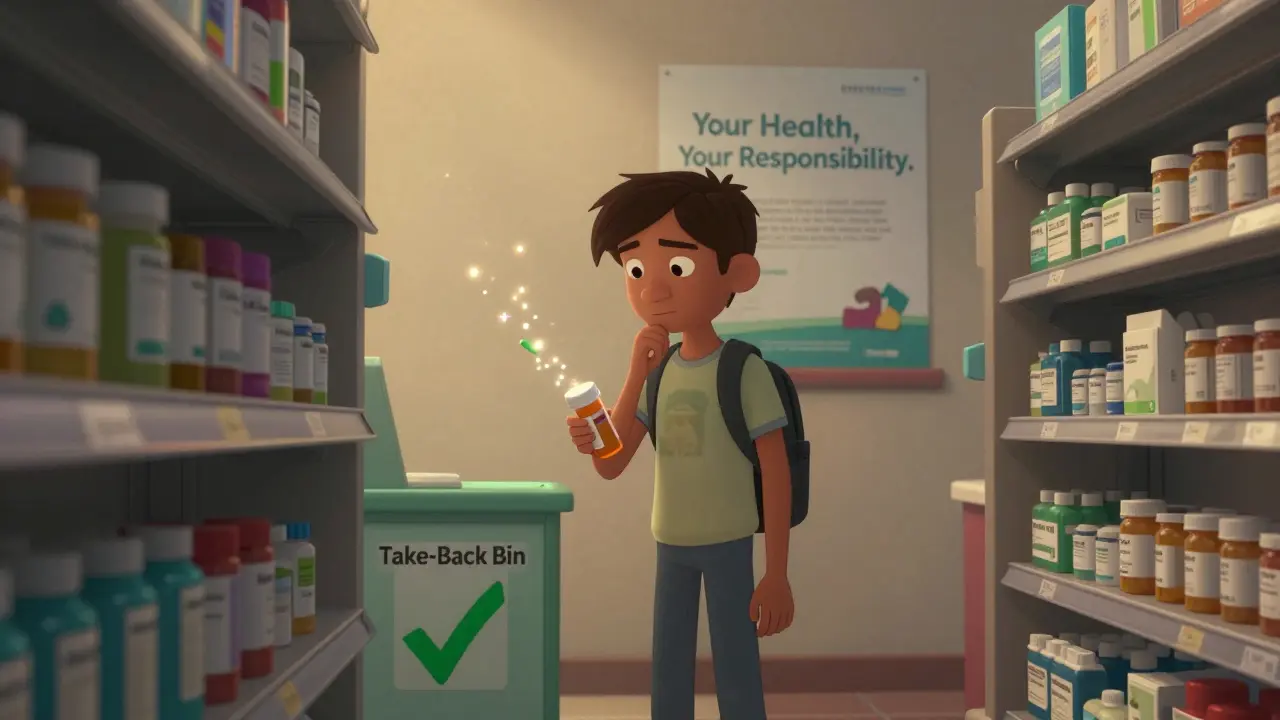
Also, never leave extra pills lying around. Empty bottles go in the pharmacy take-back bin. In the U.S., there are over 14,000 drop-off locations. In New Zealand, pharmacies offer free disposal. Get rid of unused meds the same day your teen’s prescription ends. No "just in case" stash.
Involve Their Friends-Quietly
Teens listen to peers more than parents. That’s why having a medication buddy helps. It doesn’t mean they have to tell everyone. Just one trusted friend who knows their schedule. "Hey, I take my pill at 8 p.m. Can you text me if I forget?" Simple. Low-pressure. Effective.
Research in the Journal of Adolescent Health found teens with a medication partner had 22% higher adherence. Why? Accountability. No one wants to look bad in front of a friend. And if a teen feels supported, they’re less likely to skip meds to fit in.
Encourage your teen to find one friend they trust. Help them write a short script: "I’m on meds for my anxiety. I don’t want to talk about it, but if you see me looking off, can you just ask if I took my pill?" That’s enough.
Check In-Then Back Off
Supervision isn’t about spying. It’s about scaffolding. Start by watching them take their meds. Then move to text confirmations: "Did you take your inhaler?" Then to weekly check-ins: "How’s the routine going?" By the end of 12th grade, it’s monthly spot-checks-no warning.
The goal is independence, not control. If your teen is consistent for three months, stop asking. Let them own it. But stay ready. If they miss two doses in a row, gently ask why. Maybe they’re overwhelmed. Maybe they’re depressed. Maybe they’re using it wrong. Don’t panic. Just listen.
What Schools Can Do
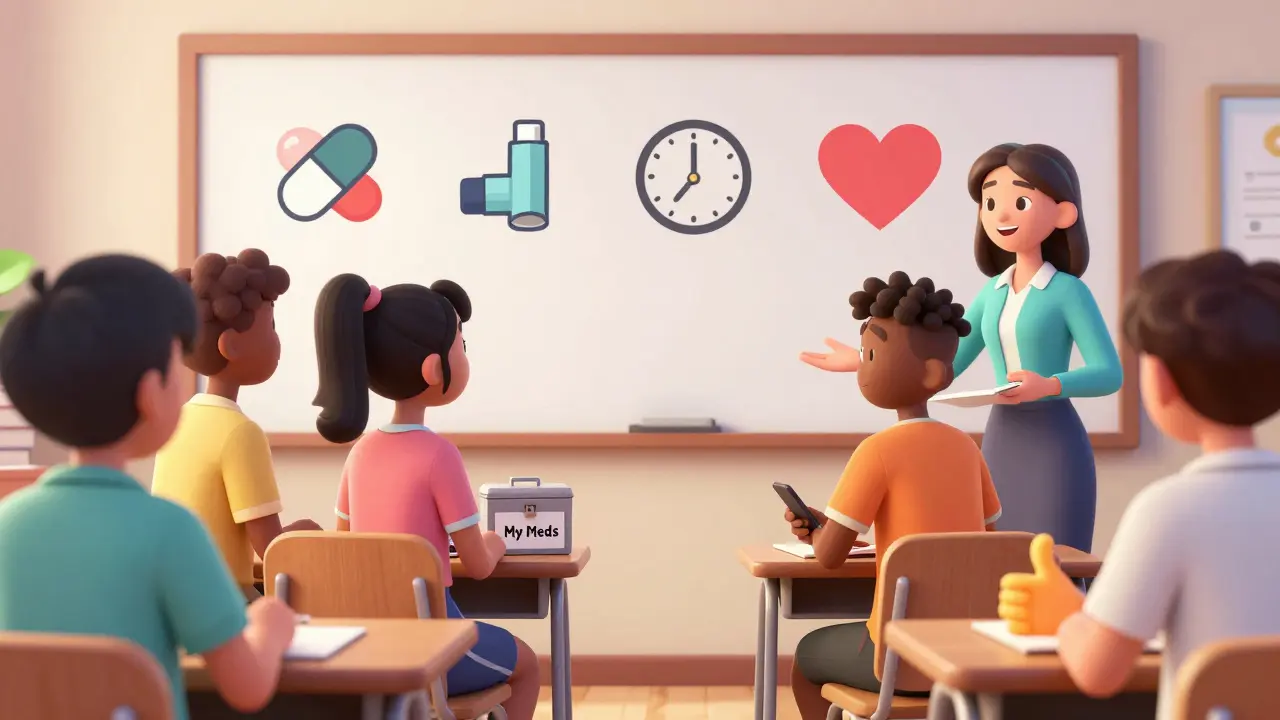
Not every parent has the time or knowledge to teach this. That’s where schools come in. Programs like Generation Rx’s "My Generation Rx" curriculum are being used in over 2,000 U.S. high schools. They teach teens how to say no to peer pressure, how to read labels, and how to recognize misuse.
Schools that use these programs report 33% fewer cases of prescription drug misuse. That’s huge. Ask your teen’s school if they offer any medication safety education. If not, push for it. It’s as important as sex ed or drug prevention.
What Happens If You Don’t Teach Them?
Every year, $290 billion is spent in the U.S. on healthcare costs tied to teens and young adults not taking their meds right. That’s not just money-it’s ER visits, hospital stays, missed school, and worse.
Teens who don’t learn to manage meds are more likely to stop taking them entirely when they leave home. That’s true for asthma, diabetes, epilepsy, depression-you name it. And once they stop, restarting is hard. The body forgets. The routine breaks. The trust fades.
Teaching your teen to manage meds isn’t about control. It’s about giving them the tools to stay healthy when you’re not around. It’s about trust. It’s about safety. And it’s about preparing them for life.
What to Do Next
Start today. Pick one medication your teen takes. Sit down with them. Ask: "What’s this for?" Then ask: "When do you take it?" Then ask: "What happens if you forget?" Write down the answers. If they can’t answer, you’ve found your starting point.
Set up one tool-a pill box, an app, a sticky note. Make it their choice. Then check in once a week. No nagging. Just: "How’s it going?"
By next month, they’ll know more than you think. And by next year, they’ll be ready to handle it on their own.
Ishmael brown
February 2, 2026 AT 05:00June Richards
February 3, 2026 AT 06:23Jaden Green
February 3, 2026 AT 18:22Furthermore, the suggestion that teens should "pick their own tool" ignores the fact that most adolescents lack metacognitive awareness to make such decisions. You don’t let a child choose their own insulin regimen because they "like the app’s colors." Why are we pretending this is different?
Lu Gao
February 5, 2026 AT 16:15Angel Fitzpatrick
February 7, 2026 AT 07:29Lockboxes? Weekly counts? That’s not safety-that’s surveillance. What about the teens who need these meds because their trauma was never addressed? You’re medicating symptoms while ignoring root causes. And don’t get me started on how schools are being pushed to adopt Generation Rx like it’s some kind of public service. It’s a Trojan horse for pharmaceutical indoctrination. 🕵️♂️💊
Nidhi Rajpara
February 8, 2026 AT 17:21Chris & Kara Cutler
February 9, 2026 AT 05:52Donna Macaranas
February 11, 2026 AT 04:48