

Ever feel like your medicine cabinet is starting to look like a pharmacy? If you're taking a handful of pills every day, you've likely received an invite for a medication review appointment. It might seem like just another check-up, but it's actually a critical safety net. These appointments aren't about judging how you take your meds; they're about making sure those meds are actually doing what they're supposed to do without fighting each other in your system.
The goal is simple: optimize your treatment. Whether you're managing one chronic condition or several, a structured review helps your provider spot adverse drug reactions, correct dosage errors, and potentially prune away medications you no longer need. If you ignore these invites, some clinics-like those following NHS guidelines-may actually restrict your prescription quantities or stop issuing repeats entirely until you're seen. It's a strict policy, but it's there because taking the wrong dose or an outdated drug can be dangerous.
What exactly happens during a medication review?
Depending on your needs, you'll likely spend about 20 minutes with a GP, or 30 to 45 minutes if you're seeing a clinical pharmacist for a more comprehensive dive. Your provider will generally focus on four key areas: assessing your current health, agreeing on what "success" looks like for your treatment, identifying medicines that might be inappropriate for your age or condition, and weighing the risks versus the benefits of every single pill.
There are usually three different types of reviews happening at once: Prescription Reviews, which check the technical accuracy of the script; Concordance Reviews, which look at how you're actually taking the meds in real life; and Clinical Medication Reviews, which ensure the drugs fit your current medical diagnosis.
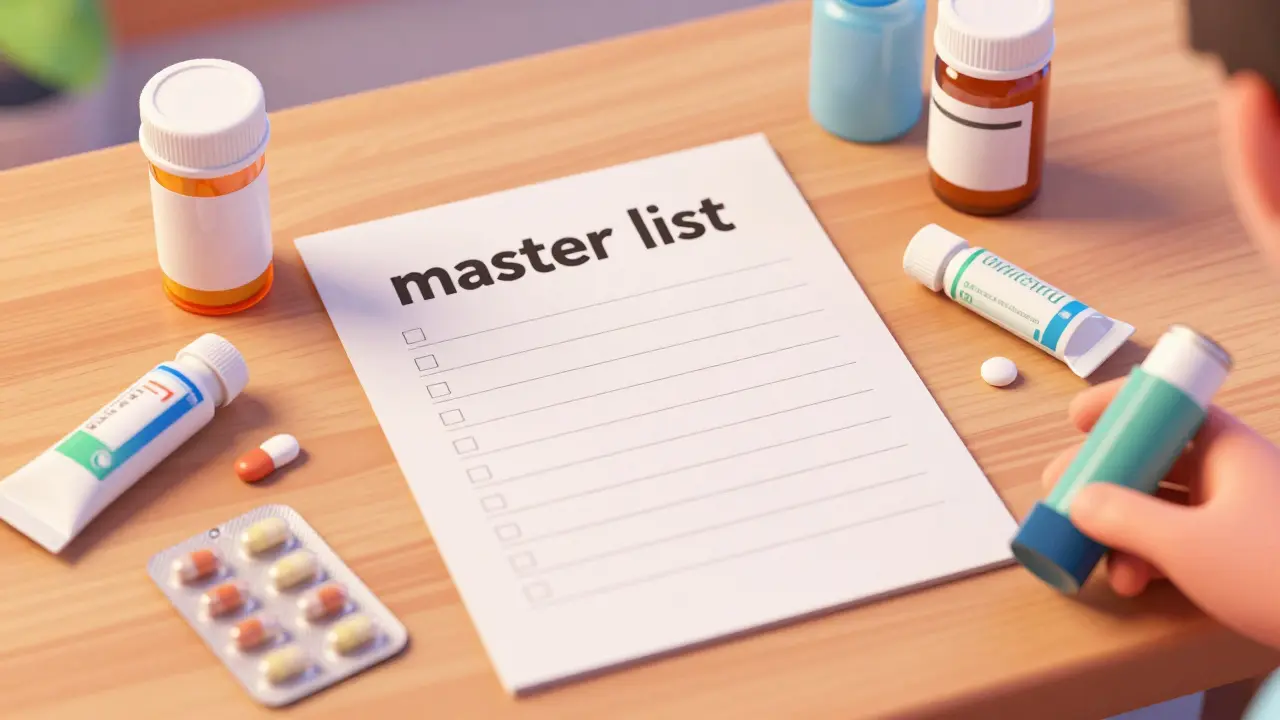
Building your master medication list
Walking in and saying "I take a blue pill for blood pressure and something for cholesterol" isn't enough. To get the most out of your time, you need a concrete, written list. Don't rely on your memory-stress and the clinical environment can make you forget a drug or a dose.
Your list should include every single thing you put in your body. This means not just the heavy-hitting prescriptions, but also:
- Over-the-counter painkillers (like ibuprofen or paracetamol)
- Daily vitamins and mineral supplements
- Herbal remedies and teas
- Creams, ointments, and inhalers
For each item, note the exact dosage (e.g., 10mg), the frequency (e.g., twice daily), the reason you're taking it, and which doctor prescribed it. If you've noticed a weird side effect-even something small like a dry mouth or a slight tremor-write it down. These tiny clues often tell a doctor more than a blood test does.
| Item to Include | Details Needed | Why it Matters |
|---|---|---|
| Prescription Meds | Name, dose, prescribing doctor | Prevents drug-drug interactions |
| OTC / Supplements | Vitamins, herbals, painkillers | Some supplements interfere with prescriptions |
| Symptom Log | Side effects, timing of onset | Identifies adverse drug reactions |
| Physical Packaging | The actual bottle or blister pack | Verifies the exact brand and strength |
Special considerations for specific needs
Different health conditions require different preparation strategies. For example, if you're living with Parkinson's disease, timing is everything. Because these medications have narrow therapeutic windows, a gap of just 30 minutes in your dose can lead to a significant return of symptoms. You should prepare a precise diary of exactly when you take each dose, rather than just "morning and night."
If you're dealing with Polypharmacy-which is the medical term for taking five or more medications-you are at a much higher risk for adverse drug events. In these cases, the review is less of a routine check and more of a safety audit. Be prepared for your doctor to suggest stopping a medication you've taken for years; this is often part of a "deprescribing" process to reduce the burden on your liver and kidneys.

Handling telehealth or virtual reviews
Virtual appointments are convenient, but they have a major flaw: your doctor can't physically see your pill bottles. This puts more pressure on your organization. Before the call starts, clear a table and lay out every single medication you use. If you're using a video link or a specific app, test your connection ten minutes early so you don't spend half your appointment troubleshooting audio issues.
Since the provider can't flip through your physical files, have your written list open in front of you. If you have a caregiver or a family member who helps manage your meds, have them join the call. They often notice side effects or missed doses that you might have overlooked.
Asking the right questions
This appointment is a two-way street. Don't just let the doctor talk at you; use the time to get clarity on your treatment plan. Instead of asking "Is this medicine okay?", try more specific questions that prompt a detailed answer. You might ask:
- "Is there a newer version of this drug with fewer side effects?"
- "What will happen if I stop taking this specific supplement?"
- "Are any of these medications causing the fatigue I've been feeling?"
- "How should I adjust my dose if I get a cold or another infection?"
By focusing on shared decision-making, you move from being a passive recipient of care to an active manager of your own health. Remember, the goal isn't just to keep you on a list of meds, but to ensure that every single item you take is contributing to your quality of life.
How often should I have a medication review?
Most healthcare guidelines suggest an annual review. However, you should request one sooner if you start a new medication, experience new side effects, or if your overall health changes significantly.
Why do I need to bring my herbal supplements to the review?
Many people assume "natural" means "safe," but herbal supplements can cause dangerous interactions with prescription drugs. For example, some supplements can thin your blood or interfere with how your liver processes medication, making your prescriptions either too strong or ineffective.
What happens if I miss my review appointment?
Depending on your provider's policy, missing a review can lead to a restriction in the amount of medication prescribed. Some practices may stop issuing repeat prescriptions entirely until the review is completed to ensure your safety.
Can a pharmacist do a medication review instead of a doctor?
Yes. Many clinics now use Practice Clinical Pharmacists to lead these reviews. They are experts in drug interactions and dosages and work closely with your GP to update your treatment plan.
Do I need to bring the actual bottles or just a list?
Bringing the actual packaging is highly recommended. It allows the provider to verify the exact brand, strength, and lot number, which eliminates any confusion that might arise from a handwritten list.
Del Bourne
April 5, 2026 AT 21:25This is such a great reminder to stay organized. I've seen so many patients struggle because they forget to mention a simple vitamin that actually clashes with their primary prescription. A physical list is definitely the way to go!
Brady Davis
April 7, 2026 AT 15:50Oh wow, a whole list of everything I put in my body. I'm sure my doctor is just dying to know exactly how many generic brand gummies I eat a day. Truly groundbreaking stuff here.
Toby Sirois
April 7, 2026 AT 22:30Everyone forgets the most basic part which is that doctors usually don't even listen to you for more than five minutes. You can bring a list and a whole pharmacy in a bag and they'll still just glance at it and tell you you're fine. I've been through this a dozen times and it's always the same story because the system is broken and people just follow the script without actually thinking about the patient.
Rauf Ronald
April 8, 2026 AT 22:46Spot on! I'd also add that if you're using a pill organizer, just bring the whole organizer with you. It's way easier for the provider to see the actual layout of your daily routine than just reading a list of dosages!
Srikanth Makineni
April 9, 2026 AT 08:27bring the bottles. way easier
Timothy Burroughs
April 10, 2026 AT 20:25imagine needing a guide for this... just be an adult and know what you take lol america is so soft with these medical hand-holding sessions we dont need all this fluff just get it done
Daniel Trezub
April 11, 2026 AT 09:56Actually, a lot of pharmacists are way better at this than GPs anyway. They spend their whole lives studying chemistry while the doctor just remembers one lecture from ten years ago. Just a thought!
Christopher Cooper
April 11, 2026 AT 20:56I really appreciate the mention of polypharmacy. It's a scary realization when you realize you're taking a pill to fix the side effect of another pill, which then requires a third pill. Deprescribing is such an underrated part of healthcare.
Dhriti Chhabra
April 12, 2026 AT 16:57It is truly commendable to provide such a detailed framework for patient care. Ensuring that there is a harmonious dialogue between the practitioner and the patient will undoubtedly lead to superior health outcomes for all parties involved.
Rupert McKelvie
April 13, 2026 AT 08:39Glad to see these reviews are being emphasized. It's a brilliant way to keep things safe and sound for everyone involved.
Sarabjeet Singh
April 13, 2026 AT 10:41Keep at it everyone! Taking charge of your own health is the best move you can make. Just a bit of prep goes a long way.
Nikhil Bhatia
April 13, 2026 AT 18:28too much reading for a simple doctor visit
Michael Flückiger
April 15, 2026 AT 11:58I totally agree... this is so important!!! Please everyone... just make the list... it saves so much stress!!!
Vivek Hattangadi
April 17, 2026 AT 00:40I've actually tried the pill organizer tip mentioned above and it works like a charm! It makes the conversation with the pharmacist so much more fluid because you can literally point to the slot for 'Tuesday morning' and discuss that specific dose. Definitely a game changer for anyone struggling with polypharmacy.
Alexander Idle
April 18, 2026 AT 10:58Oh my god, the absolute audacity of these clinics to stop prescriptions just because you missed a chat! Like, I'm sorry, but my health cannot wait for your scheduling convenience. It's honestly a cinematic tragedy that we have to jump through these hoops just to get the meds we've been on for years. Truly a nightmare scenario for any patient!