

When someone is taking multiple medications, especially older adults with chronic conditions, keeping track of what to take, when, and why can become overwhelming. That’s where family members or caregivers come in. They’re not just helpers-they’re essential partners in making sure medications work as they should. Without their support, missed doses, wrong dosages, or dangerous interactions can lead to hospital visits, worsening health, or even death. The good news? With the right system, involving caregivers doesn’t add stress-it reduces it.
Start with a Complete Medication List
The first step is simple but often skipped: write down every medication the person takes. Not just the name. Include the brand and generic name, exact dosage (like "Lisinopril 10mg"), timing ("Take at 8 AM with breakfast"), why it’s prescribed, and any known side effects. The Agency for Healthcare Research and Quality says a list with all 17 key details cuts adverse drug events by 41%. That’s not a small number-it’s life-changing.Many caregivers keep lists on napkins, phone notes, or in their heads. That’s risky. A 2021 study found that 50-60% of medication errors happen during transitions, like when someone leaves the hospital. A paper list kept in a binder or a digital version synced across devices works better. Bring this list to every doctor visit. If a specialist prescribes something new, ask: "Is this safe with what they’re already taking?" The American Geriatrics Society’s Beers Criteria lists 30 medications that are risky for older adults. Caregivers who check prescriptions against this list prevent dangerous overlaps.
Use Tools That Actually Work
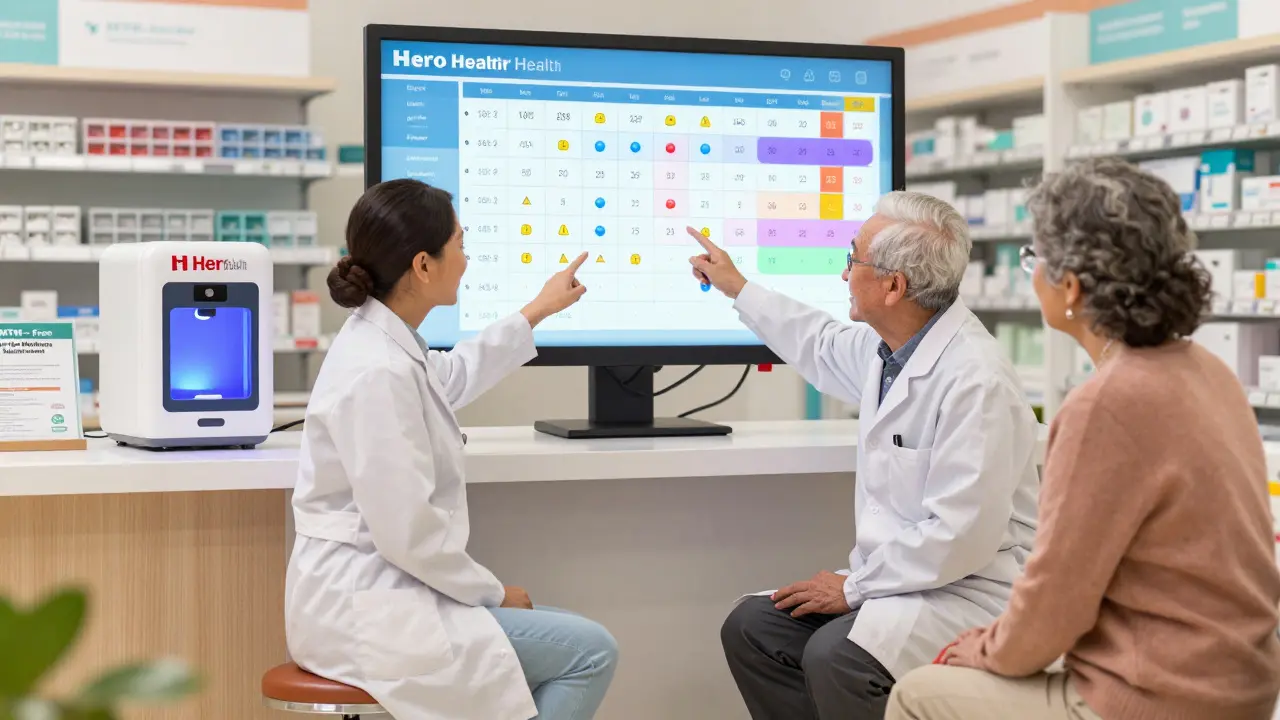
Pill organizers are everywhere, but not all are equal. A simple 7-day AM/PM box reduces errors by 37%, according to the Journal of the American Geriatrics Society. For more complex regimens-like medications taken three times a day with different rules-electronic dispensers like Hero Health or MedMinder are better. These devices lock pills until the right time, play alarms, and even notify family if a dose is skipped. Clinical trials show they cut missed doses by 62%.Pharmacies also offer help. CVS, Walgreens, and Medicare Part D plans now have automatic refill programs. Set them up at least 7-10 days before a prescription runs out. You’ll get a text or call when it’s ready. No more panic runs to the pharmacy at 10 PM. And if the person takes 8 or more medications for 3 or more chronic conditions, they qualify for free Medication Therapy Management (MTM) from their pharmacy. A pharmacist sits down with them (and the caregiver) to review everything, check for interactions, and simplify the schedule. In 2023, 68% of eligible Medicare beneficiaries used this service-most didn’t even know it was free.
Build Routines Around Daily Habits
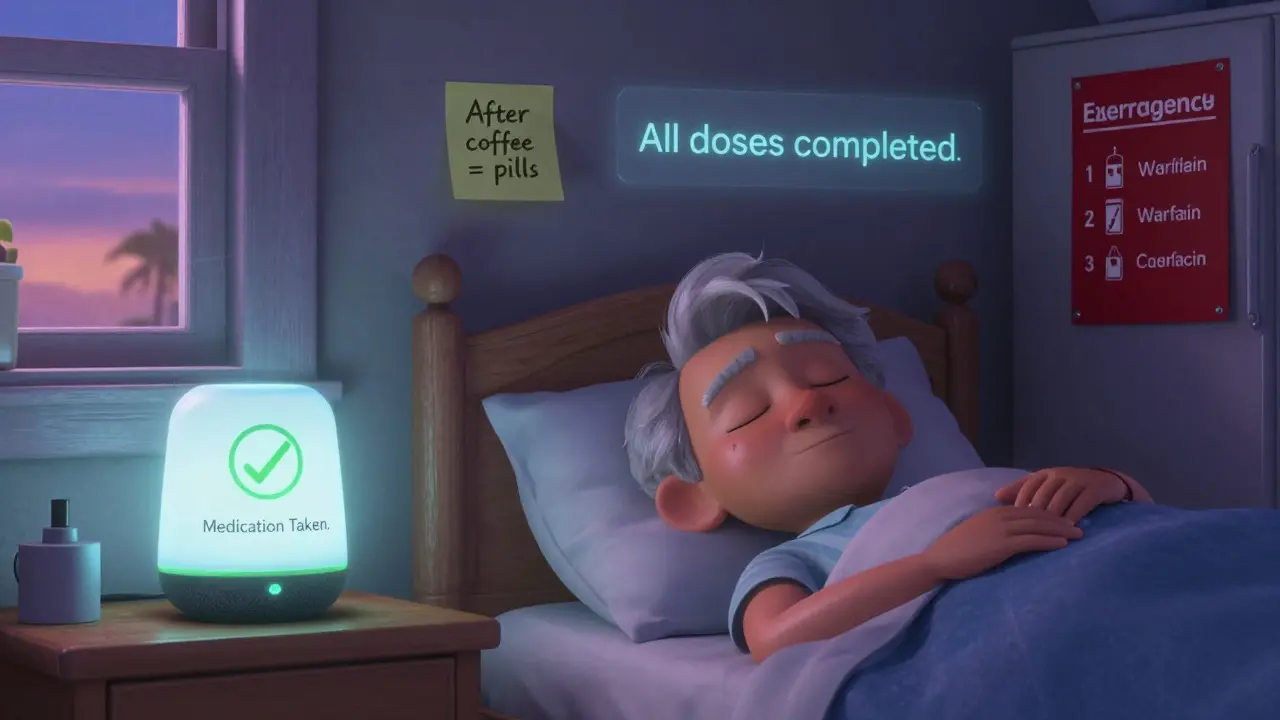
People don’t remember to take pills because they forget. They remember because they link it to something they already do. This is called "habit stacking," and it’s backed by the National Institute on Aging. Link each medication to a daily habit: "After I brush my teeth, I take my blood pressure pill." "After I pour my morning coffee, I open the pill box."A 2022 study showed this simple trick improves adherence by 28%. It works because the brain doesn’t have to create a new memory-it just attaches the new task to an existing one. For someone with memory issues, pair the pill-taking moment with a sound or visual cue: a chime from a smart speaker, a sticky note on the bathroom mirror, or even a voice reminder set on Alexa. University of Pittsburgh research found voice reminders cut missed doses by 37% for people with dementia.
Set Up Smart Reminders
Paper logs? Outdated. Smartphone apps like Medisafe or Round Health send push notifications, track when doses are taken, and even let caregivers get alerts if a dose is missed. In studies, these apps boost adherence by 45% compared to paper. But not everyone uses a phone. That’s where Alexa or Google Home come in. Say, "Alexa, remind me to take my medicine at 8 AM," and it repeats daily. For caregivers, the Alexa Care Hub lets you see if your parent took their pills-even if they don’t answer the phone.One caregiver in Ohio told the Caregiver Action Network: "I used to call my mom every morning to ask if she took her pills. Now, I get a text if she skips one. It’s less stress for both of us."
Review Medications Regularly
Medications change. New ones are added. Old ones are stopped. But no one tells the caregiver. Quarterly reviews are critical. The Beers Criteria recommends checking all medications every three months if someone takes four or more. Look for: Are any drugs no longer needed? Are there duplicates? Are any on the risky list?A 2022 JAMA Internal Medicine analysis found that regular reviews cut inappropriate prescriptions by 22%. Ask the pharmacist: "Is this still necessary?" Ask the doctor: "Could we try lowering the dose?" Sometimes, a medication that was needed after surgery isn’t needed six months later. But without a review, it just keeps being refilled.
Create an Emergency Plan
Not all missed doses are equal. Missing a blood pressure pill? Maybe it’s okay. Missing insulin? That’s an emergency. Make a "medication red list"-the drugs that require immediate action if skipped. These usually include: insulin, blood thinners like warfarin, seizure meds, heart meds like beta-blockers, and certain psychiatric drugs.Write down what to do if one is missed: "Call the doctor if insulin is skipped," or "Go to the ER if warfarin is missed for more than 12 hours." Keep this list taped to the fridge or in the pill box. A 2023 study in the Annals of Internal Medicine found that families with this plan cut emergency room visits by 19%.
Go to Appointments Together
Caregivers who attend medical visits with their loved ones understand the treatment plan 89% better than those who don’t, according to AARP’s 2023 survey. Bring the medication list. Write down questions ahead of time. Ask: "What’s the goal of this medicine?" "What if we stop it?" "Are there cheaper options?"One caregiver in Reddit’s r/caregivers community shared: "My dad saw four specialists. None knew what the others prescribed. I brought the list. Two meds were duplicated. One was dangerous with his kidney condition. We stopped them. He felt better in a week."
Watch for Burnout
Medication management is exhausting. The National Alliance for Caregiving found that 42% of caregivers say managing meds is their most stressful task. It’s not just remembering-it’s calling pharmacies, fighting insurance, tracking refills, dealing with side effects. If you’re overwhelmed, ask for help. Can a sibling take over refills? Can a home care worker check the pill box? Can a pharmacist do a home visit?Many home care agencies now train their staff in medication support. Medicare and private insurers cover some of these services. Don’t try to do it all alone. Your health matters too.
What to Avoid
Don’t rely on memory. Don’t let medications pile up in a drawer. Don’t skip reviews just because "it’s been fine." Don’t assume a doctor knows what’s being taken at home. Don’t feel guilty for asking questions. You’re not interfering-you’re protecting.Complex regimens-like taking pills three times a day-are 40% harder to stick to, according to the New England Journal of Medicine. If the schedule is too hard, ask for simplification. Can some pills be combined? Can a once-daily version exist? Many medications have long-acting forms now. A simple switch can make all the difference.
What’s Changing Now
In 2024, pharmacies like Walgreens launched dedicated "Caregiver Support Hubs" with pharmacists trained just for this role. CVS bought Signify Health to bring medication assessments into homes. The FDA has cleared over a dozen digital pill trackers since 2017. AI tools are starting to predict missed doses before they happen. By 2027, 65% of caregiver support may use AI assistants.But the real change isn’t tech. It’s recognition. The 21st Century Cures Act now requires electronic health records to include patient-facing medication lists. The SUPPORT Act requires hospitals to train caregivers before discharge. And by 2030, the goal is to cut home medication errors by half.
You don’t need to be a nurse. You just need to be organized, consistent, and willing to ask questions. The tools are here. The support is growing. And the results? Better health, fewer hospital trips, and more peace of mind-for the person taking the meds, and for the one helping them.
What if my loved one refuses to take their meds?
Refusal often comes from side effects, confusion, or fear. Don’t force it. Talk to their pharmacist or doctor. Maybe the dose is too high, or the timing causes nausea. Sometimes switching to a liquid form or a different brand helps. If memory is the issue, use a pill dispenser with alarms. If they’re scared of side effects, show them the benefits: "This pill keeps you from having another stroke." Make it personal. And always involve their provider before making changes.
Can I get paid to help manage my family member’s medications?
In most cases, family caregivers aren’t paid. But some states offer cash assistance through Medicaid waiver programs for caregivers who provide home-based support-including medication management. Check with your state’s Department of Health or Area Agency on Aging. Some long-term care insurance policies also pay family members. If your loved one qualifies for home health services, a trained aide may be sent to help with meds. Ask their doctor or social worker about options.
How do I handle medications from multiple doctors?
This is one of the biggest risks. Keep a master list with every drug, dose, and doctor. Bring it to every appointment. Ask each provider: "What else is this person taking?" If they say "I don’t know," say, "Here’s the list. Can you check it?" Many doctors now use electronic records, but not all systems talk to each other. A 2022 study found that 68% of caregivers were confused during hospital-to-home transitions because prescriptions didn’t sync. Be the bridge. Your list is their safety net.
Are there free resources for caregivers?
Yes. The Caregiver Action Network offers free downloadable medication trackers and checklists. Medicare Part D beneficiaries get free Medication Therapy Management from their pharmacy-no extra cost. The National Institute on Aging has guides on habit stacking and pill organizers. Local Area Agencies on Aging often host free caregiver workshops. And many pharmacies now offer free one-on-one med reviews with no appointment needed. You don’t need to pay for help.
What should I do if I miss a dose?
It depends on the drug. For most medications, if you realize you missed a dose within a few hours, take it right away. If it’s almost time for the next dose, skip it. Never double up unless instructed. For critical drugs like insulin, blood thinners, or seizure meds, have a written plan. Call the doctor or pharmacist immediately. Keep a list of emergency contacts-pharmacist, doctor, poison control-taped near the meds. Don’t guess. Always ask.
Melissa Starks
March 20, 2026 AT 23:58And habit stacking? After coffee = pill box. After brushing teeth = insulin. It’s stupid simple but it works. Brain doesn’t have to think. Just do.
Kal Lambert
March 22, 2026 AT 01:10David Robinson
March 22, 2026 AT 05:28Melissa Starks
March 22, 2026 AT 16:52Paul Ratliff
March 22, 2026 AT 20:21Gaurav Kumar
March 23, 2026 AT 18:17jerome Reverdy
March 25, 2026 AT 04:47cara s
March 25, 2026 AT 19:52Andrew Mamone
March 27, 2026 AT 12:20Laura Gabel
March 28, 2026 AT 06:39Emily Hager
March 30, 2026 AT 04:29Melissa Stansbury
March 31, 2026 AT 22:58Andrew Muchmore
April 1, 2026 AT 14:19Jeremy Van Veelen
April 3, 2026 AT 09:36jared baker
April 4, 2026 AT 11:09