
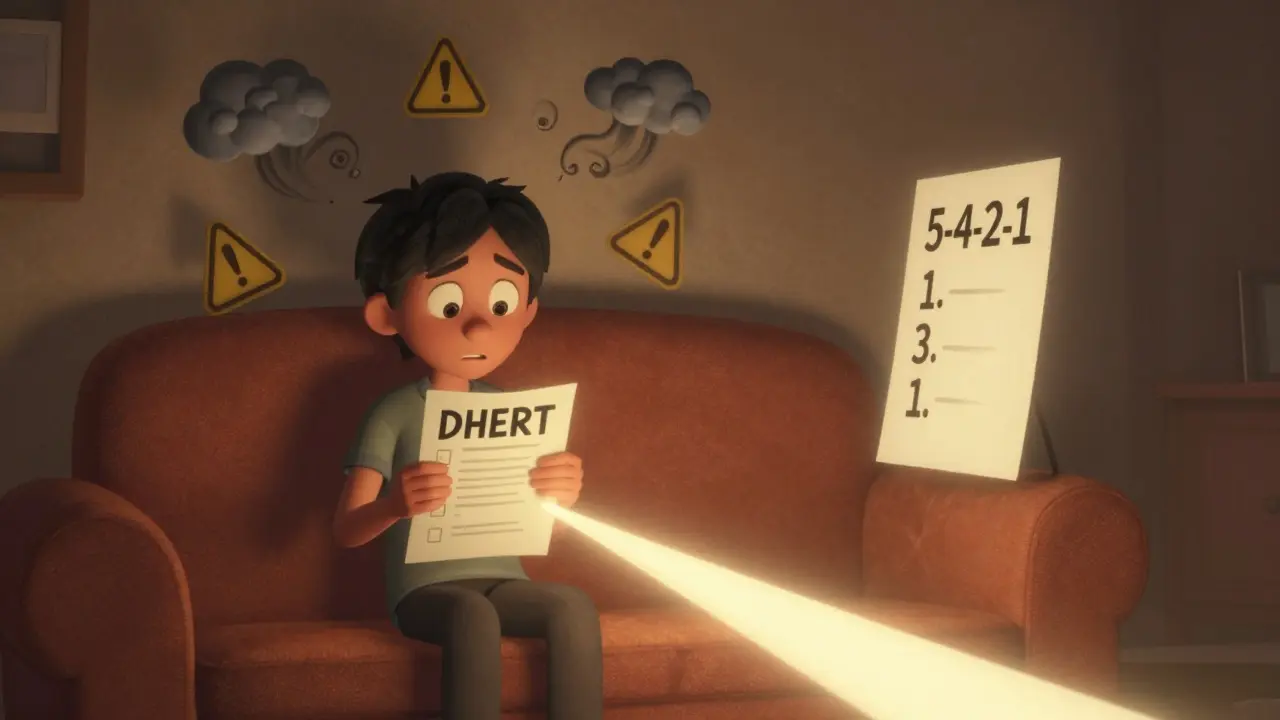
When you get a drug safety alert-whether it’s a recall notice, a warning about side effects, or a sudden change in dosage guidelines-it’s easy to feel like the ground just disappeared. Your heart races. Your thoughts spiral. You might immediately want to stop taking the medication, call your doctor at 3 a.m., or panic-buy alternatives online. But here’s the truth: panic doesn’t protect you. It just makes things worse. The goal isn’t to ignore the alert. It’s to respond to it.
Why Your Brain Goes Haywire During Alerts
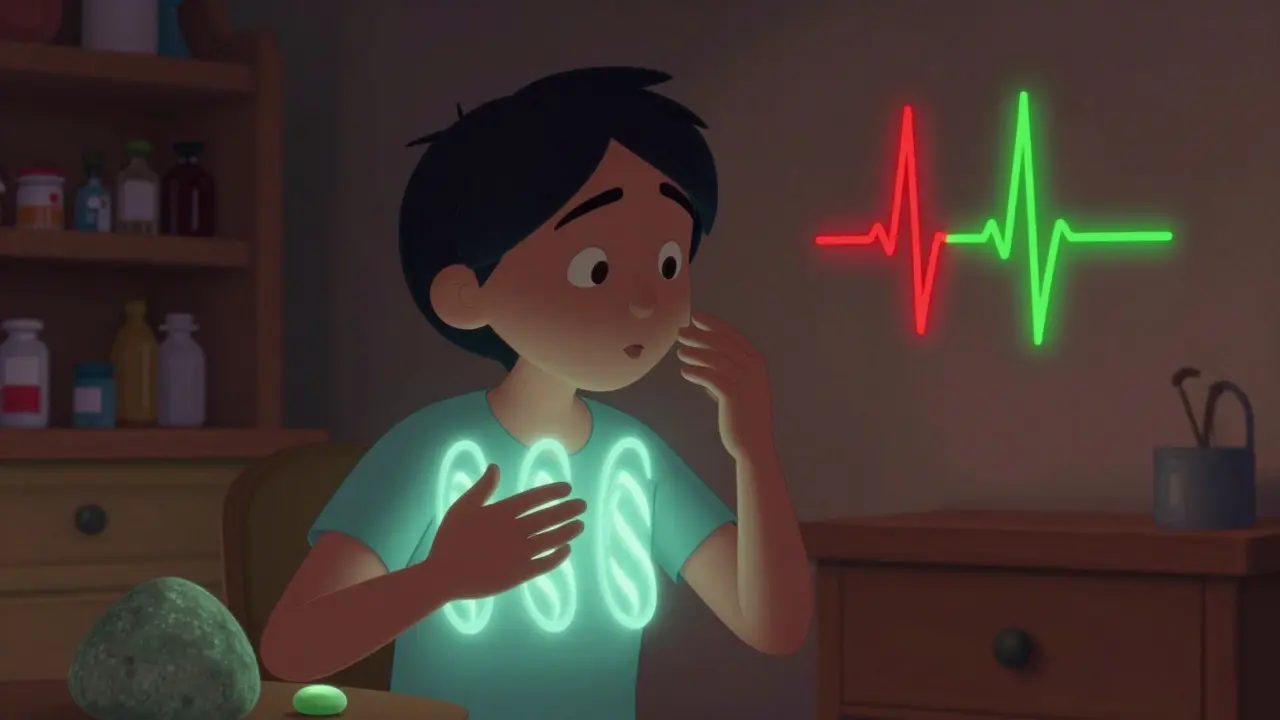
Your brain isn’t broken when you panic. It’s doing exactly what evolution designed it to do. When an alert hits, your amygdala-the part of your brain that handles fear-flashes a red light. Suddenly, your body thinks you’re under attack. Your heart rate jumps from 70 to over 110 beats per minute. Your breathing gets shallow. Your prefrontal cortex, the area responsible for logic and planning, shuts down like a computer overheating. This isn’t weakness. It’s biology.Studies show that during acute stress, people lose up to 67% of their ability to weigh options. That means if you’re trying to decide whether to stop your medication, switch brands, or wait for more info, your brain is operating on autopilot. And autopilot in panic mode usually means overreaction.
Step 1: Stop. Breathe. Ground Yourself
The first thing you need to do is interrupt the panic cycle. Not with willpower. Not with positive thinking. With physical action.Try the 5-4-3-2-1 technique. It takes less than a minute and works because it forces your brain to shift from fear mode to sensory mode.
- Look around and name 5 things you can see-the lamp, the book on the table, the color of the wall.
- Touch 4 things-your shirt fabric, your phone, your keys, the arm of the chair.
- Listen for 3 sounds-the hum of the fridge, birds outside, your own breath.
- Smell 2 things-coffee, toothpaste, fresh air through the window.
- Taste 1 thing-sip water, chew gum, or even lick your lips.
This isn’t fluff. A 2022 study in the Journal of Anxiety Disorders found that people who used this method during simulated alerts made decisions 42% more accurately than those who didn’t. Why? Because you’re not fighting the panic. You’re redirecting it.
Step 2: Use Your Body to Calm Your Mind
Breathing is the fastest way to reset your nervous system. You don’t need to meditate for an hour. Just do this:Take a slow breath in for 4 seconds. Hold it for 7 seconds. Breathe out for 8 seconds. Repeat 3 times.
This is called the 4-7-8 technique. It triggers the vagus nerve, which tells your body, “We’re not in danger.” Within 90 seconds, your heart rate drops from 110-130 bpm to 70-85 bpm. That’s the sweet spot where your brain can start thinking again.
Still feeling wired? Do 30 seconds of jumping jacks or run in place. It sounds odd, but intense movement burns off the adrenaline flooding your system. This is part of the TIPP method from Dialectical Behavior Therapy-Temperature, Intense exercise, Paced breathing, Paired relaxation. You don’t need a therapist to use it. Just your body.
Step 3: Don’t Act. Assess.
Now that you’re calmer, ask yourself:- What exactly does this alert say? (Read it twice. Don’t skim.)
- Who issued it? (FDA? A hospital? A private company?)
- What’s the risk level? (Is it “monitor symptoms” or “stop immediately”?)
- How many people have been affected? (Most alerts affect less than 0.1% of users.)
Most drug safety alerts are precautionary. They don’t mean you’re in immediate danger. They mean: “We’re watching. Here’s what to look out for.”
For example, if an alert says, “Report any unusual bruising while taking X medication,” it doesn’t mean stop taking it. It means: “If you see bruising, call your doctor. Don’t panic.”
Step 4: Build a Simple Decision Flowchart
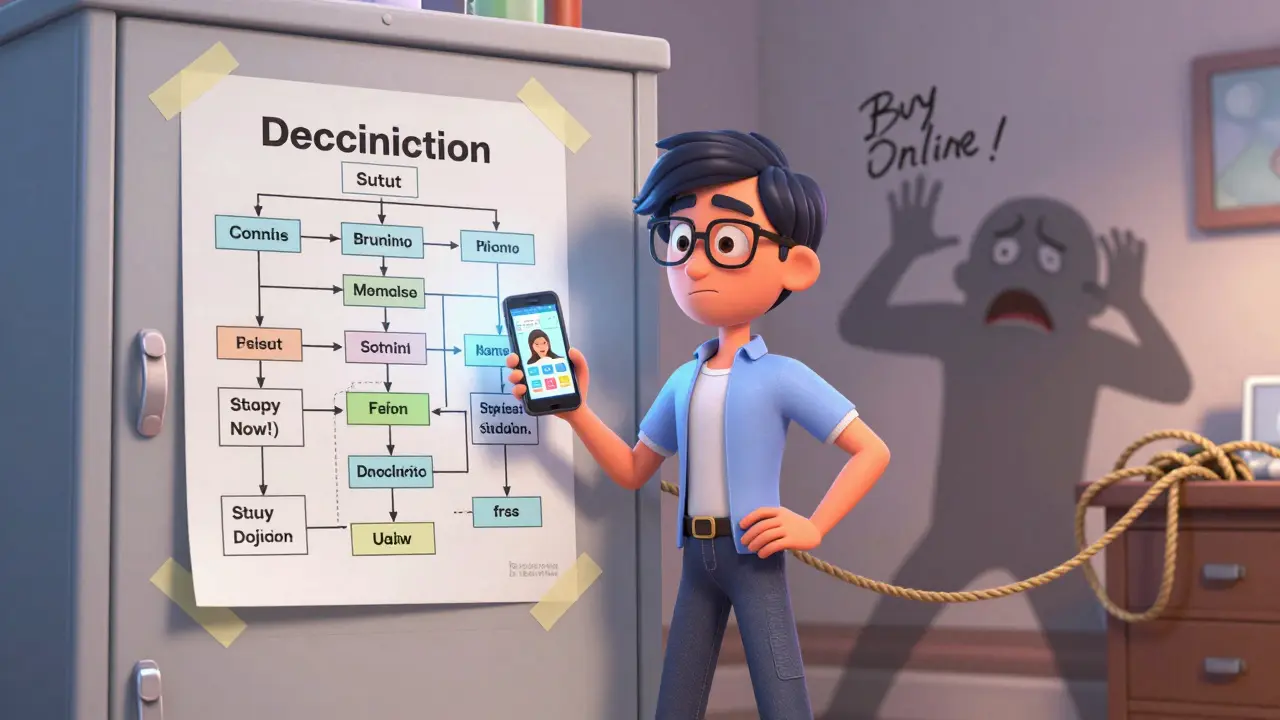
Don’t rely on memory when you’re stressed. Create a cheat sheet. Keep it on your phone or print it and stick it to your medicine cabinet.Here’s a basic version:
- Alert received? → Take 3 slow breaths.
- Read the alert fully. Note the source.
- Is it a “stop” alert? → Call your prescriber or pharmacist immediately.
- Is it a “monitor” alert? → Log symptoms. Wait 24 hours. Reassess.
- Is it unclear? → Contact your pharmacy. Ask: “What should I do right now?”
Research from Stanford University shows that having a visual decision tool reduces cognitive load by 58% during high-stress moments. You’re not making a judgment call in the heat of the moment. You’re following a script.
Step 5: Align With Your Values
Ask yourself: “What matters most here?”- Is it safety? Then follow official guidance.
- Is it continuity? Then don’t stop medication without professional input.
- Is it peace of mind? Then call your doctor, even if it’s just to say, “I got the alert. What’s your advice?”
A 2022 study from the Abundance Therapy Center found that people who used this value-filtering step made 52% fewer regrettable decisions after alerts. Why? Because panic pushes you toward extremes-either ignoring the alert entirely or quitting cold turkey. Values bring balance.
Prepare Before the Next Alert
You wouldn’t wait until a fire starts to check your smoke alarm. Don’t wait until a drug alert hits to figure out how to respond.Do this now:
- Keep a small “alert kit” near your meds: a textured stone (for touch), mint gum (for taste/smell), a printed copy of your 4-7-8 breathing steps.
- Write down your doctor’s phone number and pharmacy hours. Save them in your phone under “Emergency Med Info.”
- Practice your breathing and grounding techniques for 5 minutes a day. Not when you’re stressed. Just before bed. Regular practice makes the tools automatic.
People who do this reduce their panic response time by 65%. That’s not magic. It’s training.
What About Technology?
Some new apps and wearable devices now detect when your heart rate spikes and automatically trigger calming prompts-like a gentle vibration with instructions to breathe. These aren’t sci-fi. They’re being tested in hospitals and financial firms, and early results show a 47% drop in panic-driven errors.While you don’t need a smartwatch to stay safe, if you’re prone to anxiety, consider one with a built-in breathing coach. The goal isn’t to replace your judgment. It’s to give your brain a nudge back to calm.
Final Thought: Alerts Are Information, Not Commands
Drug safety alerts aren’t meant to scare you. They’re meant to inform you. The system works best when people respond calmly, not catastrophically. Every year, thousands of people stop taking life-saving medications because of a vague alert. That’s why the European Union’s DORA regulation now requires companies to design alerts with human psychology in mind-clear language, no alarmist tone, direct next steps.You’re not powerless. You don’t need to be a calm person to act calmly. You just need a few tools, practiced enough to work when your brain is screaming.
What should I do if I get a drug safety alert and can’t reach my doctor?
Call your pharmacy. Pharmacists are trained to interpret drug alerts and can often advise you immediately. They can tell you if the alert applies to your specific medication, dosage, or condition. If you can’t reach them, go to the official source-like the FDA website-and look up the alert. Don’t rely on social media or news headlines. Stick to trusted health agencies.
Can I stop my medication if I’m scared?
Only if the alert explicitly says “stop immediately.” Most alerts say “monitor,” “report,” or “consult your provider.” Stopping medication without guidance can be more dangerous than the alert itself. For example, abruptly stopping antidepressants, blood pressure meds, or seizure drugs can cause serious withdrawal or rebound effects. Always check with a healthcare professional before changing your dose or stopping.
Why do I feel so much panic over a small alert?
Because your brain is wired to respond to threats with urgency-even if they’re not real. Alerts trigger the same fear pathways as a car crash or a fire alarm. The more alerts you get, the more sensitive your nervous system becomes. That’s why practice matters. Repeatedly using grounding and breathing techniques rewires your brain over time to respond with calm, not chaos.
Are drug safety alerts common?
Yes. The FDA issues hundreds of drug safety alerts each year. Most are minor-like updating labeling, adding a rare side effect, or changing storage instructions. Only about 2-3% lead to recalls. The number of alerts has increased because monitoring systems are better, not because drugs are less safe. Think of alerts like weather warnings: they’re not emergencies, but they help you prepare.
How can I avoid panic in the future?
Practice daily. Spend 5 minutes a day doing slow breathing or the 5-4-3-2-1 grounding technique. Keep your alert response kit ready. Know your doctor’s and pharmacy’s contact info. Build the habit before you need it. People who practice these tools regularly respond to alerts with clarity 83% faster than those who only try them during a crisis. Calm isn’t a trait. It’s a skill you build.
Jason Pascoe
February 14, 2026 AT 02:35I’ve been using the 5-4-3-2-1 trick since my last meds alert last year and it’s changed everything. Didn’t even know I was holding my breath until I started doing this. Now I keep a little smooth stone on my nightstand just for touch. Feels silly but works like magic. My anxiety used to spike every time I got an email from the pharmacy. Now? I pause. Breathe. Look around. And usually realize it’s just a labeling update.
Sonja Stoces
February 15, 2026 AT 17:15Rob Turner
February 17, 2026 AT 16:30Luke Trouten
February 19, 2026 AT 01:02There’s real science here, and it’s refreshing to see it presented without jargon. The 4-7-8 breathing technique is backed by decades of autonomic nervous system research. The vagus nerve isn’t just a ‘nerve’-it’s the main highway between gut and brain. When you slow your exhale, you’re literally telling your body: ‘we’re safe.’ No magic. Just biology. And yes, jumping jacks work. Adrenaline needs an outlet. Don’t fight it. Channel it.
Jonathan Noe
February 19, 2026 AT 11:22Stacie Willhite
February 19, 2026 AT 12:07I’ve got a friend with severe anxiety who reads every drug alert like it’s a death sentence. I showed her the 5-4-3-2-1 trick and she started using it before bed. Now she says it helps her sleep. She doesn’t even need the alert to use it. It’s become her daily reset. I think the real win here isn’t avoiding panic-it’s building a habit that makes life calmer overall. This isn’t just about meds. It’s about learning to be in your body again.
Annie Joyce
February 20, 2026 AT 02:25My grandma used to say ‘if your gut’s screaming, listen.’ Turns out she was onto something. The alert system feels like noise, but your body? It’s the real signal. I keep a laminated card in my wallet with the 4-7-8 steps and my doc’s number. I don’t even think about it anymore. When my heart starts racing, my fingers find the card. It’s like muscle memory for sanity. Also-mint gum. Always keep mint gum. Smell = instant chill.
Gabriella Adams
February 21, 2026 AT 13:49While I appreciate the practical advice, I must emphasize that the framing of ‘panic as a biological malfunction’ risks pathologizing a natural human response. Fear is not an error. It is an ancestral survival mechanism. The goal should not be to eliminate panic, but to cultivate discernment within it. To ask: is this threat real? Is my response proportionate? We are not broken. We are wired. And sometimes, the system is the problem-not the person.
Kristin Jarecki
February 21, 2026 AT 14:18Thank you for this. As someone who has been prescribed multiple medications over the past decade, I can attest that the emotional toll of these alerts is often underestimated. The clinical language used in official communications is deliberately cautious, but it reads like a threat to those of us living with chronic conditions. This framework-grounding, breathing, assessing-should be taught in medical schools, not left to individual initiative. We need systemic change, not just coping tools.
Craig Staszak
February 22, 2026 AT 19:41alex clo
February 24, 2026 AT 16:50While the methods outlined are empirically sound, I would suggest supplementing them with a formal review of one’s medication regimen with a clinical pharmacist every six months. Proactive management reduces the psychological burden of reactive alerts. Additionally, I recommend maintaining a digital health journal with timestamps and symptom logs to reduce cognitive load during high-stress events.
Alyssa Williams
February 25, 2026 AT 00:42Ernie Simsek
February 26, 2026 AT 17:54Joanne Tan
February 28, 2026 AT 16:13