
By the end of 2024, over 277 drugs remained in short supply across the United States - a number that’s kept hospitals scrambling, pharmacists working overtime, and patients skipping doses. The problem isn’t new, but the federal response has changed dramatically in the last year. What started as scattered warnings and reactive fixes is now a high-stakes game of stockpiling, policy reversals, and untested promises. The government isn’t just reacting anymore - it’s trying to rebuild the entire system from the ground up. But is it working?
The Strategic Active Pharmaceutical Ingredients Reserve (SAPIR)
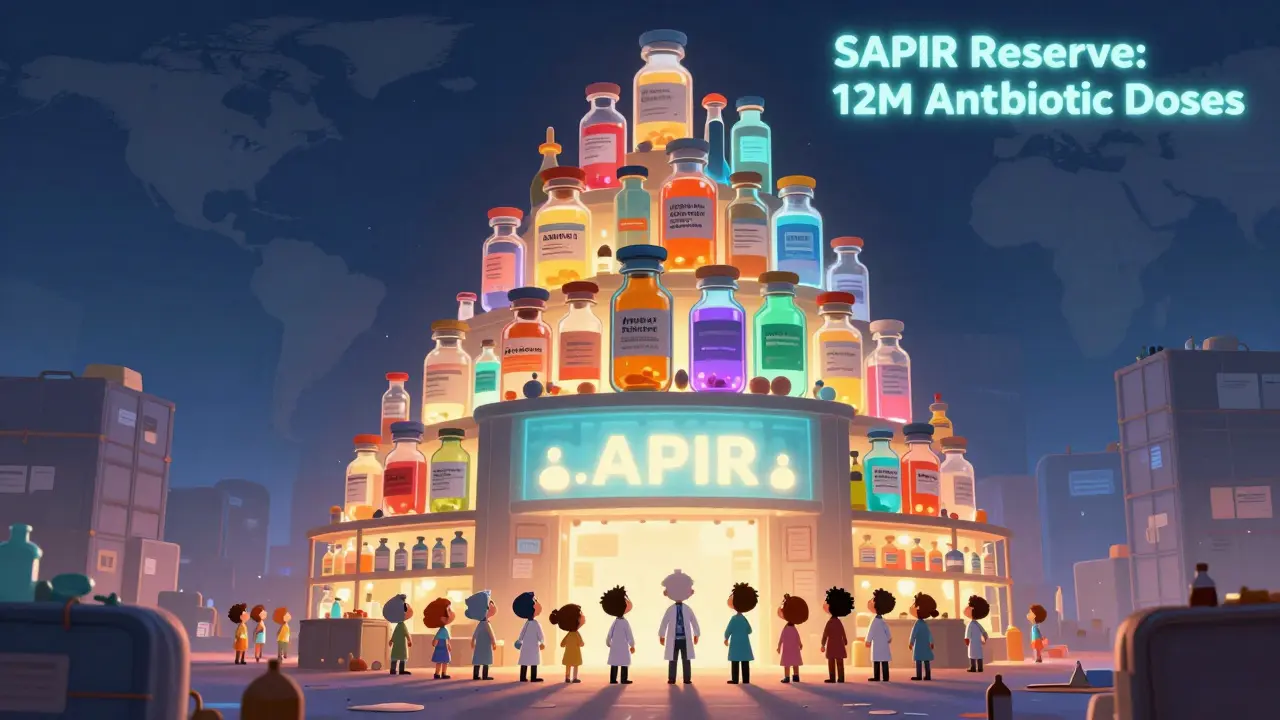
The biggest shift came in August 2025, when President Trump signed Executive Order 14178. It didn’t just expand an existing program - it redefined it. The Strategic Active Pharmaceutical Ingredients Reserve, or SAPIR, now targets 26 essential medicines: antibiotics like vancomycin, anesthetics like propofol, and cancer drugs like cisplatin. The idea? Instead of stockpiling finished pills or injections, store the raw chemical building blocks - the active pharmaceutical ingredients (APIs). Why? Because APIs cost 40 to 60% less to store, last 3 to 5 years longer than finished drugs, and are easier to ship and secure. More importantly, they reduce reliance on foreign suppliers, especially China, which still provides about 80% of the APIs used in U.S. medications.
The Department of Health and Human Services (HHS) now manages SAPIR through the Administration for Strategic Preparedness and Response (ASPR). As of late 2025, the reserve held enough raw material to produce 12 million doses of critical antibiotics and 8 million doses of oncology drugs. HHS claims this has already prevented 12 potential shortages since August. But no independent data confirms that. And here’s the catch: these 26 drugs represent only a tiny fraction of what’s actually in short supply. FDA data shows oncology drugs alone make up 31% of all shortages - yet they’re only 4% of the SAPIR list.
How the FDA Actually Fixes Shortages (Right Now)
While SAPIR grabs headlines, the FDA is the agency on the front lines every single day. Their job isn’t to predict the future - it’s to fix what’s broken today. And they’ve gotten better at it. In 2024, the FDA resolved 85% of active shortages through direct intervention: fast-tracking inspections, allowing temporary imports from trusted foreign suppliers, and giving manufacturers more flexibility to adjust production without waiting for approval.
The 2018-2020 saline shortage is a textbook example. At its peak, 90% of U.S. hospitals were running low. The FDA worked with seven manufacturers across three countries, approved emergency imports within days, and lifted restrictions on compounding pharmacies. Within six months, the shortage was over. That kind of speed is rare in government. But it’s also rare in scale. Most shortages don’t get this kind of attention. Only drugs on the FDA’s priority list - usually those used in hospitals or ICUs - get the full response.
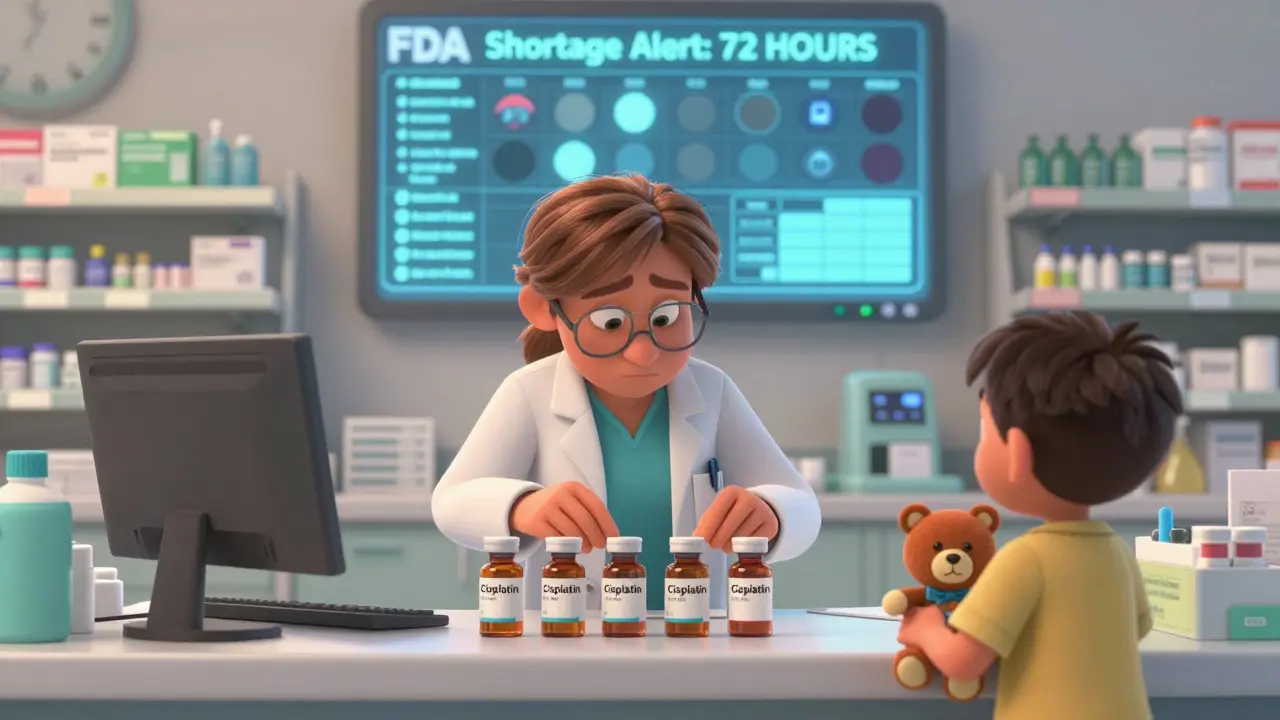
Meanwhile, the FDA’s public Drug Shortage Database tracks over 1,200 past and current shortages. But here’s the problem: manufacturers are only required to report potential shortages six months in advance. And only 58% actually do. Small manufacturers - the ones with fewer than 50 employees - miss the deadline 82% of the time. That means the FDA is often playing catch-up, not preventing problems.
The .2 Billion Paradox: Cuts Amid New Programs
Here’s where things get confusing. On one hand, the government is launching new initiatives - SAPIR, a real-time supply chain dashboard, and AI-powered forecasting tools. On the other, it’s cutting the very programs that helped build the infrastructure for those tools.
The 2026 HHS budget proposal slashes $1.2 billion from FEMA’s emergency response funding and $850 million from state public health grants. It also cuts $850 million from the Biomedical Advanced Research and Development Authority (BARDA), which funded innovations like continuous manufacturing and novel biologics platforms. That’s a 22% drop from 2024 levels. Meanwhile, the EU is investing in mandatory stockpiling and centralized monitoring - and saw a 37% drop in shortages between 2022 and 2024.
It’s not just funding. The Trump administration also rolled back Biden-era rules that forced drugmakers to disclose supply chain risks. Those rules were never perfect, but they gave regulators a clearer picture of where vulnerabilities existed. Now, that data is gone. And without it, even the best AI tools are flying blind.
Why Hospitals Are Still Struggling - And What’s Really Happening on the Ground
Behind every shortage number is a nurse, a pharmacist, and a patient. Hospitals spent an average of $1.2 million in 2025 just managing drug shortages. That’s not for extra staff - it’s for emergency purchases, last-minute substitutions, and extra monitoring.
Eighty-nine percent of hospitals say they’ve had to switch to alternative drugs during a shortage. But those swaps aren’t harmless. A 2025 survey by the American Hospital Association found that 68% of facilities reported treatment delays, and 42% said substitutions led to medication errors. One pharmacist on Reddit described having to compound cisplatin from raw powder because the pre-made vial was gone. Another said they used five different brands of the same antibiotic in a single week.
Pharmacists are spending 10 or more hours a week just tracking down drugs. Forty-one percent report near-miss errors - close calls where a wrong dose or wrong drug almost reached a patient. And patients? One in three Americans skipped doses because a drug wasn’t available, according to Patients for Affordable Drugs. For cancer patients, that number jumps to 68%.
Why Stockpiling Isn’t Enough - And What’s Missing
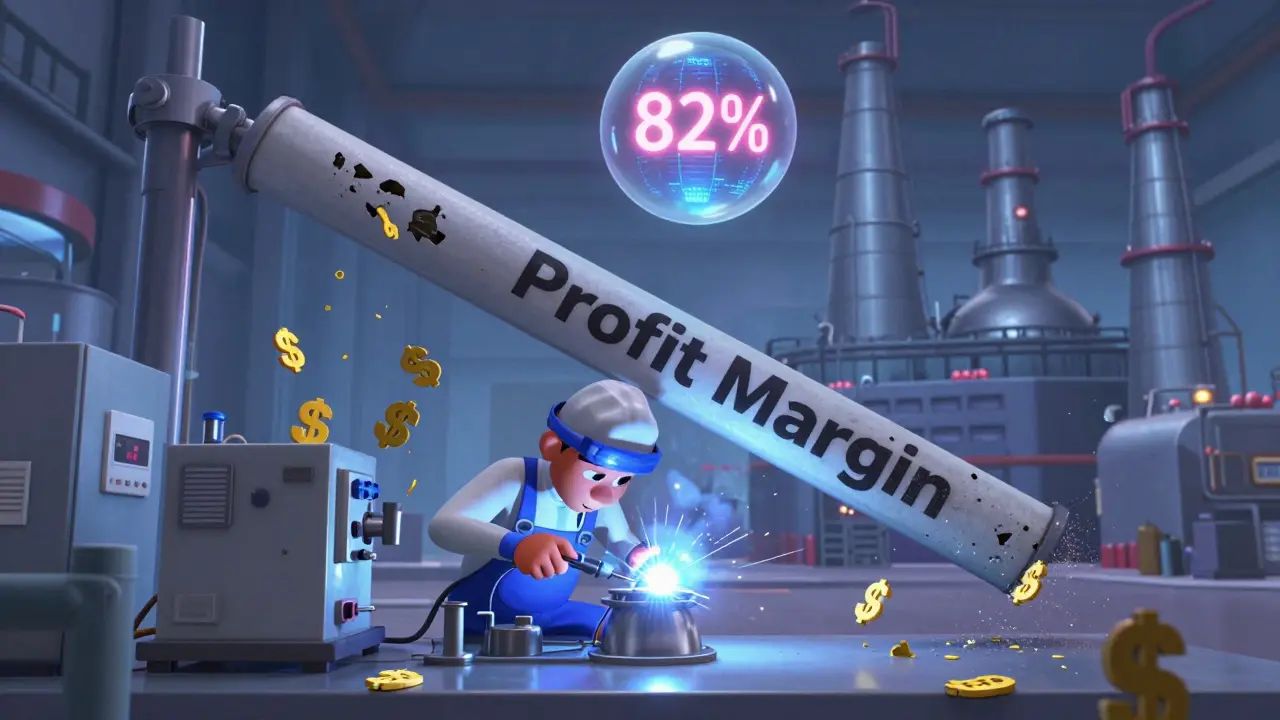
Experts agree: stockpiling APIs helps in a crisis, but it doesn’t fix the real problem. The real problem is economics. Making generic injectable drugs - the kind most often in short supply - barely turns a profit. A single vial of doxycycline might cost $0.50 to make and sell for $1.20. But building a sterile manufacturing line? That costs $100 million. No company wants to invest in that unless they’re guaranteed sales.
Just three companies control 68% of the U.S. sterile injectable market. That means if one plant shuts down - due to equipment failure, inspection issues, or natural disaster - 79% of major shortages follow. And there are only five facilities nationwide producing 78% of all sterile injectables. One failure. One crisis.
The FDA’s new expedited review for second-source manufacturers is the most promising move in years. Fourteen applications are already in the pipeline, which could add backup supply for eight critical drugs by mid-2026. But that’s still not enough. The Congressional Budget Office estimates that even if all current policies work perfectly, they’ll only reduce shortages by 15-20% over five years. Goldman Sachs says a 25% reduction is possible by 2028 - if everything goes right.
But here’s the hard truth: without fixing the profit problem, none of this lasts. The EU doesn’t just stockpile - it pays manufacturers to keep making low-margin drugs. The U.S. doesn’t. And until it does, shortages will keep coming.
The Future: AI, Reporting, and the Long Road Ahead
The FDA launched its Enhanced Shortage Monitoring System in November 2025. It uses AI to predict shortages 90 days ahead with 82% accuracy. It pulls data from shipping logs, hospital purchase histories, and manufacturing batch records. That’s a huge leap. But AI can’t fix a broken incentive system.
The real breakthrough might come from something simpler: mandatory reporting. Johns Hopkins research showed hospitals using the FDA’s Early Notification Pilot Program had 28% shorter shortages. Why? Because they reported problems early - before they became crises. But the current administration has weakened those reporting rules. Meanwhile, the FDA only issued 17 warning letters for non-reporting between 2020 and 2024. The EU issued 142 under similar rules.
And then there’s the rollout problem. Only 28 of 50 states have implemented the supply chain mapping required by the 2025 HHS Action Plan. Rural hospitals are still using paper logs. Community pharmacies don’t have the staff to train on new systems. The National Drug Shortage Response Network - launched in August 2025 - has fewer than 1,250 members. That’s less than 10% of U.S. hospitals.
The government has the tools. It has the data. It even has the will - at least on paper. But without consistent funding, strong enforcement, and real economic support for manufacturers, it’s building a fire alarm system in a house that still doesn’t have electricity.
Kathy McDaniel
January 26, 2026 AT 19:01Desaundrea Morton-Pusey
January 27, 2026 AT 14:32Kirstin Santiago
January 29, 2026 AT 05:21Harry Henderson
January 30, 2026 AT 21:34suhail ahmed
January 31, 2026 AT 21:26astrid cook
February 1, 2026 AT 13:47Andrew Clausen
February 3, 2026 AT 05:51Anjula Jyala
February 4, 2026 AT 02:17Paul Taylor
February 4, 2026 AT 07:59Murphy Game
February 5, 2026 AT 09:50