
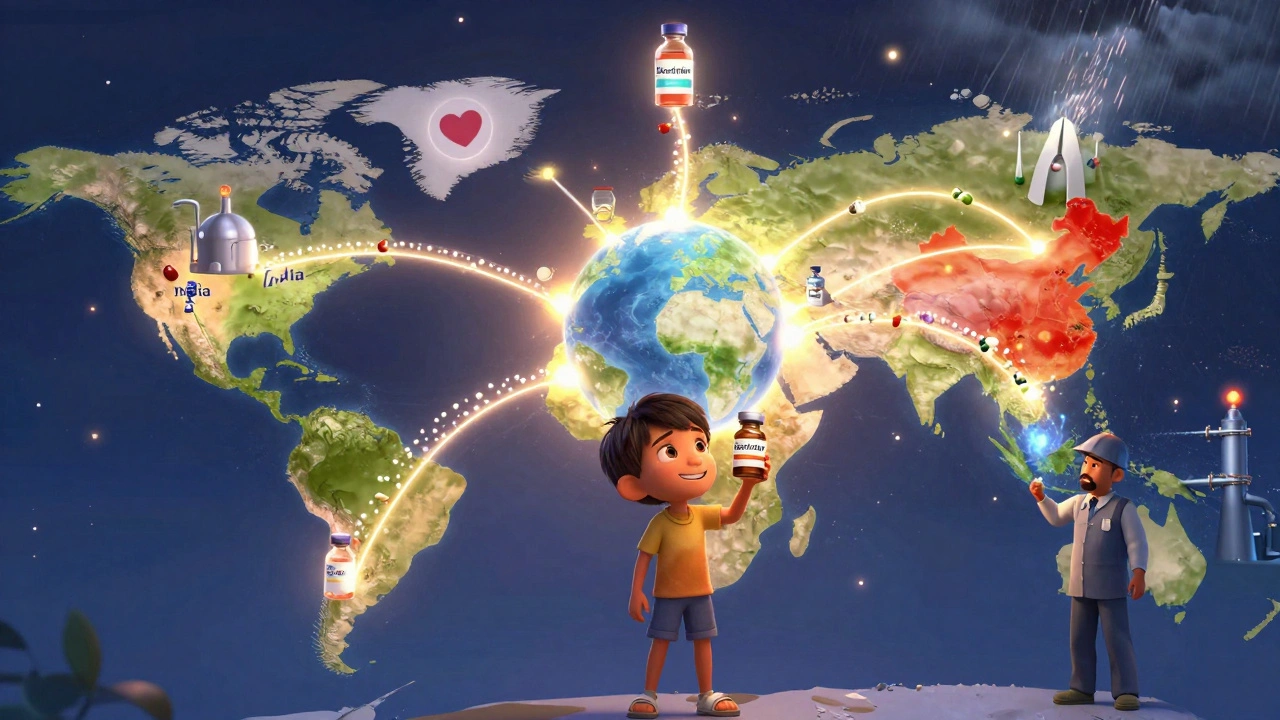
Generic drugs are the backbone of affordable healthcare - but their future isn’t as simple as cheaper versions of brand-name pills.
By 2030, nearly one in every two prescriptions filled worldwide will be for a generic drug. That’s not just a statistic - it’s a lifeline for millions. In the U.S., generics make up 90% of prescriptions but only 23% of drug spending. In India and Brazil, they’re the only option many families can afford. But the world of generics is changing fast. It’s no longer just about copying old pills. It’s about mastering complex biologics, securing supply chains, and competing in markets where regulators are finally catching up.
Here’s what’s really happening: The era of easy profits for generic manufacturers is over. Margins have dropped from 18% in 2020 to just 12% in 2024. Companies that used to win by producing the cheapest version of a blood pressure pill are now racing to build labs that can replicate insulin or cancer drugs made from living cells. These aren’t pills anymore - they’re biologics. And the ones that follow them? Biosimilars. They cost $100-250 million to develop, not $5 million. And they’re the only growth engine left.
Why biosimilars are the new frontier
Most people think generics are all the same: small molecules, simple chemistry, easy to copy. That’s true for aspirin, metformin, or amoxicillin. But over 60% of new drugs approved since 2020 are biologics - complex proteins made in living cells. When their patents expire, they don’t just get generic versions. They get biosimilars.
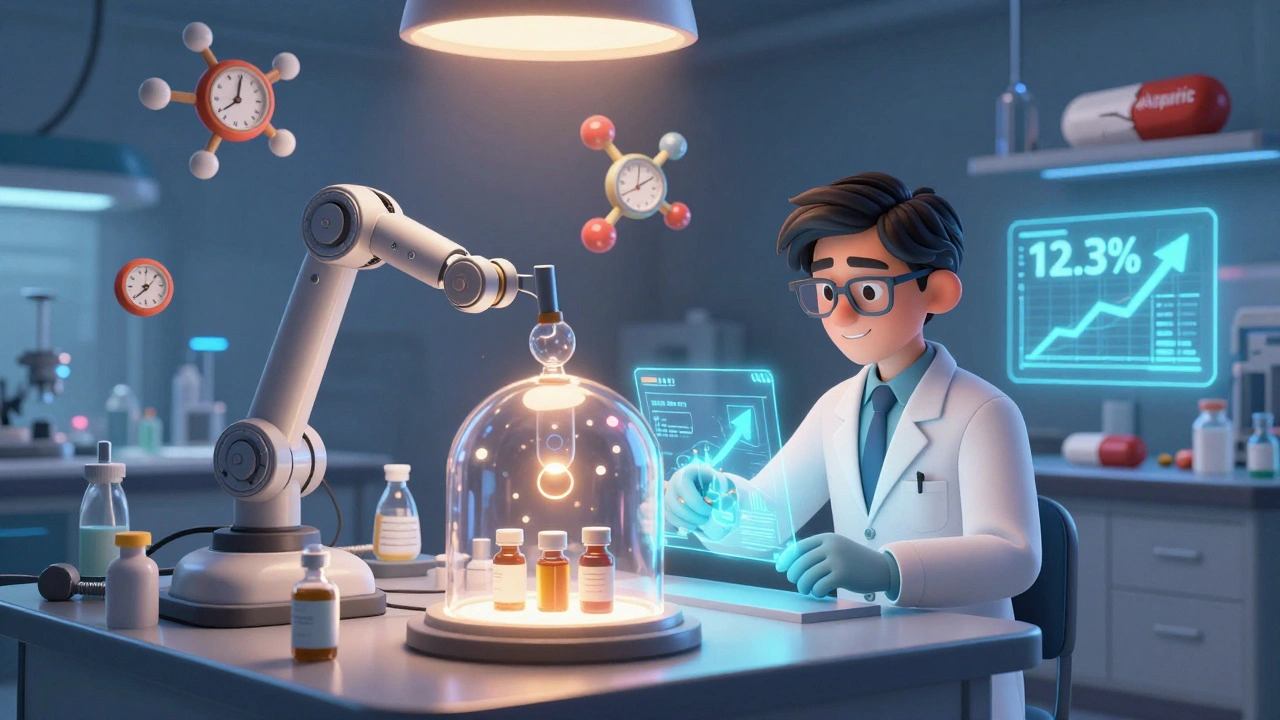
Biosimilars aren’t identical copies. They’re highly similar. Think of it like a handmade watch versus a factory replica. The parts look the same, but the precision matters. One tiny error in temperature or pH during production can make the drug ineffective - or dangerous. That’s why biosimilar development takes 10-20 times more steps than a regular generic. And why they cost 15-30% less than the original, not 80%.
But here’s the kicker: biosimilars are growing at 12.3% per year. That’s more than double the growth of traditional generics. In Europe, biosimilars for rheumatoid arthritis and Crohn’s disease are already replacing the original biologics in 40% of cases. In the U.S., the first biosimilar for insulin hit the market in 2024, cutting costs by 25%. By 2030, biosimilars could account for 15% of all generic sales - up from just 3% in 2020.
Who’s driving the market? Asia, not America
When you think of generic drugs, you probably think of India. You’re right - but not for the reasons you think.
India makes over 60,000 generic medicines. It supplies 20% of the world’s generic drug volume by quantity. But it’s not just India. China produces 40% of the world’s active pharmaceutical ingredients (APIs) - the raw building blocks of pills. Together, they control 35% of global manufacturing capacity. And they’re not just making old drugs. They’re investing billions to build biosimilar factories.
In 2024, India’s government gave $1.34 billion in subsidies to companies that build API and biosimilar plants. China’s “Healthy China 2030” plan is pushing local production of essential medicines. Meanwhile, the U.S. and Europe are still stuck in price wars. The FDA issued 187 warning letters to foreign manufacturers in 2023 - 40% of all warning letters went to facilities in India and China. Quality is improving, but it’s a slow climb.
And then there’s the Middle East. Saudi Arabia’s Vision 2030 is pushing for 50% local drug production. The UAE and Egypt are tightening regulations to attract high-quality manufacturers. These aren’t just markets - they’re emerging manufacturing hubs.
The supply chain problem no one talks about
Let’s say you take a generic pill for high blood pressure. Where did it come from?
It probably started in a chemical plant in China. The API was shipped to a factory in India. There, it was mixed with fillers, pressed into tablets, and packed. Then it went to a distributor in Germany, then to your pharmacy. That’s a supply chain with six moving parts - and every one is a risk.
China supplies 65% of the world’s APIs for generics. That’s a problem. If a flood shuts down a factory in Shanghai, or a trade ban hits, prices spike. In 2022, a shortage of a single API caused a 300% price jump for a common antibiotic in the U.S. That’s not a glitch - it’s the system.
Companies are starting to respond. Some are building backup API plants in Vietnam, Mexico, and Poland. Others are partnering with local manufacturers in Africa and Latin America. But it’s expensive. And slow. The U.S. government has spent $1.2 billion since 2021 trying to bring API production home - but it’s still early days.
Regulations are catching up - slowly
For years, generic manufacturers could get away with cutting corners. Regulatory agencies were underfunded. Inspections were rare. Now, that’s changing.
The International Council for Harmonisation (ICH) added 15 new countries to its guidelines in 2024. That means a drug approved in the U.S. can now get faster approval in Brazil, Indonesia, or Saudi Arabia. No more repeating the same tests five times.
But enforcement is still uneven. In Europe, Germany has a 72% generic usage rate because its health system rewards cost savings. Italy? Only 28%. Why? Because doctors still trust brands. In Africa, 30% of generic drugs fail quality tests. In India, the government is cracking down - but corruption lingers.
One thing’s clear: regulators are no longer just gatekeepers. They’re partners. The FDA, EMA, and WHO are now sharing inspection data. That’s a big deal. It means a factory that passes in the U.S. is more likely to pass in Kenya. That’s building trust - one batch at a time.
What’s next? The end of the cheap pill era
By 2030, the global generic market will be worth nearly $700 billion. But here’s the twist: generics will make up a smaller share of total drug spending.
Why? Because the drugs themselves are getting more expensive. Biologics, gene therapies, and personalized medicines are taking over. In 2024, $70 billion in branded drug revenue lost patent protection. But only $15 billion of that was replaced by low-cost generics. The rest? High-priced specialty drugs - like GLP-1 weight-loss medications - that cost $1,000 a month.
Generics aren’t disappearing. They’re becoming more specialized. The winners won’t be the biggest factories. They’ll be the ones who can:
- Make biosimilars with precision
- Control their own API supply
- Work with regulators, not around them
- Target high-demand areas like diabetes, heart disease, and cancer
And the losers? The companies still trying to sell $0.05 aspirin pills in saturated markets. They’re not just losing money - they’re becoming irrelevant.
Bottom line: Affordability is still the goal - but the path is harder
Generic drugs saved healthcare systems billions. They kept insulin, antibiotics, and heart meds within reach. That hasn’t changed. But the game has.
The future belongs to manufacturers who treat generics like high-tech products - not commodities. Who invest in quality, not just quantity. Who build local supply chains, not just global ones. Who see biosimilars not as a threat, but as their next big opportunity.
If you’re a patient, you’ll still get cheap pills. But they’ll be smarter, safer, and harder to make. And that’s a good thing.
Are generic drugs as safe as brand-name drugs?
Yes - if they’re made by reputable manufacturers. The FDA and other global regulators require generics to have the same active ingredient, strength, dosage form, and route of administration as the brand-name drug. They must also meet the same strict quality standards. However, quality issues have been reported in some foreign facilities - especially those with poor oversight. In 2023, 40% of FDA warning letters targeted generic drug factories outside the U.S. Always buy from trusted pharmacies and check for regulatory approval labels.
Why are biosimilars more expensive to make than regular generics?
Biosimilars are made from living cells - like yeast or hamster ovary cells - not chemicals. This means every batch can vary slightly. Manufacturers must control temperature, pH, nutrient levels, and more across hundreds of steps. A regular generic might need 10-20 manufacturing steps. A biosimilar needs 200-500. That’s why development costs range from $100-250 million, compared to $1-5 million for traditional generics. It’s not just copying - it’s reverse-engineering biology.
Which countries are leading in generic drug production?
India and China are the top two. India produces over 60,000 generic medicines and supplies 20% of the world’s generic drug volume by volume. China makes about 40% of global active pharmaceutical ingredients (APIs) and 65% of the world’s APIs for generics. Other growing players include Vietnam, Poland, Mexico, and Saudi Arabia, which are investing heavily in local manufacturing to reduce import dependence.
Why are generic drug prices falling in the U.S. but rising in some other countries?
In the U.S., intense competition among hundreds of manufacturers drives prices down. But in countries with fewer producers or weak regulation, prices can rise due to shortages or monopolies. For example, when a single company controls the only supply of a generic antibiotic, they can raise prices. In places like Egypt or Nigeria, where local production is low, import costs and taxes inflate prices. Meanwhile, government price controls in India and Brazil keep costs low - but sometimes at the cost of quality.
Will generic drugs still be affordable in 10 years?
Yes - but the definition of “affordable” is changing. Simple pills like metformin or lisinopril will stay cheap. But newer drugs - especially biosimilars for cancer or autoimmune diseases - will cost more because they’re harder to make. The real challenge isn’t price - it’s access. Even if a biosimilar costs $500 instead of $700, many people in low-income countries still can’t afford it. The future of affordability depends on local manufacturing, better supply chains, and smarter government policies - not just competition.
Reshma Sinha
December 12, 2025 AT 00:51Biosimilars are the real game-changer here - we’re talking about complex protein structures that require bioreactors, precise pH control, and cryogenic storage. It’s not just ‘copying a pill’ anymore. India’s pushing hard with those $1.34B subsidies, and honestly? We’re seeing the ROI already - companies like Biocon and Dr. Reddy’s are now in the top 5 global biosimilar players. This isn’t just affordability - it’s technological sovereignty.
Lawrence Armstrong
December 13, 2025 AT 01:33Yeah, but let’s not ignore the FDA’s 187 warning letters 😔. I’ve seen plants in Telangana with mold on the walls and no HEPA filters. Biosimilars? Cool. But if the facility fails sterility testing, it’s not a ‘biosimilar’ - it’s a liability. We need global audits, not just paperwork. 🤷♂️
Donna Anderson
December 14, 2025 AT 02:14frankly i think the us is being ridiculous with all this ‘bring manufacturing home’ nonsense. we dont even make our own phones or tvs anymore why should drugs be diff? china makes the api, india makes the pill, germany ships it - its a global system. stop trying to re-invent the wheel 🤦♀️
Levi Cooper
December 15, 2025 AT 00:23India and China are running a global pharmaceutical cartel. They flood the market with cheap generics, undercut American innovation, then get mad when we try to regulate their shoddy factories. This isn’t free trade - it’s exploitation. We need tariffs on API imports and real consequences for non-compliant plants. Our patients deserve better.
Adam Everitt
December 16, 2025 AT 01:38the supply chain is a metaphor for late capitalism really - six links, all brittle, all dependent on a single point of failure. we’ve optimized for efficiency over resilience, and now we pay the price in antibiotic shortages and insulin spikes. it’s not a flaw - it’s the feature. capitalism doesn’t care if you live or die, only if the margin is >12%
Ashley Skipp
December 17, 2025 AT 14:21the fact that biosimilars cost 15-30 less not 80 shows how lazy the industry is. if they could make them cheaper they would. its all marketing. they want you to think its innovation when its just price gouging with a fancy name
Robert Webb
December 17, 2025 AT 22:17Let me expand on something Reshma mentioned - the real win isn’t just biosimilars replacing biologics, it’s that this shift forces entire regulatory ecosystems to modernize. The ICH’s 2024 expansion means a manufacturer in Egypt can now get approval in Brazil, the U.S., and Germany using the same dossier. That’s unprecedented. It’s not just about cost - it’s about equity. Imagine a child in Lagos getting the same quality insulin as a child in Boston, because the same factory passed the same inspection. That’s the future we’re building, slowly, messily, but undeniably.
nikki yamashita
December 18, 2025 AT 04:36so basically the future of generics is: smarter, safer, and still cheap. yes please. lets fund the labs, not the lobbyists. 💪
wendy b
December 19, 2025 AT 10:56It's amusing how the article romanticizes 'local manufacturing' while ignoring that the entire global supply chain was engineered precisely to prevent redundancy and inefficiency. The notion that 'bringing it home' is a panacea is economically illiterate. The cost of re-engineering API production in the U.S. would inflate insulin prices by 300%. We are not in the business of national pride - we are in the business of pharmacoeconomics. Please consult a real economist before writing again.
Laura Weemering
December 20, 2025 AT 05:44…and yet… we still don’t know if biosimilars are truly equivalent over 20+ years… we’re just… assuming… because… it’s cheaper… and we’re desperate… and nobody wants to admit that we’re gambling with people’s lives… just… to save a few bucks… 🤔