
Generic drugs are saving billions - but the game is changing fast
By 2025, nearly 9 out of 10 prescriptions filled in the U.S. are for generic drugs. In India and China, they make up over 80% of the medicine market. These aren’t cheap knockoffs - they’re exact copies of brand-name drugs, approved by strict regulators, and priced 80-85% lower. That’s why they’re the backbone of public health systems struggling with rising costs. But the future isn’t just about more generics. It’s about smarter generics, tougher regulations, and a shift from small pills to complex biologic treatments.
The market is growing - but not everywhere the same way
The global generic drug market hit $435 billion in 2023. By 2028, it’s expected to hit $655 billion. That’s an 8.5% yearly growth rate. Sounds strong? It is - but only in some places. In North America and Western Europe, growth is flat or slow. Why? Governments keep forcing prices down. In Germany, generics are everywhere. In Italy, they’re still rare. It all depends on how much a country is willing to pay.
Meanwhile, the real action is in the so-called “pharmerging” markets: India, China, Brazil, Turkey, Saudi Arabia, and Egypt. These countries aren’t just buying more generics - they’re making them. India produces over 60,000 generic medicines and ships 20% of the world’s generic volume. China makes 40% of the world’s active drug ingredients (APIs). That’s not just supply - it’s control. And governments there are pouring money into it. India’s $1.34 billion Production Linked Incentive scheme is pushing local manufacturers to build more capacity. Saudi Arabia’s Vision 2030 is building entire new pharma zones. This isn’t just about cheaper pills - it’s about national self-reliance.
Biosimilars are the new frontier - and they’re not cheap
For years, generics meant small-molecule pills: blood pressure meds, diabetes drugs, antibiotics. Easy to copy. Easy to make. But now, the biggest patent expirations are coming from biologics - complex drugs made from living cells. Think cancer treatments, autoimmune therapies, and insulin analogs. These aren’t pills. They’re injectables. And copying them? That’s not simple. It’s like trying to recreate a Swiss watch with a hammer.
Biosimilars require 10 to 20 times more manufacturing steps than traditional generics. Development costs? $100-250 million. Compare that to $1-5 million for a regular generic. That’s why only big players can enter this space. But the payoff is real. Biosimilars don’t drop 80% in price - they drop 15-30%. Still, that’s enough to make treatments affordable. The market for biosimilars is growing at 12.3% per year. By 2030, they could be a $100 billion industry. And they’re the only part of the generic market still expanding fast.

Quality is the silent crisis
Here’s the problem no one talks about enough: 40% of the FDA’s warning letters in 2023 went to foreign generic drug factories. Not the U.S. ones. The ones in India, China, and other manufacturing hubs. The FDA issued 187 warning letters that year - more than ever before. Issues? Dirty labs, falsified data, poor storage, unapproved changes in ingredients.
It’s not that these companies are trying to cheat. It’s that the pressure to cut costs is insane. Profit margins for generic makers have dropped from 18% in 2020 to just 12% in 2024. When you’re fighting for pennies per pill, corners get cut. And when regulators can’t inspect every factory - which they can’t - risks grow. Countries like Egypt and Saudi Arabia are now requiring 50% local production of essential medicines, partly to control quality. The U.S. and EU are pushing for more inspections. But with 78 different regulatory systems around the world, harmonization is slow.
Supply chains are a ticking time bomb
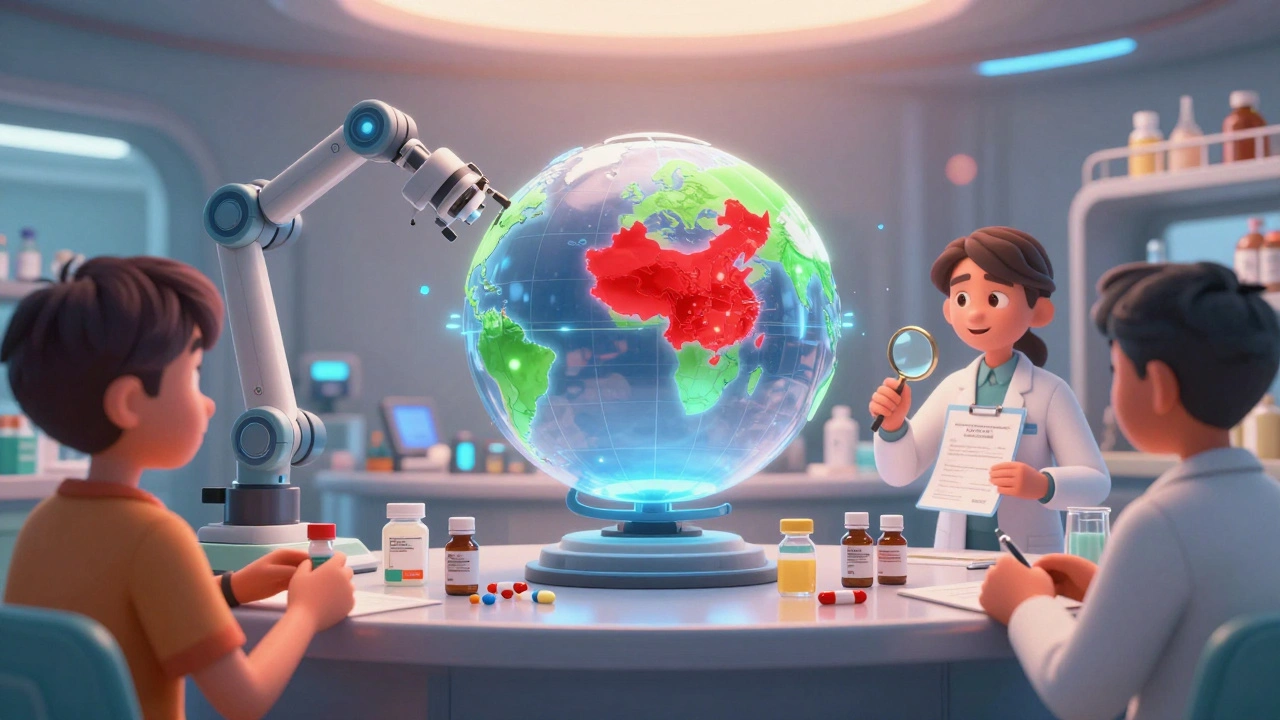
China supplies 65% of the world’s active pharmaceutical ingredients for generics. That’s not a market share - it’s a monopoly. One earthquake. One trade war. One pandemic. And the entire global supply of antibiotics, painkillers, or heart meds could freeze. The U.S. and EU know this. That’s why they’re trying to bring production back - but it’s expensive. Building a cleanroom facility in Ohio costs 3-4 times more than in Hyderabad.
Some companies are diversifying. India is stepping up its API production. Vietnam and the Philippines are emerging as new manufacturing hubs. But none of them come close to China’s scale yet. Until that changes, the world is one disruption away from a drug shortage crisis. And it’s not just about pills - it’s about access. If a country can’t get its diabetes meds, people die.
Who wins? Who loses?
Big generic manufacturers like Teva, Sandoz, and Sun Pharma are buying up smaller players. Why? To get scale. To cut costs. To survive. Smaller companies? They’re getting squeezed. They can’t afford the $200 million it takes to make a biosimilar. They can’t compete with China’s factory efficiency. Many are shifting to niche markets - like complex injectables or orphan drugs.
Meanwhile, hospitals and insurers are getting smarter. They’re not just buying the cheapest pill. They’re demanding proof of quality, traceability, and consistent supply. Some are even signing long-term contracts with manufacturers they trust. The era of “lowest bid wins” is ending. The new rule: reliable, safe, and affordable.
What’s next? The 2030 outlook
By 2030, the global pharmaceutical market will hit $1.7 trillion. But generics’ share of that will shrink - from 57.56% in 2024 to around 53%. Why? Because specialty drugs - like GLP-1 weight-loss meds, gene therapies, and personalized cancer treatments - are booming. They’re expensive. They’re complex. And they’re not genericable.
But that doesn’t mean generics are fading. They’re evolving. The future belongs to companies that can do three things:
- Make biosimilars well - not just cheap, but reliable
- Control their own supply chains - especially APIs
- Work with regulators, not around them
India and China will still dominate production. But the winners will be the ones who build trust, not just volume. Governments will keep pushing for generics - because they have no choice. But they’ll also demand higher standards. The era of “any generic will do” is over.
Bottom line: More access, higher standards
Generic drugs will remain the most important tool for making healthcare affordable. Billions rely on them. But the old model - low cost, low quality, low oversight - is collapsing. The future is about quality at scale. About transparency. About supply chain resilience. About moving from pills to complex biologics. If you’re a patient, you’ll still get your meds. But you’ll also get more assurance they’re safe. If you’re a manufacturer, you’ll need to invest - not just in factories, but in trust. Because in the next decade, the cheapest drug won’t win. The most trusted one will.
Reshma Sinha
December 13, 2025 AT 08:32The biosimilar gap is where the real play is. We’re talking about $100M+ development costs, but the margins? Still 20-30% if you nail the CMC. India’s PLI scheme is a game-changer - we’re not just making APIs anymore, we’re building end-to-end biologics infrastructure. The EU’s biosimilar uptake is sluggish because of physician inertia, not science. Time to stop treating biosimilars like ‘cheap generics 2.0’ and start investing in real comparability studies. This isn’t about price - it’s about trust architecture.
Lawrence Armstrong
December 14, 2025 AT 18:03Agreed. The FDA warning letters are terrifying. 187 in one year? 😳 That’s not a glitch - it’s a systemic failure. I work in pharma QA and we’ve seen labs with no humidity control, no temperature logs, and employees signing off on data they didn’t even run. It’s not corruption. It’s burnout. When profit margins drop to 12%, you stop caring about SOPs. The U.S. needs to fund more foreign inspections - or just ban imports from non-validated sites. No more ‘trust but verify’.
Donna Anderson
December 15, 2025 AT 13:29omg i just read this and my brain exploded 🤯 like… i had a generic blood pressure med last year and i had no idea it was made in a factory that got a warning letter. we’re literally gambling with our lives. why is no one talking about this? also i think we should just make all meds in the usa like duh??
Levi Cooper
December 16, 2025 AT 19:26China’s monopoly on APIs is an existential threat to national security. We’ve been naive. We let them own the foundation of modern medicine. The U.S. spent decades outsourcing to the lowest bidder - now we’re paying with lives. If we don’t bring back API manufacturing by 2027, we’re just a hostage nation. India’s helping, sure - but they’re still dependent on Chinese precursors. It’s not a supply chain - it’s a vulnerability.
Adam Everitt
December 17, 2025 AT 19:42the irony is that we’ve created a system where the cheapest medicine is the most dangerous, and the most expensive is the most trustworthy. we’ve inverted the entire logic of capitalism. biosimilars should be the democratization of care - but instead they’re becoming the domain of oligopolies. who’s to say the next insulin isn’t controlled by five firms who’ve bought up every patent and every cleanroom? it’s not capitalism. it’s feudalism with syringes.
Ashley Skipp
December 17, 2025 AT 23:42the whole generic market is a scam people are so gullible
Robert Webb
December 19, 2025 AT 16:02It’s worth noting that the shift from small molecules to biosimilars isn’t just a technical challenge - it’s a cultural one. For decades, prescribers were trained to equate ‘generic’ with ‘lower quality,’ and that bias persists even among specialists. We need educational campaigns targeted at clinicians - not just patients - to reframe biosimilars as scientifically equivalent, not just cheaper alternatives. The FDA’s ‘interchangeability’ designation is a start, but it’s meaningless if doctors won’t prescribe it. We also need real-world evidence registries, longitudinal outcomes tracking, and transparent adverse event reporting tied to manufacturer IDs. Without data transparency, trust won’t form. And without trust, the entire biosimilar ecosystem collapses - regardless of cost savings.
nikki yamashita
December 20, 2025 AT 17:36yes!! we need to stop treating meds like toilet paper. safety > price. also india is doing amazing things 🙌
wendy b
December 22, 2025 AT 04:58the fact that you all think this is a 'supply chain issue' is so naive. this is a moral failure of neoliberal capitalism. we commodified human health to the point where a pill's price is determined by shareholder dividends, not patient survival. biosimilars are not the solution - they're just the next profit center for Big Pharma. the real fix? universal public pharma. but that's too radical for your little reddit threads, isn't it?
Laura Weemering
December 23, 2025 AT 11:56…and yet, we still have people who believe in ‘the market’… as if the invisible hand isn’t just a greedy, sleep-deprived intern in Hyderabad, falsifying stability data so they can afford their daughter’s insulin. the real tragedy? we’re all complicit. we buy the cheapest pill. we don’t ask questions. we scroll past the FDA alerts. we let our governments negotiate in silence. and now… we’re surprised when the system breaks. it wasn’t a failure. it was the design.