

Trying to get pregnant? If you’ve been trying for months without success, it’s easy to blame stress, timing, or bad luck. But one of the most common and treatable causes of infertility is hiding in plain sight: your thyroid. Specifically, your TSH level. Many women don’t realize that even a slightly off thyroid can block ovulation, mess with hormone balance, and increase the risk of miscarriage - all before they even miss a period.
Why TSH Matters More Than You Think
TSH, or thyroid-stimulating hormone, is the signal your brain sends to your thyroid to make hormones. When TSH is too high, your thyroid isn’t working hard enough. That’s hypothyroidism. And when you’re trying to conceive, even a mild version can hurt your chances.
Research shows that women with unexplained infertility are nearly twice as likely to have a TSH level of 2.5 mIU/L or higher compared to women who conceive easily. In one study of over 7,000 women, those with TSH levels above 2.5 had a 15% higher chance of miscarriage. It’s not just about being diagnosed with thyroid disease - it’s about where your TSH sits within the normal range.
The old standard for "normal" TSH was up to 4.5 or even 5.0 mIU/L. But that range was based on the general population, not women planning pregnancy. For fertility, the goal isn’t just to be "normal." It’s to be optimal.
The Magic Number: Why 2.5 mIU/L Is the Target
The American Thyroid Association (ATA) recommends that women planning pregnancy keep their TSH below 2.5 mIU/L. This isn’t arbitrary. Studies tracking thousands of pregnancies found that women with TSH levels above this threshold had lower pregnancy rates and higher miscarriage risks - even if their TSH was still "within range."
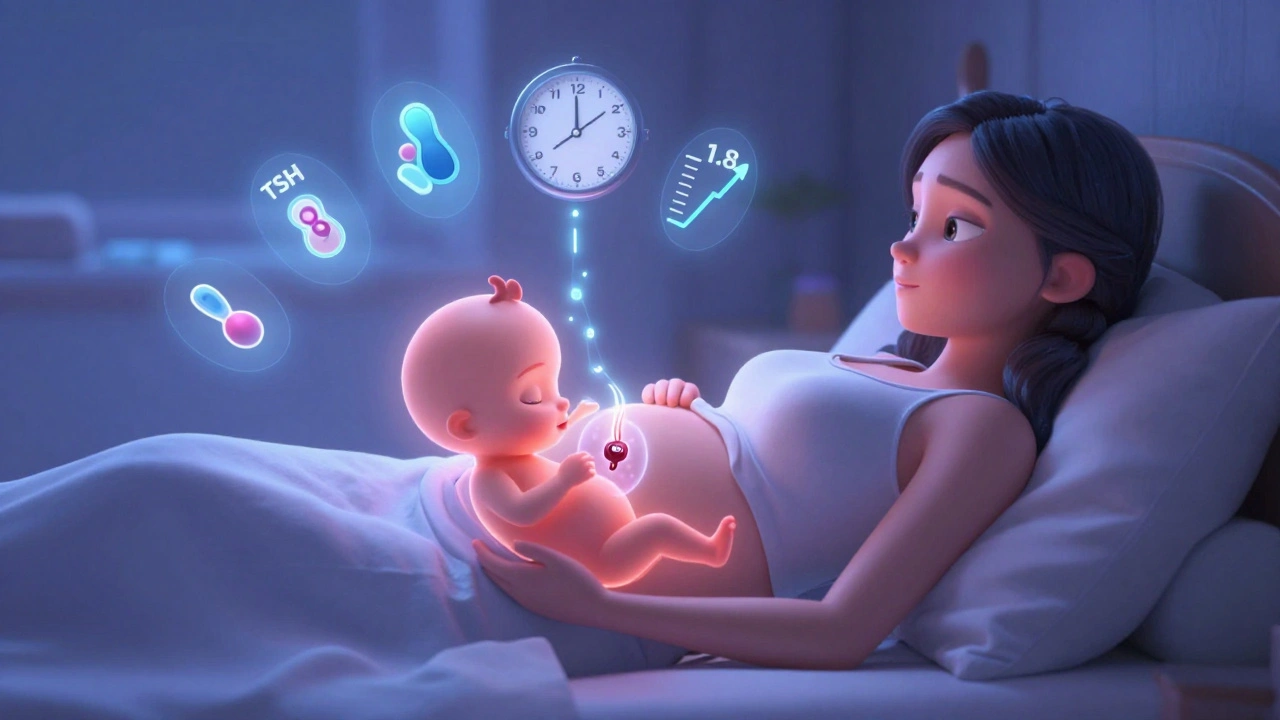
Here’s the thing: during early pregnancy, your body can’t make enough thyroid hormone on its own. The baby relies on your thyroid for the first 10 to 12 weeks. If your thyroid is already working at its limit before conception, you won’t have enough reserve to support the baby’s brain development. That’s why experts say: don’t wait until you’re pregnant to fix it.
Women with Hashimoto’s thyroiditis - an autoimmune condition that attacks the thyroid - need to aim even lower. Many endocrinologists recommend TSH levels between 1.25 and 1.75 mIU/L before conception. Why? Because Hashimoto’s makes your thyroid more vulnerable to the increased demands of pregnancy. A TSH that’s "fine" now might spike dangerously high within weeks of conceiving.
What If Your TSH Is Between 2.5 and 4.5?
This is where things get messy. Some doctors say, "If it’s under 4.5, you’re fine." Others say, "You need treatment now." The truth? It depends.
If you have thyroid antibodies (like TPO antibodies), even a TSH of 3.0 increases your risk of miscarriage by about 50%. In that case, most experts agree: start levothyroxine. A 2023 review of clinical trials showed that treating women with antibodies and TSH above 2.5 reduced miscarriage rates by 45% and improved live birth rates by 36%.
But if you have no antibodies and no symptoms - no fatigue, no weight gain, no dry skin - the evidence is less clear. One study of women undergoing IUI found no difference in pregnancy rates between those with TSH under 2.5 and those between 2.5 and 4.5. That’s why some organizations, like ASRM, say we shouldn’t treat everyone with TSH between 2.5 and 4.5 - yet.
So what’s a woman to do? Get tested. If your TSH is above 2.5, ask for thyroid antibody tests. If they’re positive, treatment is likely worth it. If they’re negative and you’re otherwise healthy, monitor closely. But don’t wait until you’re pregnant to start.

How to Fix a High TSH Before Pregnancy
If your TSH is too high, the fix is usually simple: levothyroxine. It’s a synthetic version of the thyroid hormone your body should be making. It’s safe, well-studied, and inexpensive - often under $10 a month.
Here’s how it works:
- Start with a low dose - usually 25 to 50 mcg daily - based on your weight and age.
- Take it on an empty stomach with water, at least 30 to 60 minutes before eating or taking other meds.
- Avoid calcium, iron, or multivitamins within 4 hours of your dose. They block absorption.
- Get your TSH checked again in 4 to 6 weeks. Dose adjustments are made in 12.5 to 25 mcg increments.
- Keep testing every 4 to 6 weeks until your TSH stays below 2.5 for two consecutive tests.
Don’t use desiccated thyroid (like Armour Thyroid) if you’re trying to conceive. Studies show it lowers T4 levels - the hormone your baby needs most - and can make things worse.
What Happens After You Get Pregnant?
Many women think once their TSH is under control, they’re done. Not even close.
Once you’re pregnant, your body’s demand for thyroid hormone jumps 25% to 50%. Most women need a higher dose of levothyroxine within the first 4 to 6 weeks. But here’s the scary part: a 2019 study found only 37% of women received a dose increase in time. That means two out of three women are running on empty during early pregnancy.
That’s why you need to:
- Tell your OB or midwife you’re on thyroid medication.
- Get your TSH tested as soon as you confirm pregnancy - don’t wait for your first appointment.
- Check TSH every 4 weeks until week 20, then every 6 to 8 weeks.
Don’t assume your pre-pregnancy dose is enough. Your body is changing. Your hormone needs are changing. Your thyroid needs to keep up.
Who Should Get Tested?
You don’t need to be diagnosed with thyroid disease to need this test. The American Society for Reproductive Medicine (ASRM) recommends screening TSH for all women seeking fertility help. But here’s who else should ask:
- Women over 35 trying to conceive
- Those with a family history of thyroid disease
- Anyone with unexplained fatigue, weight gain, hair loss, or irregular periods
- Women who’ve had a miscarriage before
- Those with type 1 diabetes, lupus, or other autoimmune conditions
Thyroid problems are silent. You can have them and feel fine. But your fertility doesn’t care how you feel - it only cares about your hormone levels.
The Cost of Waiting
Levothyroxine costs about $4 to $10 a month. A single miscarriage? That can cost $7,200 in medical care, lost wages, and emotional toll. Preconception TSH screening and treatment saves an average of $1,850 to $2,400 per pregnancy by reducing miscarriages and preterm births.
And it’s not just about money. One study estimates that if every woman planning pregnancy had her TSH checked and optimized, the U.S. could prevent 65,000 to 80,000 miscarriages every year. That’s more than the population of a mid-sized city.
What’s Next? New Guidelines Coming
The American Thyroid Association is updating its guidelines in 2025, and early drafts suggest even tighter targets. The European Thyroid Association already recommends TSH below 1.8 mIU/L in the first 4 weeks after conception. A major NIH trial is now testing whether personalized TSH goals - based on your thyroid reserve and antibody status - lead to better outcomes than a one-size-fits-all 2.5 target.
For now, the safest, simplest, and most proven step you can take before trying to conceive is this: get your TSH checked. If it’s above 2.5, talk to your doctor about levothyroxine. Don’t wait. Don’t assume you’re fine. Your thyroid is one of the easiest things to fix - and one of the most powerful levers for fertility.
Can low thyroid function cause infertility?
Yes. Low thyroid hormone levels can stop ovulation, disrupt menstrual cycles, and raise prolactin - a hormone that blocks fertility. Even mild hypothyroidism (TSH above 2.5) is linked to lower pregnancy rates and higher miscarriage risk. Treating it with levothyroxine often restores normal fertility.
Should I get my TSH tested if I’m not trying to conceive yet?
If you’re in your 20s or 30s and planning to have kids in the next few years, yes. Thyroid problems develop slowly. Finding and fixing a high TSH before pregnancy gives you time to stabilize your levels. Waiting until you’re pregnant means you’re playing catch-up during a critical window for your baby’s brain development.
Is TSH the only test I need?
No. You should also get tested for thyroid antibodies (TPOAb and TgAb). If they’re positive, you have Hashimoto’s - even if your TSH is normal. Antibodies increase miscarriage risk. You’ll need closer monitoring and likely treatment even if your TSH is under 2.5.
Can I take levothyroxine with other vitamins or supplements?
Not at the same time. Calcium, iron, magnesium, and prenatal vitamins can block levothyroxine absorption. Take your thyroid pill on an empty stomach with water, wait 30 to 60 minutes, then eat or take other meds. Many women take their prenatal vitamin at night to avoid interference.
Will I need to take thyroid medication forever?
If you have Hashimoto’s or permanent hypothyroidism, yes. But if your high TSH was temporary - say, due to stress or illness - you may be able to reduce or stop medication after pregnancy. Always retest your thyroid function 6 to 8 weeks after delivery. Don’t stop on your own.
Clare Fox
December 6, 2025 AT 15:14it’s wild how we treat thyroid health like a footnote in fertility talks. like, sure, ovulation’s sexy, but your thyroid? it’s the silent orchestra conductor. if it’s off, the whole symphony’s off-key-even if you think you’re fine. no symptoms doesn’t mean no problem. just means your body’s been holding its breath longer than you realize.
Kay Jolie
December 7, 2025 AT 08:05OMG YES. As someone who went from 3.8 TSH to 1.6 on levothyroxine and then got pregnant within 3 months-I’m basically the poster child for this post. So many doctors still say ‘under 5 is fine’ like we’re just trying to avoid coma. No. We’re trying to make a human brain. And that brain? It’s literally made from your thyroid hormone in the first trimester. Stop normalizing mediocrity.
Gwyneth Agnes
December 8, 2025 AT 14:41just get tested
Priya Ranjan
December 10, 2025 AT 12:03why do women keep ignoring their bodies until they’re desperate? i’ve seen this so many times. someone spends $20k on ivf, ignores their tsh, then blames the clinic. thyroid isn’t optional. it’s foundational. if you can’t manage your own hormones, how are you going to raise a child? you need discipline, not desperation.
Nigel ntini
December 11, 2025 AT 00:53Love how this breaks down the science without fearmongering. The 2.5 threshold isn’t hype-it’s data. And the fact that levothyroxine is cheap, safe, and effective? That’s healthcare we should be shouting about. Not just for fertility-for every woman who’s ever felt ‘off’ but got told ‘it’s just stress.’ You’re not crazy. Your thyroid might be underperforming.
Annie Gardiner
December 11, 2025 AT 13:42but what if the real problem is that we’ve medicalized normal womanhood? what if your body just needs rest, not a pill? what if the 2.5 standard was created by pharma to sell more synthroid? i’m not saying don’t test-but why are we so quick to pathologize biology instead of listening to it?
Inna Borovik
December 13, 2025 AT 10:42Let’s be real. The ATA’s 2.5 guideline is a profit-driven compromise. Studies show that even 1.8 is too high for optimal neurodevelopment. But if they recommended 1.5, insurance wouldn’t cover it. And if they recommended antibody screening for everyone, labs would lose money on false positives. This isn’t medicine-it’s actuarial science dressed in white coats.
Arjun Deva
December 14, 2025 AT 21:22they’re lying. the entire thyroid industry is a scam. you know why? because the government and big pharma don’t want you to know that sunlight, sea salt, and cold showers fix everything. levothyroxine? it’s a chemical leash. they want you dependent. they want you on pills for life. they don’t care about your baby-they care about your monthly subscription.
Jackie Petersen
December 16, 2025 AT 12:22so now we’re blaming women’s infertility on thyroid? what about the 500 chemicals in our water? the endocrine disruptors in plastic bottles? the glyphosate in our bread? you think a pill fixes that? you think a tsh test fixes systemic poisoning? this is distraction medicine. fix the environment before you fix my hormones.
Ashish Vazirani
December 17, 2025 AT 14:53in india, we have women in villages with no access to labs, no levothyroxine, no doctors-and they’re having babies like it’s nothing. why? because their bodies are not broken by processed food and stress. they eat real food. they sleep when tired. they don’t panic over a number. this western obsession with ‘optimizing’ every hormone? it’s cultural psychosis. stop pathologizing fertility.
Rashmi Gupta
December 19, 2025 AT 14:35the real issue? the medical system rewards intervention, not observation. if you’re a doctor and you check a TSH and say ‘it’s fine,’ you get paid nothing. if you prescribe levothyroxine, you get paid. so of course the threshold keeps dropping. it’s not science-it’s incentive structure. question everything.