
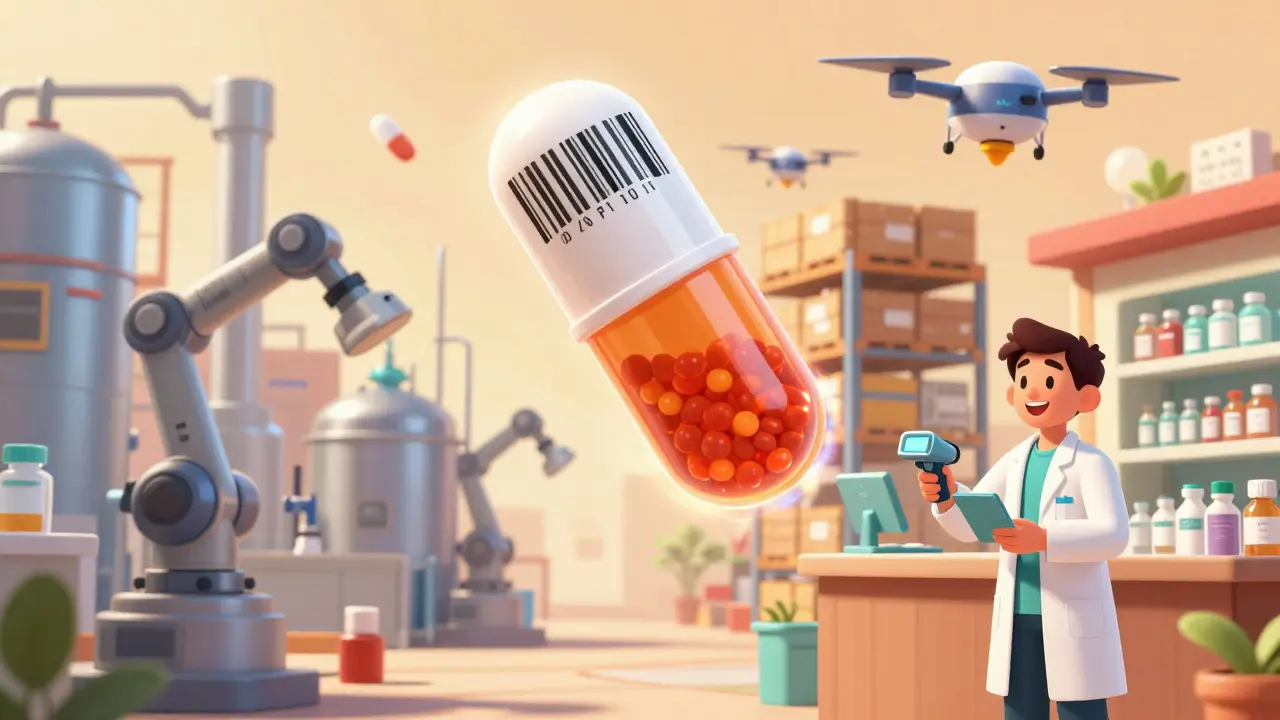
Every year, millions of prescription drugs move through a complex network of manufacturers, wholesalers, and pharmacies before ending up in your medicine cabinet. But what if one of those pills wasn’t made in a licensed lab? What if it was fake - filled with chalk, toxic chemicals, or nothing at all? That’s not a movie plot. It’s a real threat. And since 2013, the U.S. government has been building a system to stop it: the DSCSA track-and-trace system.
What Is the DSCSA, Really?
The Drug Supply Chain Security Act (DSCSA) isn’t just another regulation. It’s the first federal law in the U.S. that forces every player in the drug supply chain - from big manufacturers to your local pharmacy - to track every single pill, bottle, or vial using unique digital codes. Think of it like a digital passport for every medicine package. Before DSCSA, tracking drugs was a mess. Each state had its own rules. Some used paper logs. Others didn’t track anything at all. Counterfeiters exploited those gaps. A fake blood pressure pill could be sold in Texas, then end up in a pharmacy in Ohio, with no one knowing it wasn’t real. The DSCSA changed that. It created one national standard. No more patchwork. No more loopholes. The goal? Make it impossible for fake, stolen, or contaminated drugs to slip through. By November 27, 2024, every prescription drug sold in the U.S. must have a unique serial number, lot number, expiration date, and National Drug Code (NDC) - all printed in both human-readable text and a machine-scannable barcode. That’s not optional. That’s the law.How Does DSCSA Track-and-Trace Actually Work?
It’s not just about putting a barcode on a bottle. It’s about making sure every time that bottle changes hands, the system knows exactly where it’s been. Here’s how it works in three steps:- Serialization: Manufacturers print a unique 20-character serial number on each package. This isn’t just a random code. It’s tied to the product’s identity, lot, and expiration date. GS1 standards govern how these codes are built - the same system used for tracking groceries and electronics worldwide.
- Electronic Transaction Data: Every time a drug moves from one company to another - say, from Pfizer to McKesson, then to CVS - the sender must send three electronic documents: Transaction Information (what the product is), Transaction History (who had it before), and Transaction Statement (a legal certification that it’s legitimate).
- Verification: If a pharmacy receives a suspicious package - maybe the barcode doesn’t scan, or the serial number doesn’t match - they can instantly check it against the manufacturer’s database. In seconds, they know: Is this real? Or is it fake?
Why This Matters for You
You might think, “I don’t work in pharma. Why should I care?” But here’s the truth: your life could depend on it. Counterfeit drugs are more common than most people realize. In 2022, the FDA estimated that DSCSA’s tracking system could reduce counterfeit drug incidents by 95%. That’s not a guess. It’s based on data from countries that already use similar systems, like the European Union. Imagine taking a painkiller that’s supposed to help you - but instead, it contains a dangerous chemical used in industrial cleaners. Or a cancer drug that’s missing the active ingredient. These aren’t hypotheticals. They’ve happened. In 2018, fake versions of the blood thinner Eliquis were found in the U.S. supply chain. People could have died. DSCSA stops that. It gives pharmacies and hospitals the tools to catch fake drugs before they reach patients. It also makes recalls faster and more precise. Before DSCSA, if one batch of a drug was contaminated, companies had to recall entire product lines - thousands of bottles - just to be safe. Now, they can pinpoint the exact lot number and pull only the affected ones. Less waste. Less cost. Less risk.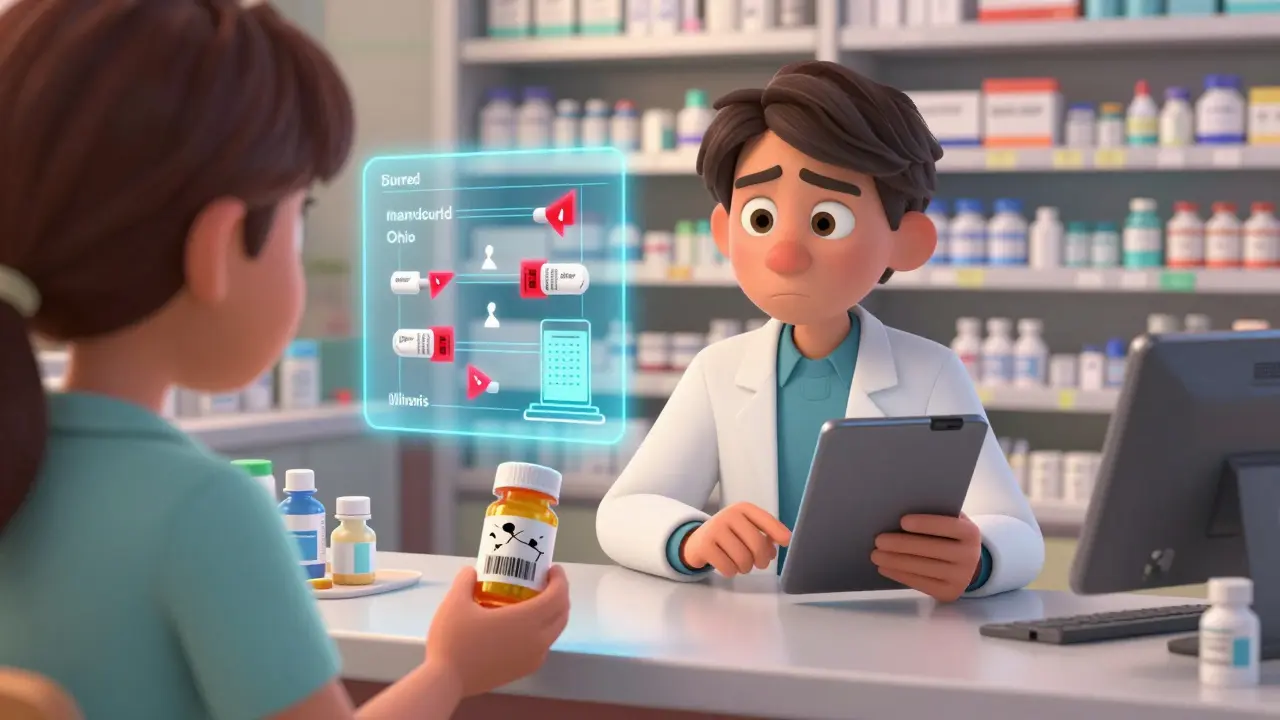
Who Has to Follow the Rules?
DSCSA applies to everyone in the chain:- Manufacturers - must serialize every package and share transaction data.
- Repackagers - like companies that repackage bulk drugs into smaller doses for nursing homes - must also serialize and track.
- Wholesale distributors - like McKesson, Cardinal Health, and AmerisourceBergen - must verify every shipment they receive and send accurate data forward.
- Dispensers - that’s your local pharmacy, hospital, or clinic. They must be able to verify any drug they receive and respond to suspected counterfeit products within 24 hours.
The Real Challenges: Tech Gaps and Cost Burdens
It sounds simple. But in practice, it’s been messy. Many pharmacies - especially small, independent ones - spent $100,000 to $185,000 upgrading their systems. One survey found 68% of independent pharmacies said DSCSA compliance was their biggest tech challenge. Walgreens alone spent $120 million on upgrades between 2021 and 2022. The bigger problem? Interoperability. Different companies use different software. One vendor’s system might not talk to another’s. A pharmacy using TraceLink might get a shipment from a wholesaler using SAP. If the data formats don’t match, the system flags the package as “suspect” - even if it’s real. That causes delays. Sometimes, patients wait extra days for their meds because the computers aren’t talking. A 2023 survey found that 42% of companies reported major data mismatches between trading partners. That’s not a glitch. That’s a systemic flaw. The FDA gave everyone a one-year grace period - from November 2023 to November 2024 - to fix these issues without penalties. But the clock is ticking.
How the System Compares to Europe’s
The European Union has its own system: the Falsified Medicines Directive (FMD). It’s similar - but not the same. FMD requires all drugs to have an anti-tamper seal and a unique code linked to a central European database. If you scan the code, it checks against a single, government-run repository. It’s centralized. It’s strict. It’s expensive. DSCSA is decentralized. There’s no central database. Instead, each manufacturer keeps its own data. Pharmacies verify directly with the maker. It’s more flexible - but it’s also more complicated. If you’re a small pharmacy, you might need to connect to 20 different manufacturer systems. That’s a nightmare. But DSCSA has one big advantage: it’s built for the U.S. market. It doesn’t force every pharmacy to buy new scanners or overhaul their entire workflow overnight. It’s a phased approach. It’s practical. And it’s working.What’s Next After 2024?
The November 2024 deadline isn’t the finish line - it’s the starting line. The FDA is already looking ahead. In March 2023, Commissioner Dr. Robert Califf said the agency is evaluating whether to extend DSCSA rules to high-risk over-the-counter drugs - like insulin pens, asthma inhalers, or erectile dysfunction pills. These aren’t prescription-only, but they’re just as vulnerable to counterfeiting. The market for DSCSA software is exploding. It’s projected to hit $3.2 billion by 2025. Companies like TraceLink, SAP, and Oracle are dominating this space. But smaller startups are popping up too, offering cloud-based tools for small pharmacies that can’t afford million-dollar systems. Long-term, experts predict DSCSA will save the U.S. healthcare system $2.3 billion a year by cutting down on fake drugs, reducing waste from broad recalls, and stopping drug diversion - where pills meant for patients end up on the black market.What If You’re a Patient?
You don’t need to scan barcodes or understand EPCIS standards. But you can still protect yourself:- Always get your meds from licensed pharmacies. Avoid online sellers that don’t require a prescription.
- Check the packaging. Does it look odd? Is the label blurry? Is the bottle sealed? If something feels off, ask your pharmacist.
- Know your drug. If your pill looks different than usual, ask why. Changes in color, shape, or taste can be signs of counterfeit products.
- Report suspicious drugs. Contact your pharmacist or the FDA’s MedWatch program. Your call could stop a dangerous batch from spreading.
Is the DSCSA system mandatory for all U.S. pharmacies?
Yes. All dispensers - including retail pharmacies, hospitals, and clinics - must comply with DSCSA requirements by November 27, 2024. This includes the ability to verify the authenticity of prescription drugs using electronic data and to respond to suspect products within 24 hours. There are no exemptions for small or independent pharmacies.
What happens if a pharmacy can’t verify a drug’s serial number?
If a pharmacy receives a drug that can’t be verified - for example, if the serial number doesn’t match the manufacturer’s records - they must treat it as a suspect product. They’re required to quarantine it immediately, investigate its origin, and report it to the manufacturer and the FDA. They cannot dispense it to patients under any circumstances.
Does DSCSA apply to over-the-counter (OTC) drugs?
As of 2025, DSCSA only applies to prescription drugs. However, the FDA has publicly stated it is evaluating whether to extend the system to certain high-risk OTC medications - such as insulin pens, epinephrine auto-injectors, and erectile dysfunction pills - due to rising counterfeit activity in those categories.
How do I know if my pharmacy is DSCSA-compliant?
You can’t directly verify a pharmacy’s compliance, but you can look for signs: licensed pharmacies use secure digital systems and won’t sell prescription drugs without a valid prescription. If you’re concerned, ask your pharmacist if they use electronic verification for drug traceability. Reputable chains like CVS and Walgreens have publicly confirmed their compliance.
Can counterfeit drugs still get through the DSCSA system?
No system is 100% foolproof. Counterfeiters may still try to replicate serial numbers or exploit data mismatches between systems. But DSCSA has made it exponentially harder. The FDA reports a 95% reduction in potential counterfeit drug incidents since serialization began. The system’s real strength is its ability to catch fakes quickly - before they reach patients.
Paul Ong
January 1, 2026 AT 11:27Finally something that actually works in healthcare
Richard Thomas
January 1, 2026 AT 19:27It’s easy to overlook how much infrastructure goes into keeping medicine safe. The DSCSA isn’t flashy, but it’s one of those quiet systems that prevents disasters before they happen. Every time a pharmacist scans a bottle and knows instantly it’s real, someone’s life is being protected without them even realizing it. The cost to small pharmacies is brutal, sure, but imagine the alternative - a child getting fake ADHD meds, an elderly person taking counterfeit insulin. That’s not a risk we can afford to take. The system’s flaws - the mismatched data formats, the fragmented software - are human problems, not technical ones. We’re trying to connect decades-old workflows with modern tech, and of course it’s messy. But the fact that we’re even trying, at this scale, is remarkable. It’s not perfect, but it’s the first time the entire supply chain has been held to the same standard. And that matters.
Andy Heinlein
January 3, 2026 AT 04:58big win for patients honestly
my grandma got her blood pressure med from a legit pharmacy and i finally feel like we're not playing russian roulette with pills
keep it going
Ann Romine
January 3, 2026 AT 08:47It's fascinating how this mirrors global efforts but adapts to U.S. fragmentation. The EU's centralized model feels cleaner, but here we're making it work with 20 different vendor systems talking to each other like strangers at a family reunion. I wonder how many small clinics in rural areas are still using paper logs from 2015. The gap between big pharma and the corner pharmacy is wider than most realize. Still, the fact that this law even exists - and is being enforced - feels like a quiet revolution.
Todd Nickel
January 3, 2026 AT 12:16The real test of DSCSA isn’t whether manufacturers comply - it’s whether the verification process is reliable under pressure. If a pharmacy receives 500 packages in a single day and 42 of them trigger false positives due to data mismatches, the system becomes a bottleneck, not a safeguard. The 24-hour response window is reasonable, but only if the tools are intuitive and interoperable. Right now, many pharmacists are spending more time debugging software than verifying drugs. The FDA’s grace period was necessary, but the real work begins now: standardizing data formats, creating open APIs, and ensuring compliance doesn’t become a burden that pushes small pharmacies out of business. Safety shouldn’t require a $150,000 IT upgrade.
Austin Mac-Anabraba
January 3, 2026 AT 14:57Let’s be honest - this is just another federal overreach disguised as safety. You think this stops counterfeits? It stops small businesses. Big pharma and tech giants like TraceLink are laughing all the way to the bank while independent pharmacies go under. And don’t tell me it’s about patients - if it were, why not just mandate a single national database like Europe? No, this is about control. It’s about locking out competition under the guise of ‘security.’ The FDA doesn’t care about your pharmacy. They care about their power. And now they’ve got a digital leash on every pill in America.
Phoebe McKenzie
January 5, 2026 AT 08:39THIS IS A TRAP. THEY’RE TRACKING EVERY SINGLE PILLS YOU TAKE. YOU THINK THIS IS ABOUT COUNTERFEITS? NO. IT’S ABOUT CONTROL. THEY’RE BUILDING A DATABASE OF EVERY MEDICATION YOU’RE ON - WHO YOU ARE, WHAT YOU NEED, WHEN YOU TAKE IT. NEXT THING YOU KNOW, INSURANCE COMPANIES WILL DENY YOU COVERAGE BASED ON YOUR ‘DRUG HISTORY.’ AND WHAT ABOUT THE GOVERNMENT? THIS IS THE FIRST STEP TO FORCING YOU TO TAKE ‘APPROVED’ MEDS. THEY’RE USING FAKE DRUGS AS AN EXCUSE TO MONITOR YOU. I’VE SEEN THE PAPERWORK - THEY’RE ALREADY LINKING THIS TO FEDERAL HEALTH RECORDS. DON’T BE FOOLED. THIS ISN’T SAFETY. IT’S SURVEILLANCE.
gerard najera
January 6, 2026 AT 03:15It works.
Stephen Gikuma
January 6, 2026 AT 13:55Why does the U.S. even bother with this? Europe’s system is centralized, clean, and government-run. Here we’ve got a patchwork of private companies doing what should be a public function. And who benefits? The tech vendors. The big distributors. Not the people. This whole thing feels like a corporate giveaway dressed up as public health. We’re spending billions so Oracle and SAP can sell software to pharmacies while real solutions - like national drug oversight - get ignored. And don’t get me started on how this system excludes foreign generics. It’s protectionism with a medical mask.
Bobby Collins
January 7, 2026 AT 05:19okay but like… what if someone just prints a fake barcode? like… it’s not magic, right? what’s stopping someone from copying a real serial number and sticking it on a fake pill? i feel like this is just giving people a false sense of security. like, cool, the scanner says it’s good… but what if the scanner’s being lied to? 🤔
Layla Anna
January 8, 2026 AT 04:46My dad’s a pharmacist in Nebraska and he told me they had to retrain everyone after the system went live. Some of the older staff were crying because they thought they’d lose their jobs. But now? They say it’s the best thing that’s happened in years. One time they caught a shipment that looked weird - turned out it was from a distributor that got hacked. Saved like 300 bottles of diabetes meds from going out. I cried when he told me. We don’t talk about this enough. This is real life-saving stuff. ❤️
Heather Josey
January 8, 2026 AT 23:43While the implementation has been challenging, the DSCSA represents a critical step forward in patient safety. The coordination required across hundreds of entities is unprecedented in the pharmaceutical industry. The fact that this system is operational at all - with real-time verification, traceability, and accountability - is a testament to the industry’s ability to adapt under regulation. The cost burden on small dispensaries is undeniable, but the long-term savings from reduced counterfeit incidents, targeted recalls, and decreased drug diversion will far outweigh initial investments. Continued collaboration between regulators, vendors, and providers will be essential to refine interoperability. This is not merely compliance - it is a moral imperative.
Kristen Russell
January 10, 2026 AT 20:36My pharmacy just got their system fixed last week. Took 6 months. But now it works. No more false alarms. No more delays. I’m just glad we’re finally on the same page.
Good job, everyone.
Bill Medley
January 11, 2026 AT 23:02The DSCSA’s decentralized architecture, while operationally complex, preserves market innovation and avoids the risks of a single point of failure. Centralized systems, though conceptually elegant, introduce vulnerabilities that could be exploited at scale. The current model, despite its friction, allows for resilience through redundancy. It is not ideal, but it is pragmatic. Further standardization of data exchange protocols, rather than centralization, remains the most viable path forward.
Paul Ong
January 13, 2026 AT 20:43they’re already talking about extending this to OTCs like insulin pens
next thing you know we’ll need a barcode to buy tylenol