

CYP1A2 Medication Interaction Checker
Check Your Medication Interactions
Results
Based on scientific evidence from the article. This tool provides general guidance only. Always consult your healthcare provider for personalized advice.
Ever wondered if your weekend barbecue could mess with your meds? It sounds far-fetched - until you dig into the science. Charcoal-grilled meats don’t just taste smoky; they trigger real biochemical changes in your body that can affect how your medications work. The enzyme at the center of this is CYP1A2, a liver protein responsible for breaking down about 10% of common drugs - including clozapine, theophylline, and caffeine. And yes, eating charred meat might bump up its activity. But here’s the catch: it’s not as simple as it sounds.
What Exactly Is CYP1A2 and Why Does It Matter?
CYP1A2 is one of your body’s main drug-processing engines. It’s not just a passive bystander - it actively modifies chemicals so they can be cleared from your system. If you take clozapine for schizophrenia, theophylline for asthma, or even just rely on coffee to get through the morning, CYP1A2 is working behind the scenes. When this enzyme becomes more active, drugs get broken down faster. That means lower blood levels, reduced effectiveness, and sometimes, a dangerous drop in symptom control.
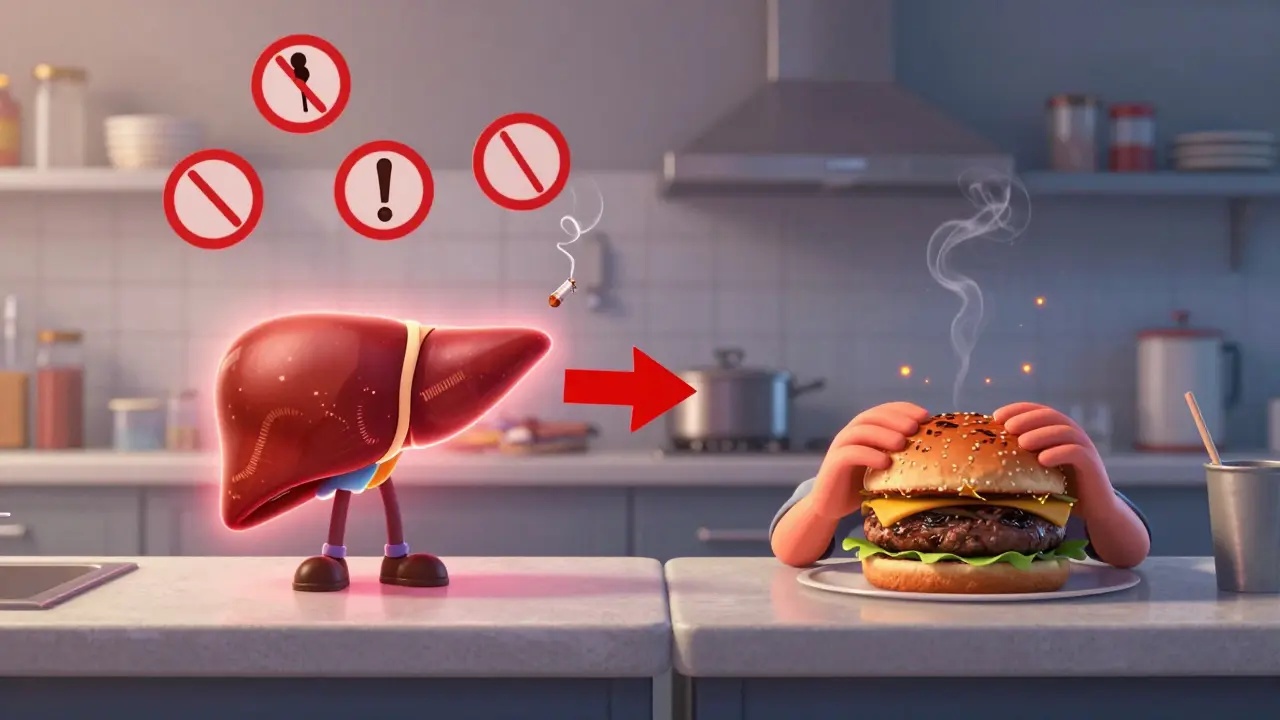
But CYP1A2 doesn’t just respond to pills. It reacts to what you eat. Specifically, the charred parts of meat grilled over charcoal. When fat drips onto hot coals, it creates smoke filled with polycyclic aromatic hydrocarbons (PAHs) like benzo[a]pyrene. These compounds bind to a receptor in your liver and gut called AhR, which flips a genetic switch that tells your body to make more CYP1A2. More enzyme = faster drug breakdown.
The Two Studies That Started the Debate
In 1999, a team led by Dr. Robert Fontana at the University of Michigan did something unusual: they took biopsies from people’s guts and livers. Ten healthy adults ate 250 grams of chargrilled meat every day for a week. Afterward, they found CYP1A2 activity jumped by 47% in the liver. Intestinal CYP1A1 - another enzyme in the same family - rose by 53%. The evidence was direct, physical, and undeniable.
Then, in 2005, Dr. Kim Brøsen’s group in Denmark did the same thing - but differently. They didn’t take tissue samples. Instead, they measured how fast people metabolized caffeine and other probe drugs. Twenty-four men ate charcoal-broiled meat twice a day for five days. The result? CYP1A2 activity increased by just 4.2%. Not statistically significant. Not meaningful. Not even close to what smoking does.
So which one’s right? Both. But they measured different things. Fontana saw the enzyme itself increasing. Brøsen saw whether that increase actually changed how drugs behaved in real time. One was about biology. The other was about real-world impact.
Why the Disagreement Matters for You
Here’s the problem: most people don’t care about enzyme levels. They care about whether their medication still works. If you’re on clozapine and your doctor tells you to avoid grilled meat, you need to know if that’s based on real risk or theoretical science.
The Fontana study showed a clear biological effect. But it didn’t prove anyone had a bad reaction. No one had a seizure. No one’s drug levels crashed. The Brøsen study didn’t find a change in drug metabolism - and that’s what matters in the clinic. No one’s been hospitalized because they ate a burger off the grill while on theophylline.
Even more telling? The FDA and EMA don’t list grilled meat as a risk for any CYP1A2 drug. Not one warning label mentions it. Meanwhile, cigarette smoking - which can boost CYP1A2 by 200-400% - is flagged on nearly every relevant drug label. That’s because smoking has proven, repeated, dangerous effects. Grilled meat? Not so much.
What About Real People? Any Cases?
Ask pharmacists. Ask patients. Ask the medical literature. You won’t find many stories. A 2022 review of drug interaction reports found only three possible cases over ten years where someone linked grilled meat to a change in drug levels. None were confirmed. No causation. No clear timeline. Just a hunch.
On Reddit, a pharmacist replied to a worried clozapine user: “I’ve been doing this for 20 years. I’ve never seen a case tied to BBQ.” A Drugs.com thread from 2021 had the same theme: fear, but no proof. Even the American Society of Health-System Pharmacists didn’t issue a single formal alert on this issue.
Mayo Clinic and Cleveland Clinic? Their patient guides on clozapine, theophylline, and caffeine don’t mention grilled meat at all. But they do tell you to quit smoking. Why? Because smoking has a documented, massive, and dangerous effect. Grilled meat? It’s a footnote.
What Actually Changes CYP1A2 in Real Life?
If you’re worried about your meds, focus on the big players:
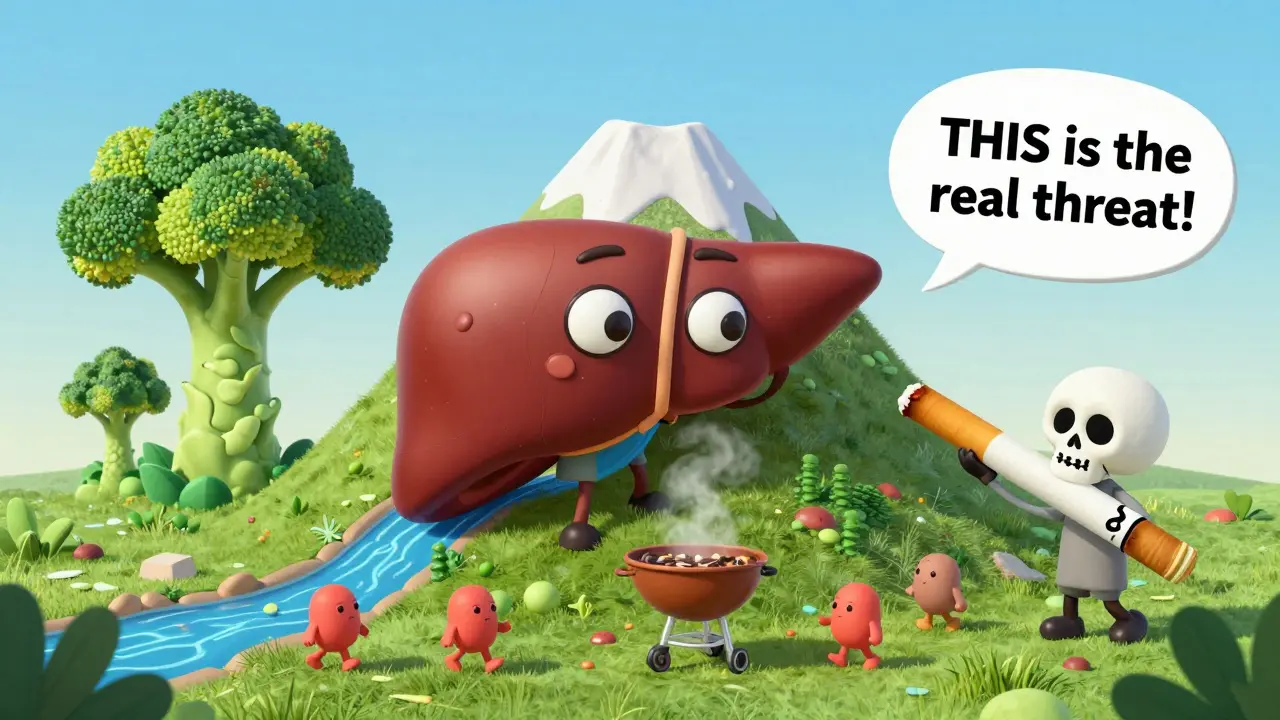
- Smoking: Increases CYP1A2 by 2-4 times. Quitting can cause drug levels to spike dangerously.
- Caffeine: Heavy daily intake (5+ cups) can slightly induce CYP1A2 - but it’s reversible and mild.
- Cruciferous vegetables: Broccoli, Brussels sprouts, and cabbage can mildly induce CYP1A2 - but again, not enough to matter clinically.
- Genetics: Some people naturally have high or low CYP1A2 activity due to DNA differences. This matters far more than diet.
Even if you eat grilled meat every day, your CYP1A2 level might not budge. Or it might go up a little. But unless you’re on a drug with a razor-thin safety margin - like clozapine or theophylline - it’s unlikely to cause a problem.
Should You Stop Eating Charcoal-Grilled Meat?
No. Not because it’s safe - but because the risk is too small to justify giving up something you enjoy.
Yes, PAHs in charred meat are carcinogens. That’s a real concern for cancer risk over decades. But that’s separate from drug interactions. If you’re worried about cancer, eat less charred meat. If you’re worried about your meds? Don’t stress.
Here’s what you should do instead:
- If you’re on clozapine, theophylline, or tacrine - talk to your doctor or pharmacist. Don’t assume anything.
- Don’t quit smoking because you’re eating BBQ. Quit smoking because it’s deadly. And yes, it affects your meds way more than meat does.
- If you suddenly stop eating grilled meat after years of eating it daily - that’s unlikely to change anything. Your enzyme levels won’t crash.
- Don’t rely on online forums. Ask a professional who knows your meds.
The Bottom Line
Charcoal-grilled meat does trigger CYP1A2 induction in lab settings. But in real life? The effect is too weak, too inconsistent, and too rare to matter for most people. The science is fascinating. The clinical impact? Almost none.
Focus your energy where it counts: smoking, alcohol, grapefruit juice, and your actual medication schedule. Those are the things that change drug levels - not your summer cookout.
Enjoy your steak. Just don’t burn it to a crisp every time. And if you’re on a critical medication - talk to your pharmacist. They’ve seen the data. They’ll tell you what’s real - and what’s just noise.
Can eating charcoal-grilled meat make my medication stop working?
It’s theoretically possible, but extremely unlikely in practice. While grilled meat can slightly increase CYP1A2 enzyme levels, studies show this doesn’t translate to meaningful changes in how drugs like clozapine or theophylline work in the body. No confirmed cases of treatment failure due to BBQ consumption exist in medical literature.
Should I avoid grilled meat if I take clozapine?
No - unless your doctor advises otherwise based on your individual situation. The FDA and major health organizations do not list grilled meat as a risk for clozapine interactions. Smoking, on the other hand, is a major concern and can drastically alter clozapine levels. Focus on quitting smoking before worrying about BBQ.
Does the way I cook the meat make a difference?
Yes - but not in the way you might think. Charring meat creates more PAHs, which are the compounds that may induce CYP1A2. However, even heavily charred meat only causes a small, inconsistent enzyme increase. If you’re concerned, trim off the blackened parts or use indirect heat. But again, this is more about cancer risk than drug effects.
How long does the CYP1A2 effect last after eating grilled meat?
The enzyme-inducing effect, if it happens, likely lasts a few days to a week after stopping consumption. But since the increase is small and variable, most people won’t notice any change in how their meds work. Your body returns to baseline quickly, and there’s no evidence of long-term buildup from occasional grilled meals.
Are there any foods that definitely interact with CYP1A2?
Yes - cigarette smoke is the strongest and most clinically relevant inducer. Grapefruit juice doesn’t affect CYP1A2, but it does block other enzymes like CYP3A4. Caffeine can mildly induce CYP1A2 with heavy daily use, but it’s not strong enough to cause problems for most people. Stick to avoiding smoking and large amounts of grapefruit if you’re on sensitive meds.
Herman Rousseau
December 23, 2025 AT 02:28Bro, I’ve been on clozapine for 8 years and grill every weekend. Never had an issue. My pharmacist laughed when I asked. Smoking? Yeah, that’s the real villain. BBQ? Just enjoy it. 🍖😎
Johnnie R. Bailey
December 24, 2025 AT 15:16It’s funny how we anthropomorphize enzymes like they’re little factory workers with union contracts. CYP1A2 doesn’t ‘react’ to meat-it’s a protein responding to ligand binding, period. The real story here isn’t the grill, it’s how medicine conflates statistical noise with clinical relevance. Fontana’s biopsy data? Elegant. Brøsen’s caffeine test? Practical. The disconnect? That’s the scientific method in action. We don’t need fear. We need nuance.
Vikrant Sura
December 26, 2025 AT 04:25Why are you even writing this? No one cares. Just say ‘don’t eat charred meat’ and be done with it. This is just clickbait dressed up as science.
Art Van Gelder
December 27, 2025 AT 10:09Okay, so let’s unpack this. We’ve got a biochemical pathway activated by smoke from burning fat-same smoke that’s in your chimney, your campfire, your incense, your neighbor’s bad weed. And somehow, the only thing we’re panicking about is the steak? Meanwhile, people are downing 10 cups of coffee a day, smoking two packs, and drinking grapefruit juice like it’s juice, and the medical community’s got a whole manual on that-but the BBQ? Nah. It’s just ‘maybe.’
It’s not about the meat. It’s about how we assign risk. We fear what’s visible-blackened edges on a burger-but ignore the invisible: nicotine, alcohol, sleep deprivation, stress-induced cortisol spikes that probably mess with CYP1A2 way more than benzo[a]pyrene. We’re terrified of the grill, but not of our own habits. That’s the real story here.
Jeremy Hendriks
December 28, 2025 AT 18:45You’re telling me we’ve got a multi-billion dollar pharmaceutical industry, pharmacogenomics, and precision medicine… and we’re still treating a 4% enzyme fluctuation like it’s a crisis? That’s not science. That’s fearmongering wrapped in a lab coat. If your drug fails because you ate a rib, your doctor should be fired, not your grill. Get real.
Kiranjit Kaur
December 29, 2025 AT 00:47Y’all are overthinking this 😅 I love my grilled chicken with char marks-so delicious! But I also take my meds at the same time every day, and I talk to my pharmacist every 3 months. That’s all you need. No need to give up BBQ. Just stay in touch with your care team 💚🔥
Sai Keerthan Reddy Proddatoori
December 30, 2025 AT 20:30Big Pharma doesn't want you to know this. Charcoal meat is a tool to make you dependent on their drugs. They pay scientists to downplay the danger. Your liver is being poisoned by Western diet. Stop eating grilled meat. Eat only steamed vegetables. This is how they control you.
Cara Hritz
December 31, 2025 AT 06:03i read this whole thing and i think u meant CYP3A4 not CYP1A2? i swear i saw grapefruit juice mentioned with 3A4 not 1A2? also i think u misspelled 'charcoal' in the title? just sayin' 😅