

Chronic watery diarrhea that won’t quit? If you’ve been told you have IBS-D but nothing seems to help, you might be dealing with something else entirely: bile acid diarrhea. It’s not rare - studies show it affects up to 30% of people diagnosed with IBS-D. Yet most doctors never test for it. The good news? Once you know it’s bile acid diarrhea, treatment works - fast.
What Exactly Is Bile Acid Diarrhea?
Your liver makes bile to digest fat. Normally, 95% of bile acids are reabsorbed in the last part of your small intestine (the terminal ileum) and recycled. But when that system breaks down, too much bile ends up in your colon. That’s bile acid diarrhea (BAD). The bile acts like a laxative - pulling water into your gut, speeding things up, and causing sudden, urgent, watery stools. You might notice greasy, pale stools that are hard to flush. Some people have symptoms all the time. Others only get them after eating fatty meals. There are three types:- Type I: Caused by damage to the ileum - think Crohn’s disease, surgery, or radiation.
- Type II: No obvious cause. This is the most common and often mistaken for IBS.
- Type III: Triggered by other gut issues like celiac disease, gallbladder removal, or chronic pancreatitis.
How Is It Diagnosed?
There’s no single test everyone uses, but here’s what works:- SeHCAT scan: The gold standard outside the U.S. You swallow a radioactive tracer that mimics bile. If less than 15% is still in your body after 7 days, you have BAD. It’s not available in most U.S. hospitals.
- Serum C4 test: Measures a chemical your liver makes when producing bile. Levels above 15.3 ng/mL strongly suggest BAD. This test is becoming more common and is 77-82% accurate.
- FGF-19 blood test: FGF-19 is a hormone that tells your liver to slow down bile production. If your level is below 85 pg/mL, your body isn’t regulating bile properly. This test is still emerging but promising.
- Fecal bile acid test: Collects stool over 48 hours to measure total bile acid output. Highly accurate but requires a specialized lab.
Most doctors don’t order these tests unless you push for them. If you’ve had chronic diarrhea for more than 4 weeks - especially if you’ve had gallbladder surgery or IBS-D that didn’t improve with standard treatments - ask about BAD.
The Three Main Bile Acid Binders
These medications trap bile acids in your gut so they can’t irritate your colon. They’re not magic pills, but they work for about 70% of people. Improvement usually starts within 2-3 days.| Medication | Dose | Pros | Cons |
|---|---|---|---|
| Cholestyramine (Questran) | 4g, 1-2 times daily (max 16g/day) | Effective, low cost | Chalky, gritty texture; causes constipation in 20-30% of users |
| Colestipol (Colestid) | 5g, 1-2 times daily | Similar effectiveness to cholestyramine | Better taste, but still causes bloating and constipation |
| Colesevelam (Welchol) | 1.875-3.75g daily | Tablets only, no powder; only 5% report constipation | Expensive without insurance ($350-$450/month); may raise triglycerides |
Many people quit binders because of taste or side effects. If cholestyramine is too unpleasant, mix it with apple sauce, yogurt, or a smoothie. Don’t take it with other meds - it can block absorption. Space it out by at least 1 hour before or after other pills.

Dietary Changes That Actually Help
Medication alone isn’t always enough. Diet plays a huge role - and small changes can make a big difference.- Limit fat to 20-40g per day. Fat triggers bile release. Cutting fat below 30g daily can reduce stool frequency by 40%. Avoid fried food, fatty meats, cream sauces, butter, and full-fat dairy.
- Add soluble fiber. Psyllium husk (5-10g daily) binds bile acids like the meds do. Take it with water, 30 minutes before meals. Clinical trials show it cuts bowel movements by 35%.
- Eat smaller, more frequent meals. Three big meals flood your gut with bile. Five or six small meals spread the load. One study found this cut post-meal urgency by 25%.
- Avoid triggers. Caffeine (coffee, tea, soda) speeds up colon movement. Artificial sweeteners like sorbitol and xylitol pull water into your gut. Alcohol and spicy foods can make things worse.
- Try the Specific Carbohydrate Diet (SCD). It removes complex carbs and sugars. In one survey, 45% of BAD patients reported improvement. It’s strict, but worth trying if other diets fail.
Most people need 4-6 weeks to figure out their personal triggers. Keep a food and symptom journal. Note what you ate, when you had diarrhea, and how bad it was. Over time, patterns emerge.
What Doesn’t Work (and Why)
Many people try probiotics, antispasmodics, or anti-diarrheal pills like loperamide. These might give temporary relief, but they don’t fix the root problem. Loperamide can even make bile acid diarrhea worse by slowing transit too much, leading to bloating and cramping.Also, don’t assume low-FODMAP diets will help. While they work for IBS-D, they’re not designed for BAD. You might eliminate the wrong foods and still feel awful.
Real Patient Experiences
On patient forums, common stories pop up:- "I was on 4 different IBS meds for 3 years. Started cholestyramine, and within 72 hours, I stopped having accidents. I still hate the taste, but I mix it with peanut butter now."
- "I had greasy, floating stools every day. My doctor said it was "just IBS." I got the C4 test - my level was 22.5. After 2 weeks of colesevelam and cutting fat, I could go out without planning my bathroom route."
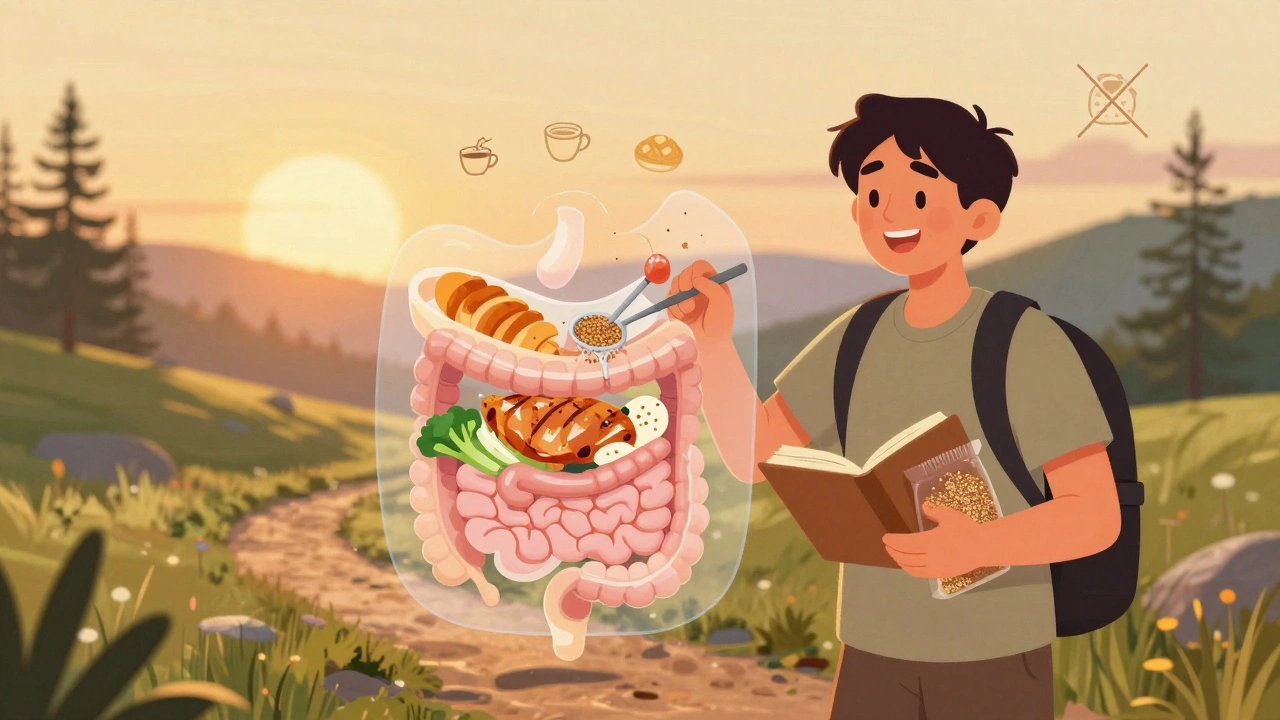
- "I tried psyllium husk with every meal. No meds. My stools went from 8 times a day to 2-3. It’s not perfect, but I’m back to hiking and traveling."
One study found that 68% of patients who combined binders with diet saw major improvement. About 60% who couldn’t tolerate binders still found relief with diet alone.
What’s Coming Next?
Research is moving fast. A new drug called A3384 - an FGF-19 analog - showed 72% symptom improvement in phase 3 trials. It works by telling your liver to make less bile in the first place. It’s not approved yet, but it could be available by 2027.Genetic testing is also on the horizon. Scientists have found four gene variants linked to BAD susceptibility. In the future, a simple blood test might tell you if you’re at risk before symptoms even start.
Right now, the biggest problem is underdiagnosis. Experts estimate 90% of BAD cases are labeled as IBS-D. That means thousands of people are stuck on ineffective treatments while the real issue goes untreated.
What to Do Next
If you’ve had chronic diarrhea for more than a month:- Ask your doctor for a serum C4 test. It’s the most accessible starting point in the U.S.
- If C4 is high, try a bile acid binder - start with colesevelam if cost allows, or cholestyramine if you’re on a budget.
- Start a low-fat diet (under 30g fat per day) and add 5g psyllium husk before meals.
- Track symptoms for 4 weeks. Note what works, what doesn’t.
- If no improvement, ask about FGF-19 testing or a referral to a specialist.
You don’t have to live with daily urgency. This isn’t just "bad digestion." It’s a specific, treatable condition. With the right diagnosis and a simple plan, you can get your life back.
Steve World Shopping
December 3, 2025 AT 06:40Let’s cut through the noise: bile acid diarrhea isn’t some mysterious IBS variant-it’s a bile acid malabsorption cascade driven by ileal dysfunction or dysregulated FGF-19 signaling. The SeHCAT scan remains the gold standard, but given its unavailability in the U.S., serum C4 is the pragmatic biomarker of choice. Colesevelam’s pharmacokinetic profile makes it the optimal binder for long-term compliance, especially when contrasted with cholestyramine’s colloidal viscosity and gastrointestinal tolerability issues. Dietary fat restriction below 30g/day isn’t just anecdotal-it’s physiologically rational, as cholecystokinin-mediated bile release becomes unmoored without enterohepatic recycling. Psyllium’s mucoid matrix acts as a passive bile acid chelator, mimicking the mechanism of sequestrants. This isn’t lifestyle advice-it’s pathophysiology-driven intervention.
Rebecca M.
December 5, 2025 AT 02:52Oh wow. So after years of being told I have ‘IBS’ and being handed a $200 bottle of Imodium… the answer was ‘eat less fat and take chalky powder’? I’m just stunned. No wonder doctors don’t test for this-imagine if they had to admit they’ve been misdiagnosing half their patients for a decade. 🙃
Lynn Steiner
December 5, 2025 AT 06:06I cried reading this. I had 8 bowel movements a day for 4 years. My husband said I was ‘just anxious.’ My mom said I was ‘eating too much junk.’ I got a C4 test on a whim-24.1. Started colesevelam. Two weeks later, I went to a concert. Without planning three exits. I’m not okay. I’m not okay. I’m not okay. 😭
Alicia Marks
December 5, 2025 AT 12:10This is life-changing info. If you’ve been struggling with chronic diarrhea, please-ask for the C4 test. You don’t have to suffer like this. Small changes = big results. You’ve got this.
Paul Keller
December 7, 2025 AT 03:02While the clinical utility of bile acid binders is well-documented, the broader systemic implications of underdiagnosis in gastroenterology warrant deeper scrutiny. The current diagnostic paradigm relies heavily on exclusion rather than targeted biomarker validation, which perpetuates a cycle of therapeutic inertia. Furthermore, the commercial availability of colesevelam is disproportionately constrained by pharmaceutical pricing structures, effectively rendering it inaccessible to low-income populations despite its superior tolerability profile. This is not merely a medical issue-it is a structural failure of healthcare equity. Until diagnostic algorithms prioritize bile acid dysregulation as a primary differential rather than a tertiary afterthought, we will continue to mislabel suffering as ‘functional disorder.’
Shannara Jenkins
December 7, 2025 AT 18:55I tried cholestyramine and thought I was going to vomit. Then I mixed it with peanut butter and a banana smoothie-game changer. Also started taking psyllium before breakfast. My stomach stopped screaming. I still eat fat, but I don’t eat it like a maniac anymore. You don’t need to be perfect. Just better. 💪
Elizabeth Grace
December 7, 2025 AT 19:14Wait, so my greasy floating stools weren’t ‘just my metabolism’? I thought I was weird. I’ve been avoiding dairy and gluten for years. Turns out I just needed to stop eating avocado toast like it’s oxygen. 🤦♀️
Jay Everett
December 8, 2025 AT 07:26Man, this is the kind of post that makes you feel like the universe finally whispered the answer after screaming for years. I’ve been doing the psyllium + low-fat thing for 6 months now. No meds. Just fiber, timing, and a little discipline. I’m hiking again. I’m traveling. I’m not hiding in bathrooms like a ghost. And yeah, I still hate the taste of cholestyramine-but if I ever need it again, I’ll mix it with chocolate almond butter and call it a ‘bile-binding smoothie.’ 🤓💊 The future? FGF-19 analogs. That’s the holy grail. But until then? You’ve got tools. Use ‘em. You’re not broken. You’re just misdiagnosed. And now? You’re armed. 🙌