

When a medication triggers anaphylaxis, every second counts. This isn’t a slow-moving allergy - it’s a full-body crisis that can kill in minutes. You don’t need to be a doctor to act. You just need to know what to do, and do it fast. Medication-induced anaphylaxis happens when your body overreacts to a drug - antibiotics like penicillin, NSAIDs like ibuprofen, contrast dyes, or muscle relaxants during surgery. It’s not rare. In hospitals, it accounts for 20-30% of all anaphylaxis cases. And the biggest killer? Delay. Studies show 70% of deaths happen because epinephrine was given too late - or not at all.
Recognize the Signs - Even When They’re Subtle
Anaphylaxis doesn’t always start with a rash. In fact, up to 20% of cases have no skin symptoms at all. That’s why so many people miss it. Look for problems with airway, breathing, or circulation - the ABCs. If someone can’t breathe properly, their tongue or throat is swelling, or they’re turning pale and dizzy, it’s anaphylaxis. Specific signs include:- Difficulty breathing, wheezing, or a persistent cough
- Swelling of the tongue or throat
- Tightness in the throat or trouble talking
- Dizziness, fainting, or collapse
- Pale, clammy skin - especially in kids
Don’t wait for hives. Don’t wait for confirmation. If two or more of these are happening, and a medication was taken recently - act.
Step One: Lay Them Flat - No Exceptions
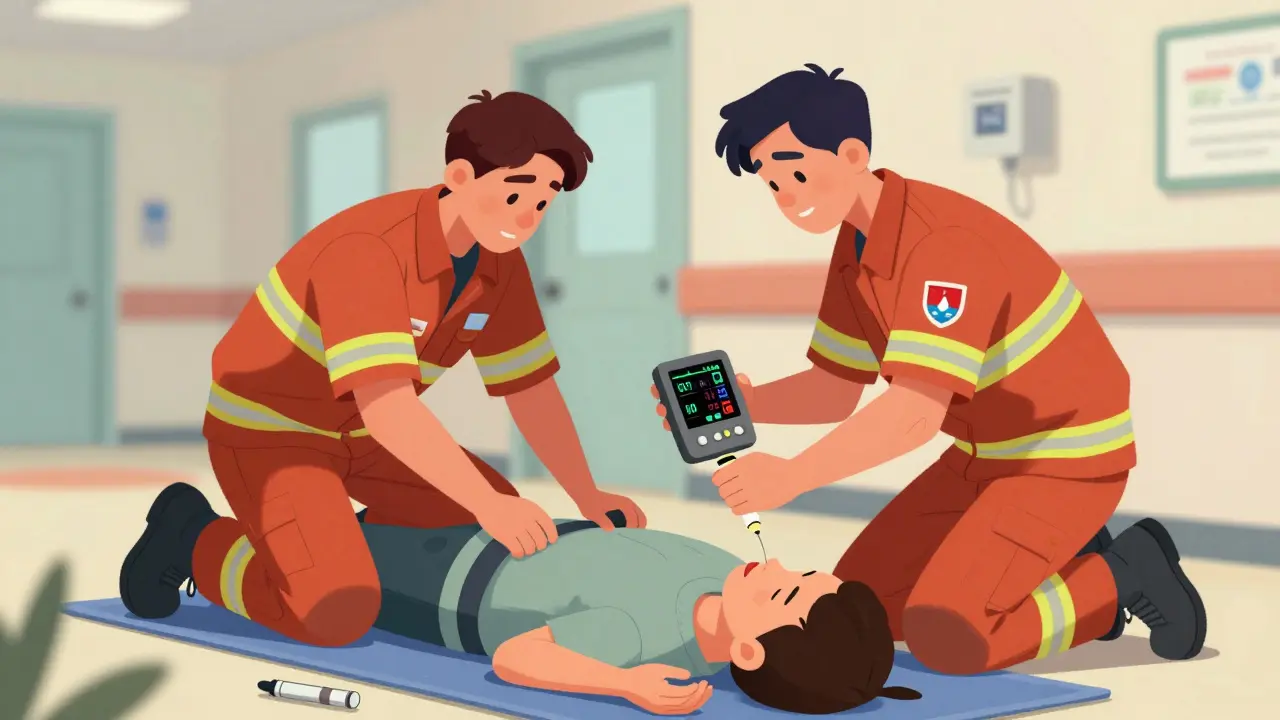
This is the most misunderstood rule. If someone is having anaphylaxis, you must lay them flat on their back. No sitting up. No standing. No walking. Even if they’re struggling to breathe, lying flat prevents sudden drops in blood pressure that can cause cardiac arrest. Studies show that changing from lying down to standing triggers collapse in 15-20% of cases. For pregnant people, roll them onto their left side. For children, hold them flat - don’t let them sit on your lap. If they’re gasping for air, let them sit with legs stretched out - but only if they can’t lie flat. Never let them move on their own.Step Two: Give Epinephrine - Now
Epinephrine is the only thing that stops anaphylaxis from killing someone. Antihistamines? They help with itching, but they do nothing for breathing or blood pressure. Steroids? They’re not needed at this stage. Epinephrine is the only lifeline. Use an auto-injector - EpiPen, Auvi-Q, or Adrenaclick - into the outer thigh. Don’t hesitate. Don’t worry about side effects. The risk of not using it is death. The risk of using it? Very low. Out of 35,000 doses given in the last decade, only 0.03% caused serious heart problems.Dosage matters:
- Adults and kids over 30 kg: 0.3 mg
- Kids 15-30 kg: 0.15 mg
Hold the injector in place for 10 seconds. Make sure it goes into muscle, not fat. If you’re unsure, give it anyway. The ASCIA guidelines say: "IF IN DOUBT, GIVE ADRENALINE." That’s not a suggestion - it’s a life-saving rule backed by data from Australia showing that hesitation caused 35% of preventable deaths between 2015 and 2020.
Step Three: Call Emergency Services - Immediately
Epinephrine works fast - within 1 to 5 minutes. But it doesn’t last. Its effects fade after 10 to 20 minutes. That’s why you must call 911 (or your country’s emergency number) the moment you give the shot. Don’t wait. Don’t think they’ll "just rest it off." Anaphylaxis can come back worse - up to 20% of cases have a second wave of symptoms hours later. This is called a biphasic reaction. Hospitals require 4 to 6 hours of observation after an episode. For medication-induced cases, that number may be higher - up to 8 hours - because of increased risk.Step Four: Prepare for a Second Dose
If symptoms don’t improve after 5 minutes, or if they get worse, give another dose of epinephrine. Yes - a second shot. Some protocols say you can give one every 10 minutes if needed. You don’t need to wait for paramedics. You don’t need permission. If the person is still struggling to breathe or their blood pressure is dropping, give another injection. This isn’t overkill - it’s survival. In 5-10% of cases, two doses aren’t enough. That’s when advanced care like IV epinephrine or fluids becomes critical - but only in a hospital.What Not to Do
- Don’t give antihistamines first. They’re not a substitute. They’re a distraction.
- Don’t delay. The average time from symptom onset to epinephrine in hospitals is over 8 minutes - too late for many.
- Don’t let them stand. Standing during anaphylaxis is like stepping off a cliff.
- Don’t assume it’s just a panic attack. Dizziness and trouble breathing are not "just nerves."
- Don’t rely on inhalers or asthma meds. They don’t fix anaphylaxis. Only epinephrine does.

Special Considerations for Medication Reactions
Medication-induced anaphylaxis has unique risks. Antibiotics cause nearly half of all fatal cases. NSAIDs like aspirin or ibuprofen are common triggers, especially in people with asthma. Muscle relaxants used in surgery are responsible for 15% of deaths. And if the person takes beta-blockers - common for high blood pressure or heart issues - epinephrine may not work as well. In those cases, higher doses may be needed. New research is even looking at dosing based on body mass index, not just weight, since obese patients often don’t get enough drug into their system with standard doses.There’s also a new tool helping people get it right: the Auvi-Q 4.0, an auto-injector with voice instructions. Clinical trials showed it improved correct use from 63% to 89% in untrained users. If you or someone you know has a known drug allergy, ask your doctor about getting one.
Laura B
February 21, 2026 AT 05:53Hariom Sharma
February 21, 2026 AT 08:55Caleb Sciannella
February 21, 2026 AT 22:08Davis teo
February 23, 2026 AT 03:57Chris Beeley
February 23, 2026 AT 06:50Arshdeep Singh
February 24, 2026 AT 22:40Liam Crean
February 25, 2026 AT 15:33Tommy Chapman
February 26, 2026 AT 17:21Freddy King
February 28, 2026 AT 14:43Jayanta Boruah
February 28, 2026 AT 15:41Ashley Paashuis
March 1, 2026 AT 01:33Michaela Jorstad
March 1, 2026 AT 03:17